This stark image of soldiers distributing food in schools is not just alarming—
it’s a flashing red light signalling a system on the brink of collapse. In the same week that Ghana signalled its intention to seek additional support from the
International Monetary Fund (IMF), another headline revealed that soldiers had
been deployed to distribute food supplies to public schools.
This is not just about hunger; it’s about the deep, structural failure of
governance, the fragility of Ghana’s food systems, and the collapse of the
infrastructure that once kept them stable.
At first glance, these two developments—an economic bailout and military food
distribution—might seem unrelated. One speaks to fiscal policy, the other to
humanitarian crisis. But combined, they paint a disturbing picture of a state
grappling with its own inefficiencies. When a country negotiating international financial rescue requires military logistics to feed its schoolchildren, the problem is far bigger than just the economy—it’s a governance crisis.
Food Insecurity: A Structural Issue, Not a Seasonal Crisis
Ghana’s food insecurity is no longer a temporary or seasonal issue—it has
become structural. Over the past few years, food prices have risen faster than
wages, eroding household purchasing power. For many working families, food
is no longer a given; it’s rationed, substituted, and often unaffordable. School
meals, once a supplement, have become a lifeline.
The school feeding program, long considered a cornerstone of social protection,
has been stretched to its limits. Caterers are facing rising input costs, delayed payments, and fragile supply chains, forcing them to cut back on meal quality.
What was once a nutritious meal, including vegetables and protein, has been
reduced to a basic starch, stretched as far as possible. When soldiers are called in to distribute food, it’s not a coincidence—it’s a sign that the system has reached its limits.
Cocoa Farmers’ Struggles: A Mirror to the Larger Crisis
The crisis does not end with schoolchildren. It echoes across Ghana’s entire
agricultural sector, particularly in the cocoa industry. Recently, cocoa farmers
have voiced deep frustrations—complaints about unreasonably low prices,
rising input costs, and insufficient support. Despite being one of the world’s
largest cocoa producers, Ghana’s farmers are struggling to remain profitable.
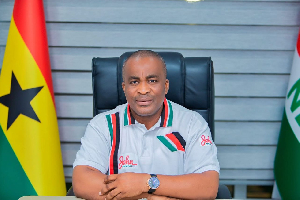
The Managing Director of Cocobod, in an unprecedented move, travelled
directly to cocoa farms to hear farmers’ complaints first-hand. This level of
engagement is critical, but it underscores a deeper problem: Farmers are caught
in a web of inefficiency, unable to access affordable financing, fair pricing, and adequate support for maintaining productivity.
But financial institutions—especially banks—could be part of the solution. By
partnering with Cocobod, banks can help provide tailored financial products to
cocoa farmers, such as low-interest loans for purchasing inputs, crop insurance,
and advances on cocoa exports. Such partnerships would reduce financial
pressures on farmers, allowing them to increase productivity and maintain the
quality of their crops. Moreover, this would help Ghana stabilize its cocoa
sector and ensure its continued global competitiveness.
When Food Security Meets Fiscal Constraint
The renewed push for IMF support highlights Ghana’s dire macroeconomic
reality—high debt levels, limited fiscal space, and persistent balance-of payments pressures. While IMF programs bring stability, they also demand
fiscal discipline, often at the cost of social programs like food security.
Food security is often treated as a short-term welfare issue rather than a long term economic imperative. But when food becomes more expensive and less
accessible for ordinary citizens, it directly impacts human capital, social
stability, and economic growth. The situation becomes a vicious cycle—as the state works to stabilize the economy, the daily struggles of its people deepen.
Military Logistics in a Peace Time: A Disturbing Precedent
Military intervention in food distribution during peacetime should not reassure
us—it should alarm us. When soldiers are deployed to distribute food, we need
to ask why civilian institutions—ministries, agencies, markets—are failing so
utterly that the military must step in.
Historically, military involvement in food security is something we see in
wartime or in conflict zones. In those situations, the military steps in to address urgent needs because no other institutions are equipped to handle them.
But this is not war. Ghana is not in a state of emergency or conflict, yet the military has been called in to perform basic civilian functions. That’s a sign of profound institutional weakness.
The Role of Financial Institutions in Rebuilding Food Security
The solution to Ghana’s food security crisis isn’t just about government
intervention—it requires a collective effort. Financial institutions, particularly banks, must step up and provide much-needed support across the agricultural value chain to ensure its efficiency and sustainability.
Here’s how banks can play a pivotal role:
1. Financing for Value Chain Development
Banks can help link farmers, aggregators, and institutional buyers (such
as schools) by providing value-chain financing. This means offering loans
and credit to farmers to buy inputs, helping traders absorb transport and
storage costs, and providing working capital for caterers and processors.
2. Supporting Cocoa Farmers
Banks can partner with Cocobod to design financing models that reduce
financial risk for cocoa farmers. By offering low-interest loans, crop
insurance, and financial products that ensure fair pricing, banks can help
farmers stabilize their income, increase productivity, and become more
resilient to shocks.
3. Supporting School Feeding Programs
Banks can create working capital facilities for school caterers to smooth
out cash flow and ensure that meals are consistently provided. By backing
these programs with predictable financing, banks can ensure that children
continue to receive nutritious meals without relying on emergency
military interventions.
4. Investment in Infrastructure
Investment in storage, transportation, and agro-processing infrastructure
is critical for reducing post-harvest losses and stabilizing food prices.
Through blended finance or public-private partnerships, banks can ensure
that farmers and traders have access to the resources they need to ensure
food gets from farm to table efficiently.
5. Long-Term Policy Support
Financial institutions can work with the government to design sustainable
agricultural policies and help fund critical infrastructure projects that
benefit food security in the long run. By collaborating with policy makers, banks can help ensure that food security isn’t treated as a temporary social program, but as a fundamental part of the national economy.
Food Security Is Economic Infrastructure
Food security is not charity—it is an economic imperative. Healthy populations
are more productive, and stable food systems reduce inflationary pressure and
social tension. If the state’s efforts to stabilize the economy come at the cost of food security, then that stability is fragile.
When soldiers are called in to feed children in school, it’s not a success—it’s a warning. This isn’t a sign of resilience; it’s a sign of deep institutional failure.
The involvement of the military in routine civilian functions highlights how
badly the system is broken, and how much work remains to rebuild it.
But this crisis also represents an opportunity. Financial institutions have the
power to help rebuild Ghana’s food systems, stabilize its agricultural sector, and reduce reliance on emergency interventions.
Banks can lead the way, not just by responding to crises, but by investing in
long-term solutions that ensure food security is no longer a luxury—but an
economic foundation.
The time for action is now—before food insecurity becomes the new
normal.
Enoch Young Dogbe is a concerned citizen deeply invested in the well-being of
his country. Enoch believes that through the right interventions and the
establishment of effective systems, Ghana can overcome its food security
challenges.
He is passionate about ensuring that food remains affordable for all, while supporting farmers and other key stakeholders to work more efficiently and effectively. Enoch views the current crisis as a call to action for comprehensive reforms—emphasizing that with the right structures in place,
real change is possible. He is committed to advocating for a future where food
security is no longer a crisis but a foundation for sustainable development in
Ghana and beyond.
Opinions of Thursday, 12 February 2026
Columnist: Enoch Young Dogbe
Ghana's Food Crisis: When soldiers feed schoolchildren, it's not just an emergency
 Enoch Young Dogbe is the writer