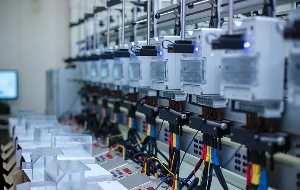
Ghana’s latest electricity tariff increase has sparked a familiar question: if the cedi is strengthening and fuel prices at the pump are coming down, why do light bills keep going up? The answer lies in how the power sector actually works, what the new tariff decision is designed to pay for, and who we have decided should not be left behind.
Below is a plain‑language walkthrough of the key issues behind the 9.86% average increase in electricity tariffs effective January 1, 2026, as captured in the Public Utilities Regulatory Commission’s (PURC) 2025–2030 Major Tariff Review Decision.
1. This is a 5‑year “investment” tariff, not just a quarterly adjustment The first thing to understand is that this is not one of the usual quarterly reviews that mostly track short‑term changes in inflation, exchange rate and fuel prices.
It is a major Multi‑Year Tariff Review that sets the framework for 2026–2030 and, by law, must cover both capital expenditure (CAPEX) and operating expenditure (OPEX) for the utilities.
PURC explicitly notes that the “regulated asset base” of utilities such as GRIDCo, ECG, NEDCo and VRA has been evaluated for the 2026–2030 period, and the new tariffs are meant to allow them to meet their asset investment requirements over the next five years.
In simple terms, this review is about giving the power companies enough predictable revenue to invest in new lines, substations, meters, IT systems and maintenance so that the lights will actually stay on over the medium term, not just this quarter.
Those investments do not disappear just because the cedi has had a good run for a few months; they are long‑term, lumpy costs that must be planned and recovered over several years.
2. More thermal, less hydro – and that mix is expensive
A second, often misunderstood, factor is the changing generation mix. Ghana’s cheapest bulk power historically comes from hydro (Akosombo, Kpong, Bui), while thermal plants that burn gas or other fuels are more expensive per kilowatt‑hour.
Current planning figures show that Ghana is relying far more on thermal generation (71%) than before, with thermal expected to provide the bulk of total generation over the control period while the share of hydro declines(28%).
Many of the thermal plants are owned by Independent Power Producers (IPPs) under medium‑ to long‑term contracts that include “take‑or‑pay” and capacity‑charge clauses.
That means the system operator must pay these IPPs for available capacity whether or not every unit of energy is eventually used.
In practice, this pushes the system to dispatch more thermal power to avoid paying for unused contracted capacity, and that raises the average cost of electricity even when the cedi is relatively stable and headline inflation is down.
So while macroeconomic indicators are improving, the structural reality is that we are leaning on a more expensive generation portfolio, and those contractual obligations have to be honoured.
3. Pump prices are not the same as the power sector’s fuel cost
Many people reasonably link “fuel prices are down” with “electricity should be cheaper,” but the two fuel stories are not identical.
For transport, we look at the price you pay at the fuel station for petrol or diesel.
For power generation, the key variable is the weighted average cost of gas, often called WACoG.
WACoG is a composite number that blends:
● Gas from different upstream sources (domestic fields, imports from Nigeria through the West African Gas Pipeline, LNG, etc.)
● The transport and processing costs involved in delivering that gas to the power plants
● The contractual obligations (minimum offtake volumes, penalties, currency of payment) attached to each gas source
Because of this, the gas used in power plants can remain relatively expensive – or at least not fall as fast as pump prices – depending on the mix of contracts, the volumes actually taken and the foreign‑exchange terms.
PURC’s framework allows quarterly reviews to reflect changes in WACoG, exchange rate and inflation, but in a major 5‑year review the Commission must also take a conservative, forward‑looking view of gas costs to avoid under‑recoveries that would throw the sector into debt again.
So a lower price at the pump does not automatically translate into a proportionate drop in the cost of generating electricity.
4. Clearing legacy debts and keeping utilities financially alive
Another uncomfortable but necessary reality is the accumulated debt within the power sector.
Over years of tariff under‑recoveries, delayed payments and political interventions, arrears have built up between government, utilities and IPPs.
The new tariff path is also about “taking the pain early” so that utilities can:
● Meet their payment obligations to IPPs and gas suppliers
● Service loans taken for network and generation investments
● Regain enough financial health to maintain infrastructure and invest in upgrades
PURC stresses that tariffs have to maintain the real value of revenues across the control period, otherwise inflation will quietly eat away the utilities’ ability to operate even when the nominal tariff looks unchanged.
If the sector cannot pay its bills, we risk a return to curtailments, load shedding and stalled investment – outcomes that are far more damaging to households and businesses than a single‑digit percentage increase on tariffs.
5. Mini‑grids, island communities and the price of solidarity
Perhaps the least understood – but morally important – driver of the new tariffs is Ghana’s push for universal electricity access, particularly for remote island and lake communities.
Dozens of communities on the Volta Lake and along remote stretches of river were, until recently, completely off‑grid.
Reaching them with conventional grid extension is technically difficult and extremely expensive, so Ghana has deployed solar‑battery mini‑grids in places like:
● Atigagorme and Wayokope on the Volta Lake
● Aflivie, Azizakpe and Alorkpem in the Ada area
● Other small island and lakeside communities that are only accessible by boat
These mini‑grids have transformed life in these communities – enabling lighting, refrigeration, water pumping, small businesses and better social services – but their cost per customer is much higher than in dense urban areas.
Here is the critical policy choice:
PURC has decided that customers in these island communities should pay the same national uniform tariffs (lifeline and residential) as other Ghanaians, rather than a much higher “true cost” tariff that would price them out of basic electricity use.
To make that work, the extra cost of supplying these communities has been added to the revenue requirement of the Volta River Authority (VRA) and spread across the general tariff paid by everyone else.
In other words, part of the increase in your bill is effectively a cross‑subsidy – a small contribution each of us makes so that families living on remote islands can also enjoy reliable power for their homes, schools and clinics.
You can think of it as a solidarity surcharge built into the national tariff structure: invisible on the bill, but very visible in the lives of people who used to live in the dark.
6. Why tariffs rise even when the headline economy improves Putting all these elements together explains why electricity tariffs can rise even when some macro indicators look positive:
● A 5‑year tariff review must lock in enough revenue for long‑term investment, not just reflect this quarter’s good news.
● The generation mix has shifted toward more expensive thermal power, with contractual obligations that limit how far costs can fall in the short term.
● The fuel cost that matters for power (the weighted average cost of gas) follows its own dynamics and contracts, and does not track pump prices one‑for‑one.
● The sector has legacy debts and ongoing obligations that must be honoured to keep the system solvent and the lights on.
● As a country, we have chosen to extend modern electricity to remote island communities at the same tariff everyone else pays, which means the extra cost is quietly shared across all consumers.
These are not always comfortable truths, but they are necessary for an honest conversation about electricity pricing.
Citizens are right to demand transparency and efficiency from utilities and government, and regulators must continually push for value for money.
At the same time, understanding the real cost drivers helps us see that not every tariff increase is a sign of hidden agendas; sometimes, it is the price of maintaining a reliable system, honouring signed contracts and making sure no part of the country is permanently left in the dark
Opinions of Thursday, 5 February 2026
Columnist: Michael Berko
Why your light bills are up amidst strong cedi and lower petrol prices
 Ghana's latest electricity tariff increase has sparked a familiar question








Opinions