The 1992 Constitution has served as Ghana’s supreme law for over three decades, laying the foundation for the country’s Fourth Republic. It establishes the governance framework, delineates powers and limitations of state institutions, guarantees fundamental rights and freedoms, and upholds the rule of law to prevent abuse of power. It has served as a catalyst for peaceful transitions of power, making Ghana a beacon of democracy in Africa.
However, as Ghana and the global landscape evolve rapidly, amendments to the Constitution have become essential. These changes address contemporary challenges while preserving democratic gains and national values. In view of this, after his inauguration on January 7, 2025, His Excellency President John Dramani Mahama appointed an eight-member Constitutional Review Committee comprising distinguished Ghanaians on January 19, 2025.
The 2025 Constitutional Review Committee, chaired by Professor H. Kwasi Prempeh, reviewed previous initiatives, such as the 2010 Constitution Review Commission (CRC-I), the Constitution Review Implementation Committee (CRIC), and the 2023-24 Constitution Review Consultative Committee (CRCC). The Committee also identified implementation gaps, engaged the public for input, and made recommendations to enhance democratic governance and create a more inclusive framework.
The report presented to the President on December 22, 2025, titled “Transforming Ghana: From Electoral Democracy to Developmental Democracy”, covers a raft of proposals on the three arms of government and other institutions. This article focuses on the Committee’s proposals regarding the rights of Persons with Disabilities (PWDs), a cursory comparison with Article 29 of the 1992 Constitution and a look at the PWD Act, 2006 (ACT 715).
PWDs in Ghana
According to the Ghana Statistical Service’s 2021 Population and Housing Census, approximately 8% of Ghana’s population, or over 2 million Ghanaians live with disabilities. Many PWDs across the country face persistent challenges such as poverty, discrimination, and inaccessible services, among others.
In her statement on International Day of Persons with Disabilities (IDPD), Hon Ewurabena Aubynn, Member of Parliament for Ablekuma North Constituency stated at Parliament that “Disability prevalence is higher among females, more pronounced in rural communities, and visual impairment remains the most common disability type. Among the elderly, 38 per cent live with at least one disability, increasing vulnerability to exclusion.”
In 2011, the World Health Organization and World Bank noted that disability is an inescapable human condition and at one point or another, almost every person is exposed to, and may experience temporary or permanent disability. In 2024, during the maiden Disability Conversation hosted by the John Agyekum Kufuor Foundation, President Kufuor shared similar sentiments, noting that disability can affect anyone, regardless of wealth or education, and shared his own experience of living with limited mobility.
He said “Look at me today, if someone had said ten years ago that I would be in a wheelchair today, perhaps, he would have been disputed and damned as a false prophet, but this prophecy is the reality today, I’m in a wheelchair and I cannot walk, and I need about four, five six hefty men to be pushing me around like a baby.”
Therefore, advocating and protecting PWD rights means protecting our future selves, our loved ones, friends and millions of Ghanaians.
Reforms for PWD Rights (Section 6.17 of CRC Report):
1. Rename “Rights of Disabled Persons” to “Rights of Persons with Disabilities,” aligning with modern human rights standards and the social model in the UN Convention on the Rights of Persons with Disabilities (UNCRPD), a human rights treaty that ensures people with disabilities have the same rights as everyone.
2. Remove the qualifier “as far as practicable” from accessibility requirements in Article 29(6), imposing an enforceable obligation on the State for accessibility in public spaces, services, and infrastructure (with only narrowly justified exceptions).
3. Mandate pre-construction disability access audits, compliance certification before use, and periodic reviews for all publicly funded or public-private partnership projects. No public funds should be disbursed for non-compliant infrastructure.
4. Require mechanisms for complaints, inspections, sanctions, and compensation for violations.
5. Oblige Parliament to harmonise the Persons with Disabilities Act (2006) and related laws with the revised Article 29, ensuring adequate and predictable funding for enforcement.
Comparison with the 1992 Constitution’s Article 29
The current Article 29 (“Rights of Disabled Persons”) below provides foundational protections However, it uses outdated language and there has been weak enforcement.
1. Disabled persons have the right to live with their families or with foster parents and to participate in social, creative or recreational activities.
2. A disabled person shall, not be subjected to differential treatment in respect of his residence other than that required by his condition or by the improvement which he may derive from the treatment.
3. If the stay of a disabled person in a specialized establishment is indispensable, the environment and living conditions there shall be as close as possible to those of the normal life of a person of his age.
4. Disabled persons shall be protected against all exploitation, all regulations and all treatment of a discriminatory, abusive or de grading nature.
5.In any judicial proceedings which a disabled person is a party the legal procedure applied shall take his physical and mental condition into account
6. As far as practicable, every place to which the public has access shall have appropriate facilities for disabled persons.
7. Special incentives shall be given to disabled persons engaged in business and also to business organizations that employ disabled persons in significant numbers.
8. Parliament shall enact such laws as are necessary. to ensure the enforcement of the provisions of this article.
PWD Act, 2006 (ACT 715)
A legal framework designed to protect the rights of individuals with disabilities, ensuring non-discrimination, equality, and accessibility in employment, education, and public spaces, the PWD Act, 2006, Act 715 has been described as one of Ghana’s most important social justice instruments.
However, since receiving Presidential assent on 9th August 2006, some 20 years ago, Lecturer at the Faculty of Management Studies, University of Professional Studies, Accra (UPSA), Dr. James Kwabena Bomfeh in 2025 noted that: “Public infrastructure remains hostile to access.
Employment discrimination endures. And the voices of persons with disabilities are too often muffled in policy corridors. Stereotypical abuses to the personhood of PWDs abound.” Dr. Bomfeh added that “Legislation without implementation is like symbolism without substance. Disability inclusion is not charity. It is justice.”
He, like many advocates for PWDs in Ghana have called on more efforts to strengthen the enforcement of PWDs right. In recent times President Mahama in a bid to push for stronger legal reforms towards rights of PWDs has hinted that a new Persons with Disabilities (Amendment) Act and accompanying Legislative Instrument (L.I.) will be introduced to modernise the existing 2006 Act (Act 715).
Towards Inclusion
UN Secretary-General António Guterres’s message on the IDPD on December 3, 2025, said: “Let us commit to working side-by-side with persons with disabilities in all their diversity, as equal partners. When inclusion is real, everyone benefits. Together, we can build more accessible, resilient societies where all of us thrive.”
These recommendations by the committee and efforts by the represent a major step toward true inclusion. True inclusion means that everyone, including PWDs and the marginalised in our societies have a genuine sense of belonging and contributes to creating equitable, sustainable communities for shared well-being.
The emphasis on audits, person-first language, funding, and sanctions proposed by the committee could transform public infrastructure and services, further reducing barriers that confront many PWDs and better align Ghana with the UNCRPD.
President Mahama’s Free Tertiary Education for PWDs is commendable for advancing access to education for PWDs which positions Ghana on track with the United Nations Sustainable Development Goal 4 (SDG 4), a universal call for quality education for all.
It is important for other groups and associations to join the umbrella of the Ghana Federation of Disability Organisations (GFD) to amplify the voice of PWDs across the country.
We must also have a comprehensive set of reforms aimed at modernising disability rights framework, incorporating views of PWDs on Community development activities, and financial regulations aimed at promoting greater inclusion in our society.
Opinions of Monday, 2 February 2026
Columnist: Lawson Kwame Lugu
Transforming Ghana: Strengthening right of Persons with Disabilities
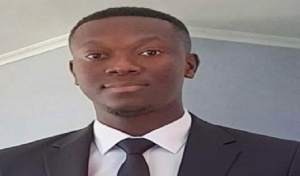 Lawson Kwame Lugu




Entertainment