The emergence of Dr. Mahamudu Bawumia as flagbearer of the New Patriotic Party (NPP) has reopened an unavoidable national conversation about power, responsibility, and political memory ahead of the 2028 general elections. This will not be a conventional contest defined only by campaign messages or manifesto promises.
It is shaping up as a referendum on how Ghanaians interpret both past governance failures and present performance. Unlike a candidate emerging from opposition with no governing baggage, Dr. Bawumia enters the race firmly tied to the record of the previous NPP administration under Nana Akufo-Addo.
His central challenge is not intellectual capacity or communication skills, but proximity to power and the decisions taken during eight turbulent years of economic management.
One reality continues to dominate public perception: Bawumia was not a bystander in economic governance. As Chair of the Economic Management Team, he was at the heart of macroeconomic coordination, publicly defended policy choices, and remained in office as debt levels expanded, inflation surged, reserves dwindled, and the cedi sharply depreciated.
In an era of increased political awareness, efforts to separate him from those outcomes struggle to convince many voters.
In politics, authority without visible corrective action is rarely interpreted
as innocence; it is more often read as shared responsibility.
This perception deepens when the discussion turns to the tenure of Ken Ofori-Atta.
For many Ghanaians, that period has come to symbolize fiscal indiscipline, aggressive borrowing despite warning signs, resistance to parliamentary scrutiny, and a delayed turn to the IMF only after the economy entered crisis. The politically damaging question for Bawumia is no longer whether
that era failed; public opinion has largely settled that.
The harder question is why decisive action did not come sooner. If he had influence, why was it not exercised more forcefully? And if he lacked influence, why should voters trust him with ultimate executive authority? This dilemma
sits at the heart of his 2028 challenge.
Beyond economics, the National Cathedral project remains a powerful symbol in Ghana’s political memory. Though championed personally by President Akufo-Addo, elections are not judged by intentions but by optics and timing. For citizens dealing with high living costs, job insecurity, IMF conditionalities, and reduced purchasing power, the project came to represent elite detachment and misplaced priorities.
Senior leaders, including the Vice President, did not publicly challenge it. In politics, silence is rarely neutral, and even non-authorship can become association.
These combined factors have weakened Bawumia’s earlier image as an “outsider within” government. Once perceived as inside power yet separate from its excesses, his role in economic coordination, policy defense, and silence on key controversies has firmly placed him within the establishment.
In a political culture where prolonged incumbency often triggers voter fatigue,
this is a serious liability.
Yet the 2028 election will not be decided by the NPP’s past alone. The National Democratic Congress (NDC), now in government, also faces its own risks if it assumes that voter dissatisfaction with the previous administration automatically translates into long-term electoral security.
Ghanaians are watching closely, and patience is limited.
Two issues in particular threaten to undermine the NDC’s standing if not addressed decisively.
The first is galamsey. Illegal mining continues to devastate water bodies, farmlands, and ecosystems, and public frustration is growing. Campaign promises and task forces will mean little if rivers remain polluted and enforcement appears selective or inconsistent. Galamsey has become a test of political will, not rhetoric, and failure here could rapidly erode public trust.
The second is the cost of living. While the cedi has strengthened and government has announced reductions in import duties and other relief measures, many ordinary Ghanaians see little change in the prices of food, transport, and basic household items. When macroeconomic indicators improve but market prices remain stubbornly high, a credibility gap emerges.
For voters, economic recovery is not measured in press statements but at the market stall and fuel pump. If this disconnect persists, the NDC risks being seen as technically successful but socially unresponsive — a perception that has undone many governments before.
Ultimately, the 2028 election will be contested on two fronts at once. Dr. Bawumia will be judged on what he knew, what he allowed, and what he failed to stop during his years in power.
The NDC, on the other hand, will be judged on whether it can translate macroeconomic stabilization into visible relief and demonstrate real resolve on environmental destruction.
Neither side enters the contest from a position of comfort.
Ghanaian voters are no longer choosing between slogans. They are weighing accountability against performance, memory against experience, and promises against lived reality.
For Dr. Bawumia, the task is to prove moral courage, independence, and humility born of hard lessons.
For the NDC, the task is to show that change in government leads to change in outcomes. Failure on either side will be costly.
Opinions of Monday, 2 February 2026
Columnist: Isaac Yaw Asiedu
Ghana’s 2028 Election: When political memory meets present performance
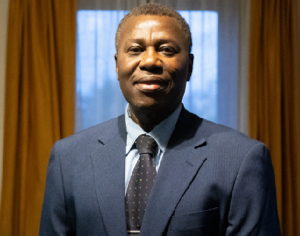 Isaac Yaw Asiedu authored this article