Ghanaians went to the polls on December 7, 2024, and delivered a decisive verdict in the presidential elections, ushering H.E. John Dramani Mahama back into office as President of the Republic. His return marked the beginning of a bold national reset one anchored in restoring confidence in public institutions, strengthening service delivery, and retooling governance systems to better respond to the needs of citizens.
A Strategic Realignment for a Reset Agenda
Barely days after assuming office, President Mahama, acting under Section 11(3) of the Civil Service Act, 1993 (P.N.D.C.L. 327), effected a strategic re-organisation of government through Executive Instrument 1(E.I 1) of the Civil Service Instrument, 2025, dated January 9, 2025. This reform culminated in the realignment of the Ministry of Local Government, Decentralisation and Rural Development into the Ministry of Local Government, Chieftaincy and Religious Affairs.
The realignment significantly broadened the Ministry’s scope, incorporating chieftaincy, religious affairs, and sanitation into its mandate. This move reflected government’s recognition that effective local governance must be anchored not only in administrative efficiency but also in cultural leadership, social cohesion, and environmental sustainability.
One year on, it is fitting to take stock of how the Ministry has navigated this transition and delivered on the President’s Resetting Agenda.
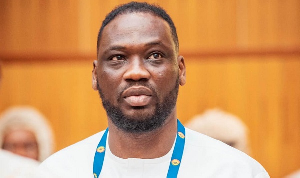
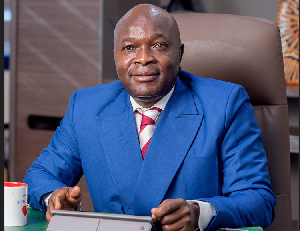
According to the sector minister, Hon. Ahmed Ibrahim (MP), the first year was largely one of transition and consolidation. “Our focus,” he noted, “was on harmonising systems and sustaining service delivery by strengthening sector planning, coordination, monitoring, and evaluation.”
Strengthening Decentralisation and Local Governance
Despite the transitional nature of the year, the Ministry recorded notable milestones, particularly in decentralisation and local governance the traditional core of its mandate.
All thirty per cent (30%) Government Appointees to the 261 Metropolitan, Municipal and District Assemblies (MMDAs) nationwide were successfully appointed and sworn in, completing the composition of the Assemblies and enabling them to function effectively.
In addition, the Ministry coordinated the appointment and confirmation of all 261 Metropolitan, Municipal and District Chief Executives (MMDCEs). To equip these leaders for the demanding task ahead, an intensive orientation and training programme was organised from June 17 to 21, 2025, at the Institute of Local Government Studies (ILGS), Accra. The programme strengthened participants’ understanding of the local government system, leadership, public administration, ethics, and performance management.
To ensure fiscal discipline and efficient service delivery at the local level, the Ministry issued comprehensive guidelines on the utilisation of the District Assemblies Common Fund (DACF) and facilitated the transfer of funds to MMDAs across the country.
Driving Performance and Accountability
A key highlight of the year was the successful conduct of the 9th Cycle of the District Assemblies Performance Assessment Tool (DPAT) for all 261 MMDAs under the DACF–Responsiveness Factor Grant (DACF-RFG). This performance-based financing mechanism, implemented with support from Development Partners, incentivises improved planning, prudent financial management, and results-oriented service delivery at the MMDA level.
Promoting Sustainable Urban and Rural Development
In the area of urban and rural development, the Ministry deepened collaboration with international partners to promote inclusive and resilient cities. On June 4, 2025, in partnership with the World Bank, the Ministry launched the Ghana Sustainable Cities Strategy at Alisa Hotel, North Ridge, Accra.
The strategy provides a national framework to guide Ghana’s urban development towards resilience, inclusiveness, and environmental sustainability. Its launch was complemented by the validation of the National Slum Upgrading and Prevention Strategy—an important step towards addressing the housing and infrastructure challenges confronting vulnerable urban communities.
As part of preparations towards the implementation of Government’s flagship 24-Hour Economy Policy, the Ministry finalised designs for the 24-Hour Economy Modern Markets to be adopted and constructed by MMDAs. Consultants were engaged, and an orientation workshop was organised for Regional Ministers and MMDCEs to ensure a shared understanding of the policy objectives and implementation approach.
Empowering Communities and Creating Opportunities
Through the Department of Community Development, the Ministry intensified grassroots empowerment initiatives. Sixty-six (66) community educators were trained at the Rural Development College, Kwaso, while 395 mass education campaigns were conducted nationwide.
The Department also supported 193 community groups with Village Savings and Loan Association (VSLA) training, enhancing financial inclusion at the community level. Women, in particular, benefited from skills training programmes in home management, entrepreneurship, fashion, and catering—interventions that contribute directly to household incomes and local economic development.
In the area of social protection and job creation, the Ministry, under the Ghana Productive Safety Net Project Phase Two (GPSNP 2), enrolled 62,262 beneficiaries, 69 per cent of whom were women. Through the Social Investment Fund and the Integrated Rural Development Project Phase Two, a total of 867 jobs were created, alongside the continued rollout of socio-economic infrastructure projects nationwide.
Advancing Environmental Health and Sanitation
Environmental Health and Sanitation emerged as a defining pillar of the realigned Ministry. Under the Clean-Up Ghana Agenda, the Ministry successfully relaunched the National Sanitation Day, reviving citizen participation in environmental cleanliness.
The relaunch was followed by sustained monthly clean-up exercises across the country. Significantly, environmental health and sanitation have been integrated as key performance indicators for all MMDCEs, underscoring government’s commitment to cleaner, healthier communities.
Deepening Chieftaincy and Religious Affairs
Recognising the central role of traditional and religious institutions in national development and social harmony, the Ministry undertook targeted capacity-building interventions within the chieftaincy sector.
A training workshop was organised for the newly inaugurated Teshie and Zuarungu Traditional Councils in Greater Accra and Upper East Region to strengthen institutional leadership and deepen understanding of the legal and administrative framework governing Traditional Councils.
The Ministry also collaborated with the Judicial Training Institute (JTI) to organise a two-day refresher course for Counsels of the National and Regional Houses of Chiefs, enhancing their appreciation of the constitutional and legal regime underpinning chieftaincy in Ghana.
The achievements recorded over the year were not without challenges but notwithstanding these constraints, the Ministry remained focused on delivering results.
Looking ahead to 2026, Hon. Ahmed Ibrahim (MP) has outlined clear priorities: deepening decentralisation reforms; expanding sanitation and environmental sustainability initiatives; strengthening accountability and intergovernmental collaboration; enhancing community development and social protection programmes; promoting Ghana’s traditional values; and fostering peaceful religious coexistence.
One year into the reset, the Ministry of Local Government, Chieftaincy and Religious Affairs has laid a solid foundation for responsive, inclusive, and accountable local governance. While challenges remain, the progress affirms a clear commitment to reform, service delivery, and people-centered development. Indeed, the journey of resetting local governance has begun and Ghana has come a long way.
Opinions of Monday, 12 January 2026
Columnist: Prince Boakye-Boateng
One Year of Resetting Local Governance: A journey of consolidation, reform and renewed hope
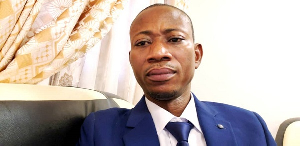 Prince Boakye-Boateng, Head of Public Relations, Ministry of Local Government