In recent weeks, West Africa has witnessed yet more disruptions to its democratic order. Coups in Benin and Guinea-Bissau have reinforced the region’s growing reputation as a “coup belt,” joining countries like Niger, Mali, and Burkina Faso, where military juntas have taken power in recent years.
The drivers of these coups are complex. Popular frustration with incumbent governments, economic stagnation, inequality, and rising insecurity have created fertile ground for military intervention. External actors have exploited these grievances, often using sophisticated disinformation campaigns. In the Sahel, for instance, AI-generated propaganda with links to Russia has sought to erode democratic values and promote authoritarian alternatives, exacerbating public disillusionment with democratic institutions.
Yet the promise of military rule rarely translates into solutions. In the Sahel, coups have coincided with a surge in terrorism, escalating violence, and continued economic stagnation. Mali exemplifies this trend: a nationwide fuel shortage, caused by the government’s failure to manage Islamist insurgents blocking access to the capital, has effectively paralyzed the country. Rather than improving security or fostering development, the Malian military junta—and its external backers—have committed serious human rights abuses against civilians. Opposition has been suppressed, democratic institutions weakened, and elections postponed indefinitely, removing checks on the abuse of power.
Guinea-Bissau: Coup Amid Electoral Tensions
On November 26, a group of senior military officers overthrew Guinea-Bissau’s President Umaro Embaló, just days before election results were scheduled to be announced. The timing has fueled speculation that Embaló may have coordinated the coup to prevent the announcement of an opposition victory. The president has since sought refuge in Senegal.
The military’s actions destroyed the election results, leaving the country’s Electoral Commission unable to certify the vote. ECOWAS, the regional economic and political bloc, did not intervene militarily but condemned the “unconstitutional change of government” and threatened sanctions if the junta does not restore constitutional order. This response underscores a growing determination among regional bodies and democratic leaders to push back against military overreach, which they view as a threat to stability and development.
Benin: A Short-Lived Coup Attempt
In Benin, a coup attempt on December 7 briefly shook the nation. Soldiers appeared on national television claiming that President Patrice Talon had been deposed. A large faction of the military, however, remained loyal to the government, confronting the coup plotters, many of whom have now been arrested. The general population also resisted the attempt, reflecting Benin’s strong multiparty democratic tradition dating back to the 1990s.
The coup attempt was quickly neutralized, in part due to ECOWAS intervention. The regional body deployed military forces in support of President Talon and conducted targeted airstrikes against forces linked to the coup. This decisive action demonstrates ECOWAS’s increasingly hardline approach toward actors attempting to undermine democracy.
The attempt also highlighted the influence of foreign-backed propaganda. Russia-aligned networks that support military juntas in the Sahel actively promoted the coup, seeking to shape public opinion in favor of the plotters. Influencers such as Kemi Seba, based in Niger and linked to Russia’s Wagner Group, publicly celebrated the event as a “liberation day.” Benin has since issued an arrest warrant for Seba, and reports suggest that some Nigerien military leaders may have had prior knowledge of, or even supported, the coup attempt.
The Road Ahead
West Africa’s democratic institutions face significant challenges. Military takeovers continue to exploit public dissatisfaction, while foreign-backed propaganda and geopolitical interests further destabilize the region. Yet, the swift responses in Benin and the growing condemnation of Guinea-Bissau’s coup indicate that regional bodies like ECOWAS are asserting their authority more decisively.
As coups continue to test the resilience of West African democracy, the battle between authoritarian impulses and democratic norms is likely to define the region’s political landscape for years to come. The stakes are high: the future of governance, stability, and development in West Africa hinges on whether democratic institutions can withstand the pressures of disillusionment, external influence, and internal power struggles.
Opinions of Saturday, 10 January 2026
Columnist: Abiodun Alero
West Africa’s Democratic Struggle: Coups, propaganda, and regional resilience
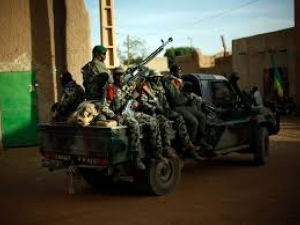 A file photo of military officers on a patrol in one of the West African countries