In the early hours of January 3, 2026, the President of the United States, Donald Trump, announced a “successful” military incursion into Venezuela and the capture of its sitting president, Nicolás Maduro. The announcement summarily provoked widespread condemnation and legal scrutiny, with international law experts and other well-meaning members of the global community pointing to the alleged violation of the prohibition on the use of force under Article 2(4) of the United Nations Charter and Venezuela’s sovereignty. As with many such episodes, the preliminary legal discourse has focused exclusively on the legality of the use of force.
What has received far less attention, however, is the environmental dimension of the invasion. Armed conflict is not only a humanitarian and political crisis; it is also an environmental one. Military operations can cause severe and long-lasting damage to ecosystems, water sources, land, and civilian livelihoods. In a country like Venezuela, with environmentally sensitive regions and extensive extractive infrastructure, the environmental consequences of an invasion may be significant and enduring.
This article shifts the focus to that overlooked dimension by examining the potential environmental damage arising from the invasion and its relevance under the International Criminal Court’s Office of the Prosecutor’s emerging policy on addressing environmental harm through the Rome Statute.
It explores how such damage could be assessed and characterised as an international crime, and whether the ICC could, in law and in practice, exercise jurisdiction over United States officials or nationals if investigations reveal serious environmental destruction.
In doing so, the article asks whether this moment could mark a meaningful test of international criminal accountability for environmental harm in armed conflict.
Overview of the Office of the Prosecutor’s Policy on Addressing Environmental Damage
On December 4, 2025, the Office of the Prosecutor of the International Criminal Court published its formal Policy on Addressing Environmental Damage through the Rome Statute, outlining how the Office will use its mandate and powers to investigate and prosecute crimes within the Court’s jurisdiction that are committed by means of, or that result in, environmental damage. This policy builds on earlier steps, including the Prosecutor’s formal announcement to issue a policy on environmental crimes in April 2023 and the public consultations in late 2024.
Objectives of the Policy
The Policy aims to strengthen accountability for environmental harm by affirming that environmental damage can constitute or result from crimes under the Rome Statute. It commits the Office to the rigorous investigation and prosecution of such crimes, supports national efforts to investigate and prosecute environmental crimes, and promotes cooperation with civil society and non-State actors. Furthermore, it seeks to engage corporate actors on their legal responsibilities and to contribute to the development of international jurisprudence and best practices on prosecuting environmental crimes.
Environmental Crime and Damage under the Policy Environmental Crimes
The Policy defines “Environmental Crimes” as crimes under Article 5 of the Rome Statute that are committed by means of, or that result in, environmental damage. These crimes include genocide, crimes against humanity, war crimes, and the crime of aggression. The Policy does not introduce a new crime under international law and is distinct from proposals to amend the Rome Statute to criminalise ecocide. Instead, it adopts a functional definition under existing Rome Statute crimes for prosecutorial purposes.
Environmental Damage
Under the Policy, “Environmental Damage” refers to any serious anthropogenic destruction, deterioration, or loss of the natural environment, including impacts on the health and well-being of a particular ecosystem.
For the purposes of this Policy, “natural environment” refers to the Earth system as a whole, including the biosphere, cryosphere, lithosphere, hydrosphere, and atmosphere. This definition draws upon scientific recognition of the interactions that make up the environment.
Acts Covered by the Policy
The Policy identifies three categories of acts that fall within its scope.
A. Crimes that Explicitly Reference Environmental Damage
Article 8(2)(b)(iv) (War Crime): Intentionally launching an attack in the knowledge that such attack will cause incidental loss of life or injury to civilians, damage to civilian objects, or widespread, long-term, and severe damage to the natural environment, which would be clearly excessive in relation to the concrete and direct overall military advantage anticipated.
B. Rome Statute Crimes Committed by Means of Environmental Damage
Rome Statute crimes committed by means of environmental damage, making the damage a material fact relevant to establishing an element of the crime and/or the actus reus of a mode of liability.
Examples include:
I. Poisoning water sources to kill or displace civilians; II. Destroying crops, land, or ecosystems to: a. bring about genocide (Article 6); b. force displacement or starvation; c. persecute identifiable groups; d. inflict conditions of life calculated to destroy a population.
C. Crimes that Result in Environmental Damage
Rome Statute crimes resulting in environmental damage, making the damage contextual information relevant to assessing gravity, impact, selection and prioritisation, sentencing, and reparations.
Examples include:
I. Aggression that causes widespread ecological destruction; II. Crimes against humanity leading to long-term ecosystem collapse; III. War crimes involving pillage or destruction of property that devastate natural resources.
Rome Statute Crimes That Could Arise from the United States’ Invasion of Venezuela under the Policy
1. Article 8 bis — The Crime of Aggression
The Rome Statute crime of aggression is the primary crime implicated by the United States’ invasion of Venezuela. Article 8 bis(1) criminalizes the planning, preparation, initiation, or execution of an act of aggression which, by its character, gravity, and scale, constitutes a manifest violation of the UN Charter. An invasion and capture of a sitting head of state, absent Security Council authorization or a valid claim of self-defense, would prima facie fall within the acts enumerated in Article 8 bis(2); invasion, military occupation and bombardment.
Under the OTP Policy, environmental damage assumes particular relevance at this stage. The Office has made it clear that intentional or foreseeable environmental destruction may aggravate the gravity of an act of aggression, especially where such damage is widespread, severe, or potentially irreversible. The Office considers “intentionally destroying or damaging the environment in another State to be a use of force that is particularly grave, because the natural environment should not be instrumentalised in the conduct of international relations”.
2. Article 8 — War Crimes Involving Environmental Damage
If the invasion is accompanied by hostilities on Venezuelan territory, war crimes under Article 8 may arise irrespective of the legality of the use of force. Of particular relevance is Article 8(2)(b)(iv), which expressly criminalises launching attacks with knowledge that they will cause widespread, long-term, and severe damage to the natural environment that is clearly excessive in relation to anticipated military advantage.
Beyond this provision, other war crimes may be implicated where military operations:
I.destroy agricultural land, water installations, or energy infrastructure not justified by military necessity; II.target civilian objects intricately linked to environmental survival; III.involve pillage or illegal exploitation of natural resources; or IV.deprive civilians of objects indispensable to their survival, such as food and water.
In each case, environmental damage need not be the primary military objective; it is enough that the conflict “played a substantial part in the perpetrator’s ability to commit the crime, the decision to commit it, the purpose of the commission, or the manner in which the crime was committed”.
3. Article 7 — Crimes Against Humanity
Environmental harm may also support charges of crimes against humanity where it forms part of a widespread or systematic attack directed against a civilian population. If environmental destruction arising from the invasion results in large-scale displacement, deprivation of livelihoods, or the intentional targeting of communities dependent on land and natural resources, such conduct may amount to deportation, persecution, or other inhumane acts of similar character under Article 7.
Crucially, crimes against humanity do not require a nexus to armed conflict. Environmental damage arising during occupation or stabilisation operations may therefore remain legally relevant even after active hostilities subside.
4. Article 6 — Genocide (May Require a Higher Threshold)
The OTP Policy recognizes that as long as the requisite intent to destroy, in whole or in part, a national, ethnic, racial or religious group is present, genocide can be committed by means of environmental damage or through acts that cause environmental damage. However, the policy requires that any act under Article 6 must be accompanied by this specific intent. In the Darfur situation, the Office has alleged that Omar Al-Bashir committed genocide under Article 6(c) by deliberately inflicting conditions of life intended to bring about the physical destruction of targeted groups, including through the destruction of food sources, water infrastructure, shelter, crops, and livestock, as well as the unlawful seizure of their land.
If the invasion was occasioned with this specific intent, the crime of genocide through environmental damage can be established. In the absence of such intent, genocide is unlikely to be a primary charge in this instance.
Legal Status of the OTP Policy
It is significant to note that the Policy on Addressing Environmental Damage through the Rome Statute does not give rise to legal rights. Instead, it guides the Office of the Prosecutor in identifying, investigating, and prosecuting cases where environmental damage is linked to Rome Statute crimes.
Prosecuting Rome Statute Crimes Arising from the United States’ Invasion of Venezuela
A. The United States and the International Criminal Court
The United States is not a State Party to the Rome Statute and has historically rejected the ICC’s jurisdiction over its nationals. As a result, the ICC’s jurisdiction over U.S. officials or nationals is not automatic. Also, the ICC exercises jurisdiction only over natural persons, not States or corporations. Thus, the ICC has a narrow window in such situations to exercise jurisdiction over the nationals of states, such as the US, that have not joined the Rome Statute.
B. Article 12 of the Rome Statute — Preconditions to the Exercise of Jurisdiction
Preconditions to the exercise of Jurisdictions
The Court may exercise jurisdiction only if: I. The crime occurs on the territory of a state party (territorial principle) II. If the accused is a national of a state party (national principle) In this instance, the alleged multiple Rome Statute crime(s) occurred in Venezuela, which is a State Party to the Rome Statute. Thus; * U.S. officials or military personnel could, in law, be subject to ICC prosecution if their conduct on Venezuelan territory satisfies the elements of a Rome Statute crime. Given that the ICC has jurisdiction only over natural persons and not states or corporations, the ICC can prosecute US nationals or officials, such as senior political leaders, Military commanders, under Articles 25 (individual liability) and 28 (command responsibility) If environmental damage results from military operations ordered, authorized, or knowingly tolerated by U.S. officials, the OTP Policy would then be fully applicable as a framework for evaluating environmental damage arising from that conduct.
It could help
* tracing chains of command, * attribute knowledge and foreseeability, and * frame environmental harm as part of the crime’s actus reus or contextual gravity.
C. Article 13 of the Rome Statute — Exercise of the Court’s Jurisdiction
The Court may exercise its jurisdiction with respect to the crimes referred to in article 5 in accordance with the provisions of this Statute if:
I. A State Party refers the matter to the Prosecutor. In this instance, Venezuela may refer to the Prosecutor a situation in which one or more crimes within the jurisdiction of the Court appear to have been committed, requesting the Prosecutor to investigate the situation for the purpose of determining whether one or more specific persons should be charged with the commission of such crimes.
II. The Security Council acting under Chapter VII of the Charter of the United Nations refers the matter to the Prosecutor. The constraint, however, is that the United States is a member of the five Permanent Members (P5), granting it veto power.
Thus, the U.S. can block any substantive resolution, preventing binding action against itself or its interests, even if most other Council members agree. III.The Prosecutor has initiated an investigation in respect of such a crime in accordance with article 15. Explained in detail below.
Duties of the Office of the Prosecutor under the Circumstances
Under Article 15 of the Rome Statute, the Prosecutor is empowered to initiate investigations proprio motu on the basis of information concerning crimes within the Court’s jurisdiction, following a preliminary assessment of seriousness and subject to authorisation by the Pre-Trial Chamber, which must be satisfied that a reasonable basis to proceed exists and that the case appears to fall within the Court’s jurisdiction. A refusal does not preclude subsequent requests grounded in new facts or evidence.
At the preliminary examination stage, the Prosecutor is required to consider whether environmental damage forms part of the material elements of the war crime, contributes to the contextual threshold of crimes against humanity, or bears on the gravity of the conduct for the purposes of admissibility and case selection under Article 53.
If an investigation is opened, the Prosecutor must assess whether environmental destruction was foreseeable, knowingly tolerated, or instrumentalised in the commission of the alleged crimes, and whether responsibility can be attributed to individual perpetrators, including senior political or military leaders, in accordance with Articles 25 and 28 of the Statute
A Special Constraint: Jurisdiction over the Crime of Aggression
While the invasion prima facie implicates the crime of aggression under Article 8 bis of the Rome Statute, the Court’s jurisdiction over aggression is effectively foreclosed. Under Articles 15 bis and 15 ter of the Rome Statute, the ICC may not exercise jurisdiction over the crime of aggression committed by nationals of, or on the territory of, a non-State Party in the absence of a referral by the Security Council. Given the United States’ non-party status and veto power, the prosecution for aggression may, as a matter of law, be unavailable.
Crucially, this jurisdictional restraint does not extend to other Rome Statute crimes. The jurisdictional regimes governing war crimes, crimes against humanity, and genocide operate independently of the amendments on aggression. Because the alleged conduct occurred on the territory of Venezuela, a State Party to the Rome Statute, the Court may, exercise territorial jurisdiction over these crimes pursuant to Article 12(2)(a), even where the accused are nationals of a non-State Party.
Accordingly, while U.S. officials appear insulated from ICC prosecution for the crime of aggression, they are not shielded from investigation or prosecution for war crimes or crimes against humanity allegedly committed on Venezuelan territory. Where environmental damage forms part of the actus reus of such crimes, contributes to their contextual elements, or accelerates their gravity, the Office of the Prosecutor is empowered to investigate and assess that harm under the Policy.
Conclusion
The United States’ invasion of Venezuela, widely regarded as constituting a breach of Article 2(4) of the United Nations Charter, which prohibits the threat or use of force against the territorial integrity or political independence of any State, presents one of the earliest and most consequential tests of the ICC Office of the Prosecutor’s Policy on Addressing Environmental Damage Through the Rome Statute.
In this sense, Venezuela may represent the first meaningful test of the Policy’s practical force. The manner in which the court responds, where it is able to exercise jurisdiction, will signal whether the ICC Office of the Prosecutor’s emerging environmental accountability framework marks a substantive evolution in international criminal justice or remains largely aspirational.
Opinions of Monday, 5 January 2026
Columnist: Joshua Wiafe Frimpong
Beyond Sovereignty: The US invasion of Venezuela and ICC environmental accountability
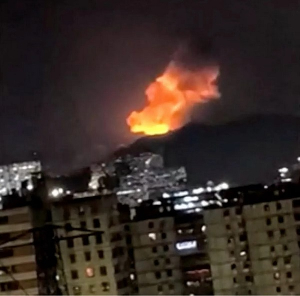 A scene from Venezuela during the US attack