Dear critical reader, as we enter the new year 2026, the question we ought to ponder over is: Can social media accountability worldwide make the digital world safer?
It's rather unfortunate that the internet's promise of global connectivity has been hijacked by a tsunami of hate, trolling, and radicalisation.
From the Rohingya genocide in Myanmar to the Charleston church shooter inspired by online white supremacist ideology, the causal link between online hate speech and real-world violence is irrefutable.
Yet, tech giants persist in prioritising profits over people, hiding behind a misinterpretation of "free speech" while vulnerable communities bear the brunt.
To worsen matters, the urgency is now amplified by AI: bad actors now wield tools that supercharge hate speech, deepfakes, and manipulation.
As John Stuart Mill said, "That the only purpose for which power can be rightfully exercised over any member of a civilised community, against his will, is to prevent harm to others. His own good, either physical or moral, is not a sufficient warrant."
Applying this "harm principle" to the digital sphere means limiting speech that incites harm to others.
By mandating public social media handles and empowering intelligence services to trawl online posts, we can dismantle the anonymity that emboldens abusers.
This isn't about stifling dissent; it's about creating a digital ecosystem where accountability of all platform actors is the norm.
Consider the externalities: Facebook's algorithmic amplification of hate speech in Myanmar; Twitter's failure to curb ISIS recruitment before it became Musk's X. These platforms' opacity enables abusers, perpetuating a cycle of harm.
In my beloved Motherland Ghana, the proliferation of vitriolic discourse by those commenting on published opinion pieces on online platforms like Ghanaweb.com and the unbridled invective propagated by certain popular public commentators, such as Kevin Taylor, underscores the pressing need for responsible digital citizenship.
The African concept of "ubuntu" – interconnected humanity – demands we prioritise protection of the vulnerable.
As Nelson Mandela said, the biggest threats to our world are:
- Fear of the other
- Ignorance
- Indifference
Let's counter these with accountability, empathy, and action. If people know they can't hide behind monikers to spread hate and that online hate speech will impact their employment prospects negatively and get their visa applications turned down, that's sufficient deterrence.
It's time to rethink the social contract. Governments, tech companies, and civil society must collaborate to establish enforceable standards for online accountability.
Social media companies should internalise the costs of hosting hate speech. Let's empower intelligence services to use online data responsibly, protecting the vulnerable and holding perpetrators accountable.
The digital world can be made safer. But it requires us to demand better – from Big Tech, from leaders, and from ourselves. The price of online hate should be real. Lives depend on it.
#EndOnlineHate #DigitalAccountability #ProtectTheVulnerable #GhanaOnline #AfricaLeads #Ubuntu
Opinions of Tuesday, 30 December 2025
Columnist: Kofi Thompson
Can social media accountability make the digital world safer?
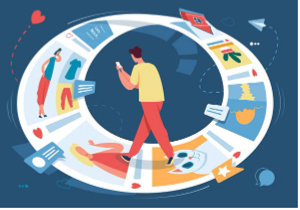 The writer says govt must collaborate with tech giants to end online hate speech