On 7 December 2025, the Nigerian Air Force provided immediate air support to the Armed Forces of Benin to counter an attempted coup, alongside the deployment of Nigerian ground troops. Notably, this intervention occurred prior to the formal mobilization of ECOWAS, underscoring Nigeria’s role as the de facto regional security provider.
As West Africa’s hegemonic power, Nigeria possesses the region’s most advanced military capabilities and remains its largest economy, enabling it to act swiftly and decisively in moments of regional crisis.
Nigeria’s leadership role in regional security is not unprecedented. When piracy escalated into a major threat in the Gulf of Guinea, Nigeria took the initiative by upgrading its naval capabilities and developing an integrated maritime security architecture.
This response not only curtailed piracy within Nigerian waters but also set a template for regional maritime security cooperation, subsequently emulated across the Gulf of Guinea. More broadly, most military interventions in West Africa have either been led or heavily supported by Nigeria, with its footprint particularly conspicuous in interventions in Sierra Leone and Liberia.
Against this backdrop, the expectation that external actors, particularly the United States should resolve Nigeria’s security challenges appears misplaced.
The historical record of Western-backed military interventions in addressing terrorism and insurgency in the Sahel and wider West African region offers little cause for optimism. The cases of Burkina Faso, Mali, and Niger illustrate the limitations and, in some instances, failures of the Western security model in producing sustainable stability.
Nevertheless, the United States has sought to reassert its influence within regional power dynamics, partly by capitalizing on Nigeria’s apparent inability to decisively address its domestic security challenges.
For years, Nigeria has appeared paralyzed in confronting its own homegrown insecurities, including jihadist insurgency and banditry. The underlying explanation is not primarily a lack of capacity, but rather a deficit of political leadership, political will, and political capital or, more precisely, the dynamics of the political economy of insecurity.
Nigerian political elites have repeatedly demonstrated a lack of sincerity and resolve in addressing insecurity in a comprehensive and sustained manner.
There is little evidence to suggest that persistent insecurity does not, in fact, serve elite political interests. Insecurity has become a mobilizing tool in electoral campaigns, while escalating military expenditures are more easily justified in its presence. Under such conditions, insecurity risks becoming not merely a governance failure, but a reproduced political resource, undermining both domestic stability and Nigeria’s capacity to credibly lead regional security governance.
Moreover, it would amount to strategic naïveté, indeed, living in a fool’s paradise to assume that the United States would seek to resolve Nigeria’s or West Africa’s security challenges without extracting tangible strategic or material returns. Great powers rarely intervene altruistically, and U.S. foreign policy has consistently been driven by clearly defined national interests rather than normative commitments alone.
Even in the context of Ukraine, often portrayed as the frontline of the so-called “free world”, U.S. engagement has been accompanied by negotiations over access to strategic resources, including rare earth minerals, underscoring the transactional logic that underpins American security commitments.
If such calculations are central in a geopolitical theatre involving European allies, it is reasonable to expect that similar, if not more extractive, dynamics would shape U.S. engagement in Africa, where historical patterns of external intervention have long reflected unequal power relations and instrumental valuation of local security crises.
Comparable dynamics are evident in the case of Venezuela, where U.S. counter-narcotics operations have been widely interpreted as serving broader geopolitical and energy-security objectives, particularly related to oil, rather than narrowly defined law-enforcement goals. These cases collectively reinforce the argument that external security interventions are seldom neutral; rather, they are embedded in resource politics, strategic positioning, and global power competition.
Consequently, any expectation that U.S. involvement would fundamentally resolve Nigeria’s insecurity without recalibrating regional power relations or advancing American strategic interests is analytically untenable.
The persistence of insecurity in Nigeria is therefore less a justification for external intervention than an indictment of domestic political incentives that allow insecurity to endure.
Without confronting the political economy of insecurity in which violence legitimizes budgets, sustains patronage networks, and structures electoral mobilization, external involvement risks reinforcing dependency rather than producing durable security outcomes.
At a more fundamental level, Nigeria is confronting a crisis of leadership. What the country urgently requires is decisive and visionary leadership, leadership capable of rising above narrow parochial, personal, and party interests to mobilize the energy, ingenuity, and demographic dynamism of Nigerians toward a future that would not only redefine Nigeria itself but also shape the trajectory of West Africa as a whole.
Nigeria’s size, strategic location, and historical role impose a burden of responsibility that cannot be deferred or outsourced.
Unfortunately, the current leadership and much of the political class more broadly appears ill-equipped and conceptually unprepared to grasp the magnitude of this responsibility.
Rather than demonstrating an appreciation of the structural demands imposed by Nigeria’s geopolitical position and historical moment, political elites remain preoccupied with celebrating the personal achievement of attaining high office.
Power is treated as an end in itself rather than as a means to advance the collective interests of the Nigerian state and society. In doing so, they have effectively ceded the leadership role of the “Giant of Africa” to external actors, while simultaneously issuing politically correct statements that legitimize foreign intervention as a substitute for responsibilities they themselves are capable of fulfilling.
This leadership deficit is mirrored and, in some respects, compounded at the regional level. While Nigeria’s failure is evident, ECOWAS as a regional institution is not blameless.
The organization’s ability to mobilize forces within days to support President Patrice Talon whose democratic credentials have been weakened by constitutional and electoral reforms that have narrowed political competition in Benin stands in stark contrast to its persistent hesitation to deploy comparable resolve in confronting terrorism and insurgency within member states.
This asymmetry suggests not merely a capacity problem, but an emerging elite-club logic within ECOWAS, whereby regime security is prioritized over citizen security.
Such a pattern lends credence to the argument that ECOWAS is increasingly functioning as a mechanism for enforcing competitive authoritarianism under the guise of democratic order, rather than as a genuinely transformative democratic security community.
The selective securitization of democracy, rapidly enforced in cases of unconstitutional changes of government, yet inconsistently applied to existential security threats such as terrorism undermines the organization’s normative credibility.
If regional security governance were genuinely people-centered, West African forces would be conducting sustained air and ground operations against terrorist networks destabilizing Nigeria and the wider Sahel, rather than relying on external powers whose strategic interests in the region are well documented and deeply contested.
Nigeria’s security crisis is therefore inseparable from ECOWAS’ institutional shortcomings: Nigeria’s failure is, in effect, ECOWAS’ failure.
Finally, ECOWAS should not be deceived into believing that elaborate protocols, action plans, and security frameworks, however well drafted, possess intrinsic value in the absence of credible enforcement capacity.
Normative documents without the power to bite and strike are worth little more than the paper on which they are written. Without political courage, coercive credibility, and consistent application, regional security governance risks becoming performative rather than effective, reinforcing instability rather than resolving it.
At this juncture, it is no longer sufficient for ECOWAS to merely articulate commitments to collective security; the organization must fundamentally upscale its capacity to act.
This requires sustained investment in collective military capabilities, including the development of standing, specially trained ECOWAS forces capable of rapid deployment and sustained operations across member states.
Such a force should not be ad hoc or politically selective, but institutionalized as the primary military instrument for regional stabilization, counterterrorism, and crisis response. ECOWAS must also invest in state-of-the-art military hardware and advanced skills training for its personnel. Without this, ECOWAS risks remaining normatively ambitious but operationally hollow.
Effective collective security in the contemporary threat environment characterized by asymmetric warfare, terrorism, cyber threats, and transnational criminal networks requires more than political declarations.
It demands modern airpower, intelligence-surveillance-and-reconnaissance (ISR) capabilities, interoperable command-and-control systems, and highly trained forces capable of joint and expeditionary operations. Without such investments, regional security frameworks remain aspirational rather than operational.
Equally important is the need for normative consistency.
The systematic undermining of democratic institutions by elected leaders through constitutional manipulation, electoral engineering, and repression of political opposition must attract sanctions comparable to those imposed in response to military coups.
Treating unconstitutional changes of government as the sole threat to democracy, while tolerating democratic erosion by civilian incumbents, reinforces selective enforcement and erodes ECOWAS’ normative legitimacy. If democracy is to be securitized, it must be protected not only from soldiers in uniform but also from elected elites who hollow out institutions from within.
At the national level, Nigeria’s political leadership must engage in serious self-reflection. The country must confront the hard truth of its failure to decisively address domestic insecurity. National renewal begins with political honesty.
Nigeria cannot credibly project regional leadership while remaining unable or unwilling to resolve jihadist insurgency, banditry, and organized violence within its own borders. Reasserting Nigeria’s regional power therefore requires first restoring internal security through decisive leadership, institutional reform, and sustained political will.
Even where external assistance becomes necessary, it must occur on Nigeria’s terms and under Nigerian leadership. External actors should complement, not substitute domestic and regional capacity. While calls to pivot toward alternative partners such as Russia or China are frequently justified by claims of Western failure, this interpretation is analytically misleading.
These interventions have failed only insofar as they are judged against African security objectives, not against the strategic calculations that have historically guided Western engagement. Substituting one external power for another does not constitute strategic autonomy.
The operational logic of external intervention remains fundamentally the same, regardless of origin, and none should be regarded as a lesser evil.
Africa and Nigeria in particular, must therefore reject the false choice between competing external patrons. What is required instead is the construction of credible indigenous military and security capacity capable of resolving internal threats and deterring external interference.
In this regard, I think even at current level, Nigeria is militarily capable of defeating the insurgency. External actors should be engaged cautiously, instrumentally, and from a position of strength, not dependency.
As Machiavelli long warned, reliance on mercenaries is perilous, for their loyalty cannot be assumed. External actors, however benevolent they may appear, must be understood in this light. Sustainable security cannot be outsourced. Until Nigeria and ECOWAS internalize this lesson and act accordingly, regional security governance will remain reactive and fragile rather than transformative.
Written by
Ishmael Kwabla Hlovor (PhD)
Department of Political Science Education
University of Education, Winneba
Opinions of Monday, 29 December 2025
Columnist: Ishmael Kwabla Hlovor
US military action, Nigeria’s internal failure and the dynamics of ECOWAS in West Africa
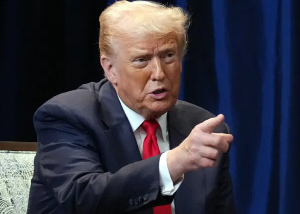 US President Donald Trump