Opinions of Thursday, 11 December 2025
Columnist: Lawrence Acheampong
Why a National Forensic Authority is now essential, lessons from the Zambia model

In every credible justice system, truth is not assumed. It is demonstrated through verifiable scientific evidence. Courts cannot rely on intuition, legislators cannot design effective criminal policy without accurate data, and the Executive cannot guarantee public safety without robust forensic systems capable of explaining how crimes are committed.
Yet in Ghana, the governance of forensic science remains fragmented, inconsistently regulated, and institutionally exposed.
As Parliament advances justice sector reforms, the Judiciary confronts complex evidentiary demands, and the Executive faces increasingly sophisticated criminal threats, a fundamental structural question remains unresolved: Who regulates forensic science in Ghana?
This question is not technical. It determines Ghana’s ability to deliver fair trials, secure convictions, protect rights, and maintain public trust.
Ghana’s Forensic Governance Gap: What Exists and What Is Missing
Ghana has capable forensic institutions including the Ghana Police Service Forensic Science Laboratory, teaching hospital clinical and pathology forensic departments, the Ghana Standards Authority in limited roles, digital forensic units across security agencies, and specialised academic and private laboratories.
However, these bodies operate under separate mandates without a unified statutory framework that governs the scientific standards they must meet, the accreditation they require, or the ethical safeguards they must uphold.
Forensic science disciplines such as DNA profiling, fingerprints, ballistics, toxicology, digital forensics, trace evidence, document examination, etc., are not classified as medical professions and therefore fall outside the mandate of the Medical and Dental Council.
Clinical forensics, as well as pathology, by contrast, is a branch of medicine and is already regulated under Ghana’s medical regulatory system. This distinction is central. Ghana needs a regulator for forensic science practice to uphold national standards and professional regulation.
Consequences of Fragmented Forensic Science Governance
The absence of a unified regulator exposes the justice system to predictable risks. Investigations may suffer contamination or inconsistent procedures because institutions apply different standards.
Expert testimony varies in reliability, creating opportunities for challenge in court and contributing to the collapse of serious cases on technical rather than factual grounds.
Chain of custody procedures differ across agencies, creating legal vulnerabilities that defence lawyers can exploit. Sensitive biometric and DNA data are managed without a national privacy framework, placing citizens at risk. Public confidence declines when outcomes appear inconsistent or scientifically questionable.
These challenges do not reflect a lack of commitment among Ghana’s forensic professionals. They arise from the absence of statutory standards, oversight, and coordination.
What Zambia Did and Why It Matters for Ghana
In 2020, Zambia enacted the National Forensic Act No. 2 of 2020 and established a National Forensic Science Regulator under the Ministry responsible for Home Affairs, equivalent to Ghana’s Ministry of the Interior. Zambia had faced similar fragmentation.
Forensic sciences operated without statutory governance while forensic pathology remained governed by medical law.
Zambia responded with four practical governance pillars that offer important lessons for Ghana: separating regulation from service delivery to prevent conflicts of interest, licensing and accrediting forensic providers under national standards, defining scientific, ethical, and privacy requirements across all forensic disciplines, and introducing strong penalties for tampering with evidence or misusing forensic information.
Importantly, Zambia did not disrupt existing institutions. The National Forensic Science and Biometrics Department, the Office of the State Forensic Pathologist, and other specialised bodies continue to perform forensic work.
The regulator governs standards, accreditation, ethics, and scientific validity, not daily operations. This strengthens credibility, protects scientific integrity, and provides a governance structure suitable for Ghana’s administrative and legal environment.
Why Ghana Needs a National Forensic Science Regulator, Now
1. Strengthening Judicial Outcomes
A regulator ensures that forensic evidence such as DNA, fingerprints, ballistics, toxicology, and digital forensics is produced under uniform national standards. This reduces evidentiary disputes and enhances the defensibility of convictions. Judges, prosecutors, defence lawyers, and investigators all benefit from a validated and consistent scientific framework.
2. Supporting National Security
Modern national security threats including cybercrime, terrorism, financial crime, narcotics trafficking, and human trafficking rely heavily on forensic science.
A regulator strengthens investigative capacity by improving scientific quality, supporting intelligence-led policing, and ensuring interoperability between forensic units. In an era of transnational crime, unregulated forensic science is a strategic liability.
3. Executive Oversight Through the Ministry of the Interior
The regulator should operate under the Ministry of the Interior, providing annual compliance and performance reports, aligning with national security and justice priorities, and maintaining technical independence from operational agencies. Parliament’s role is limited to passing the enabling legislation and receiving reports through the Minister. This retains democratic accountability without politicising scientific decisions.
4. Protecting Citizens’ Rights
Forensic science involves sensitive personal information including DNA profiles, biometric data, and digital traces. Without statutory safeguards, individuals may not be adequately protected from misuse or unauthorised access. A regulator enforces ethical standards, privacy protections, and avenues for redress. Regulation protects evidence, but more importantly, it protects people.
5. Improving Efficiency, Not Expanding Bureaucracy
A regulator is not an operational laboratory. It is a governance mechanism. By harmonising standards, reducing duplication, preventing costly evidentiary failures, clarifying institutional roles, and strengthening interagency collaboration, it makes existing institutions more effective and justice processes faster and more reliable.
An African Model Rooted in African Realities
Zambia’s reforms show that forensic science regulation can be designed, legislated, and implemented within African governance systems. Kenya, South Africa, Mauritius, and Botswana have taken similar steps. These developments signal a continental shift. African justice systems increasingly recognise that unregulated forensic science undermines justice, security, and rights. Ghana’s institutional strength and legal sophistication position it to adopt and adapt this model effectively.
Conclusion: Ghana’s Justice Reform Is Incomplete Without Forensic Science Regulation
Justice in the 21st century increasingly relies on scientific evidence. Ghana cannot modernise its Judiciary, strengthen national security, or improve investigative practice while forensic sciences remain unregulated. Establishing a National Forensic Science Regulator, anchored in the Ministry of the Interior, technically independent, and focused forensics, would close one of the most significant gaps in the country’s justice system.
Policy Actions Required
For Parliament:
Enact enabling legislation that establishes the National Forensic Science Regulator.
For the Executive
Champion the regulator as a national security and justice reform priority.
For the Judiciary:
Support uniform forensic standards that strengthen adjudication and uphold constitutional guarantees. Until Ghana creates a National Forensic Science Regulator, justice reform will remain well intentioned but structurally incomplete.
Written by:
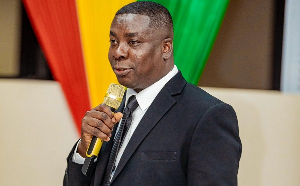
Chief Alhaji Osman Salifu Mimina, Forensic Intelligence Officer
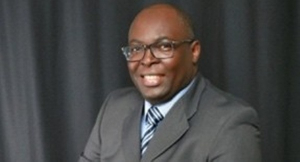
Dr. Adam Luchenga Mucheleng'anga, Forensic Pathologist, Zambia
Dr. Lawrence Kofi Acheampong, Forensic Clinician/Scientist