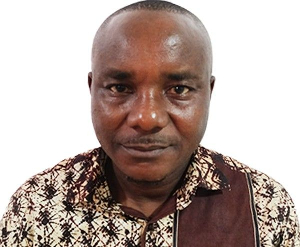
Ghana is approaching an important decision. With the Ministry of Defence awaiting a substantive minister, Parliament has urged urgency, noting that the pressures on the institution are too complex to be managed in an acting capacity.
The Defence and Interior Committee has been tasked to support the process, reflecting the seriousness of the moment.
Defence Beyond the Uniform
The Ministry of Defence is much more than military uniform and ceremony. It is a state institution that builds discipline, manages large-scale procurement, develops engineering capabilities, and maintains readiness even when national politics pause.
How Ghana uses its Defence Ministry in the coming years will influence infrastructure planning, industrial capacity, and national competence.
The next minister will help determine whether the Ghana Armed Forces continue operating as a world-respected institution with unique expertise, or whether they become a strategic pillar of national development.
That potential exists, and this appointment can unlock it.
The 24-Hour Economy connection
One idea sits at the centre of Ghana’s economic ambition: the 24-hour economy. If Ghana wants to build around continuous productivity, efficiency, and operational discipline, then the Defence Ministry is already a living example of that reality.
Military operations do not close at 5 p.m. Radar systems stay on. Aircraft maintenance continues after hours. Military hospitals never turn patients away because it is nighttime. Ghana’s Armed Forces live in the culture that the 24-hour agenda seeks to create.
A Defence Minister who understands this connection can help transfer that rhythm into the civilian economy, shaping logistics reforms, engineering projects, industrial training, and national efficiency. If the 24-hour economy is to move from concept to action, the Ministry of Defence can serve as a backbone.
AfCFTA and industrial readiness:
In the era of AfCFTA, defence is also an opportunity, not a cost centre. No country will lead continental trade without a strong logistics backbone. While treaties open borders on paper, real competitiveness depends on how quickly trucks move, how reliable supply chains are, and how efficiently contracts are executed.
The Ministry of Defence trains some of the most technically skilled young people in Ghana and manages some of the country’s largest engineering resources. With the right leadership, defence can support industrial readiness, secure trade corridors, and improve national logistics. This is where a new kind of Defence Minister can make a difference.
Why Amoabeng fits the profil
This leads to the question being discussed across business circles, civil society, and security analysts: Should President John Mahama consider Prince Kofi Amoabeng as Ghana’s next Minister of Defence?
Amoabeng’s leadership style is built on discipline, urgency, and systems thinking. UT may spark different opinions, but its rise remains one of the clearest demonstrations of how structure, accountability, and innovation can operate in Ghana outside of government. It trained a generation of leaders now active across the private sector.
His experience aligns with the attributes required to expand the role of the Ministry of Defence into a strategic engine for national productivity:
He understands supply chains not as theory, but as operational reality.
He has managed large-scale teams under time pressure.
He treats efficiency as a strategic advantage.
This conversation is not about replacing political experience with corporate experience. Rather, it is about recognising that national ambition can sometimes be strengthened by leaders drawn from diverse backgrounds. An appointment like this sends a message: the reset is intentional.
Respecting institutions
A reasonable question is often raised: What about Amoabeng’s ongoing court case? This matter deserves closure—clearly, transparently, and fully—not to create an opportunity for any one person, but because justice that remains unresolved over many years affects institutional confidence. Completing legal processes strengthens the legitimacy of outcomes and helps the nation move forward with clarity.
A decision about ambition:
Ultimately, this debate is bigger than a name. It is an invitation to expand how Ghana imagines leadership. Why must the Ministry of Defence automatically be reserved only for traditional political figures? Why not evaluate candidates who have built systems, managed risk, and operated under constant operational pressure?
If President Mahama intends for his second administration to feel different from his first, this is the kind of decision that signals national ambition through action. The choice is between a familiar path and a bold one—both legitimate, but with different signals for the future.
And so the question stands, respectfully and constructively: Should John Mahama consider someone like Prince Kofi Amoabeng for the Ministry of Defence?
Whatever the final decision, it will reflect how serious Ghana is about turning the word “reset” from aspiration into policy, and from policy into national productivity.
Opinions of Monday, 8 December 2025
Columnist: Shafiq Nurudeen
Why President John Mahama should consider PK Amoabeng: The bold choice for Defence
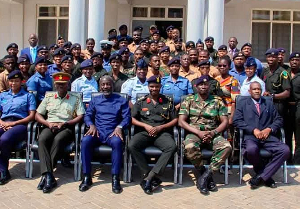 PK Amoabeng (seated, first row, third from left) with some soldiers