Opinions of Saturday, 23 May 2026
Columnist: Philip Kyeremanteng
When the environment reflects human mind: Why Accra’s flooding crisis requires human re-engineering

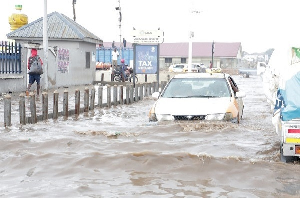
Accra’s annual flooding crisis is often discussed as an engineering problem, a sanitation problem, or a governance problem.
While all these dimensions are real, they do not fully explain why the same tragedy repeats itself year after year despite repeated conversations, public warnings, dredging exercises, and political promises.
The deeper issue is a human systems problem. In many ways, the physical environment of a society becomes a visible reflection of the invisible condition of its people. Broken systems are often the external manifestation of internal disorder.
This is where the concept of Human Re-Engineering becomes important. Human Re-Engineering is the understanding that sustainable transformation cannot occur only through external interventions while the internal condition of people remains unchanged.
A society cannot continuously produce disorder internally and expect order externally. Flooding is not caused by rain alone. Rain merely exposes the structural weaknesses that already exist beneath the surface.
When drains are choked with plastic waste, waterways are encroached upon, sanitation laws are ignored, and public infrastructure is neglected, the floodwaters simply reveal the collective behavioural patterns embedded within the society.
In many parts of Accra, drains become extensions of waste disposal systems rather than channels for stormwater management.
Illegal structures appear on waterways despite repeated warnings. Maintenance culture remains weak until disaster strikes. Public spaces are often treated as nobody’s responsibility.
These realities point beyond infrastructure into culture, civic consciousness, discipline, stewardship, and internal societal values.
The external environment mirrors the internal mindset. Where there is disorder within human behaviour, disorder eventually manifests within physical systems.
This does not remove the responsibility of government institutions. Urban planning failures, weak enforcement regimes, fragmented drainage systems, and inconsistent infrastructure investment have all contributed significantly to the flooding crisis.
However, governance alone cannot permanently solve a problem that is also rooted in public behaviour and national culture.
No drainage system can function effectively where waste management practices collapse. No engineering design can fully compensate for persistent human negligence. Sustainable environmental resilience requires both structural reconstruction and behavioural reconstruction.
The annual flooding problem in Accra therefore demands more than seasonal dredging and emergency responses.
It requires a national mindset transformation. Environmental stewardship must become part of civic identity rather than occasional public campaigns.
Citizens must begin to understand that how they treat drains, streets, rivers, and public infrastructure directly affects national resilience.
Schools, churches, mosques, media institutions, and community organisations all have a role to play in rebuilding environmental consciousness from the inside out.
Human Re-Engineering teaches that transformation begins internally before it manifests externally.
When people change, systems begin to change. When discipline becomes culture, maintenance becomes normal. When stewardship becomes collective consciousness, cities become cleaner, safer, and more resilient.
The future of Accra will not be determined only by concrete drains and flood barriers, but by the reconstruction of civic responsibility, public ethics, accountability, and environmental consciousness within the human mind itself.
Until the internal condition of society changes, the environment will continue reflecting that disorder back to the nation every rainy season.
Without unity, we can’t win power - Paul Afoko rallies NPP ahead of return bid