In recent years, Ghana has witnessed a growing wave of public prophecies surrounding almost every major national event election, disasters, economic shifts, and high-profile deaths.
What was once a sacred spiritual exercise has increasingly taken center stage in media spaces, trending on social platforms and competing for attention. While prophecy itself is biblical and remains a gift of God, its current public handling raises serious concerns about motive, wisdom, and spiritual responsibility.
More troubling is the frequency with which many of these dramatic declarations fail to pass. Each election season and national moment is followed by bold prophetic pronouncements, yet silence often follows when outcomes differ. Scripture reminds us clearly: “If what a prophet proclaims in the name of the Lord does not take place or come true, that is a message the Lord has not spoken. That prophet has spoken presumptuously, so do not be alarmed” (Deuteronomy 18:22,).
This was not meant to shame but to protect believers from spiritual confusion.
Sadly, a culture of prophetic vainglory appears to be emerging where relevance, visibility, and influence compete with reverence. Some prophetic spaces now resemble political campaign platforms rather than sacred altars.
The rush to be first, loudest, or most sensational has replaced sober spiritual discernment. It raises an important question: is the message about God’s heart, or about personal recognition?
This phenomenon thrives particularly within a vulnerable society where questioning spiritual authority is often seen as rebellion against God. Many believers have been conditioned to accept everything declared from a pulpit without examination, even when it contradicts reason or Scripture. Yet Christ Himself encouraged discernment: “You shall know the truth, and the truth shall set you free” (John 8:32).
Faith was never meant to cancel thinking. God Gave Us Faith and a Brain: Why We Must Use Both.
As the late T.B. Joshua once observed, believers must be inquisitive - testing what they hear in the light of God’s Word. Christianity does not demand blind acceptance; it calls for spiritual maturity. Sadly, Africa’s broader struggle with development mirrors this same reluctance to question authority, even when things appear clearly wrong.
To be clear, prophets - like all humans can make mistakes. The Bible is filled with imperfect vessels used by God. And just as soldiers rescue fallen comrades on a battlefield, the Christian response to genuine error should be restoration, not destruction (Galatians 6:1). But one must ask: would soldiers repeatedly rescue a colleague who deliberately runs into danger for attention? Wisdom must accompany grace.
Another growing concern is the direct entanglement of prophecy with partisan politics. Politics is inherently messy, driven by power struggles and human interests. Once spiritual gifts are dragged into that arena, they risk becoming tools of manipulation rather than channels of divine truth. Even if God reveals information, the critical issue is how and whether He instructed it to be publicly broadcast.
Scripture shows that not every revelation was announced publicly. Joseph interpreted Pharaoh’s dream privately. Nathan confronted David personally. Jesus Himself often told people not to publicize certain miracles. The wisdom of communication matters as much as revelation itself.
One wonders why many of Ghana’s most respected spiritual leaders - figures like Archbishop Duncan-Williams, Bishop Dag Heward-Mills, and Rev. Eastwood Anaba largely avoid sensational public prophecies tied to national politics. Their ministries emphasize teaching, discipleship, prayer, and character rather than dramatic predictions. Perhaps there is a lesson in that restraint.
It is also worth noting that spiritual insight is not unique to Christianity. Mystics, traditional spiritualists, and occult practitioners often claim access to supernatural knowledge, yet they rarely parade predictions across media houses. If others with supposed spiritual access practice restraint, why the current rush for public spectacle within Christian spaces?
Ultimately, the danger goes beyond embarrassment when prophecies fail. Each public failure chips away at faith, confuses young believers, and fuels mockery of Christianity. The Apostle Paul warned: “Do not despise prophecies but test all things; hold fast what is good” (1 Thessalonians 5:20–21). Testing is not rebellion; it is biblical obedience.
Ghana does not need fewer spiritual gifts; it needs greater spiritual maturity. Prophecy should draw people closer to God, not closer to drama. It should build faith, not fracture it. It should reflect humility, not competition.
As believers and as a nation, we must rediscover discernment - learning to honor God without surrendering our minds. The church grows strongest not when everything is accepted, but when truth is lovingly examined. The future of Ghana’s faith landscape depends not on louder prophecies, but on deeper wisdom.
Opinions of Monday, 2 February 2026
Columnist: Jonathan Awewomom
When Prophecy Becomes Performance: A call for discernment in Ghana’s spiritual space
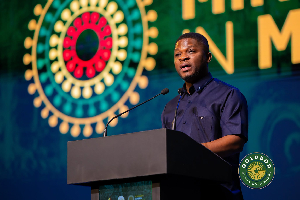
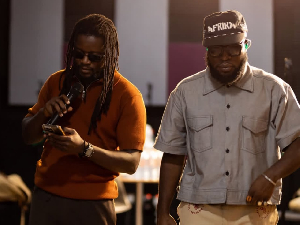
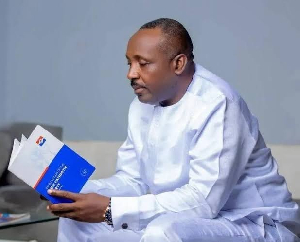
 (Left-Right): Bernard ElBernard, Prophet Nigel Gaisie, Prophet Telvin Sowah