Opinions of Sunday, 1 February 2026
Columnist: Isaac Yaw Asiedu
What Akufo-Addo’s conduct says about power and leadership mindset

During the presidency of Nana Addo Dankwa Akufo-Addo, certain ceremonial practices at public events drew widespread attention and debate. Two stood out clearly: the use of a specially designated ceremonial seat carried to events, and instances where the president himself instructed people to stand when he approached.
While some have attempted to dismiss these as mere protocol, many Ghanaians saw something deeper — a troubling signal about how power was perceived and exercised.
The Ceremonial Seat: More Than a Chair
In formal settings, leaders are often given special seating to reflect the dignity of their office. That in itself is not unusual. However, Ghana is a constitutional republic, not a monarchy.
At a time when citizens were being asked to endure economic hardship, job losses, and rising living costs, the repeated public display of a specially carried presidential seat sent the wrong message to many people. It appeared less about dignity and more about elevation — creating visible distance between leadership and the public.
The discomfort was not about the seat itself, but about what it symbolized in a struggling nation.
The Standing Instruction: When Respect Is Demanded
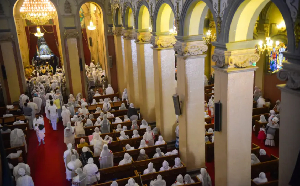
More troubling were moments captured at public events where the president personally instructed people to stand when he approached.
Standing for a leader can be a voluntary sign of respect. But when a president asks people to stand for him, the meaning changes. Respect becomes directed, not earned.
In a democracy, this matters. The president is a servant of the people, temporarily entrusted with authority. Asking citizens to physically demonstrate submission risks turning democratic leadership into a display of personal power.
Why This Is a Problem
First, it personalizes authority. Power begins to revolve around the individual rather than the office and the institutions of state.
Second, it reinforces excessive deference. Ghana already struggles with a culture where leaders are rarely questioned. Such practices deepen fear-based obedience instead of active citizenship.
Third, it widens the psychological gap between leaders and the people. Democracy thrives on closeness, humility, and trust — not elevation and ritual submission.
The Mindset Issue Behind the Symbols
This is ultimately a mindset problem.
Symbols shape behavior. A leader repeatedly placed above others — seated apart and approached with compulsory standing — may begin to see authority as personal entitlement. Citizens exposed to such symbolism may internalize silence and submission as normal.
Over time, this weakens accountability, discourages honest feedback, and undermines democratic culture.
Mindset shapes governance long before policy does.
Tradition Is Not an Excuse
Ghana respects tradition, but tradition must be interpreted within a republican framework. What belongs in a palace does not automatically belong in a democratic civic space.
In a republic, respect flows from integrity, empathy, and service — not from asking people to stand or arranging constant symbolic elevation.
Conclusion: Leadership Is Best Shown Through Humility
The debate over ceremonial seats and standing instructions is not about personality or legality. It is about the kind of leadership culture Ghana wants to normalize.
Strong leaders do not need citizens to stand up to affirm their authority. Their authority speaks through trust, competence, and humility.
In a democracy, the most powerful posture of leadership is not being elevated above others, but standing firmly with the people.