For years, the West African Senior School Certificate Examination, WASSCE, has been regarded as the gateway to higher education and professional careers in Ghana. Yet beneath the surface of impressive pass rates and celebrated school rankings lies a hidden crisis. Examination fraud has become an industry in itself, eroding the integrity of the nation’s education system and placing Ghana’s future at risk.
A Systematic Collapse in Plain Sight
An alarming 146,309 WASSCE candidates have been involved in examination malpractice over the past four years, according to official records. In 2024 alone, 62,046 students representing 13.6 percent of candidates were caught for cheating. The Bono, Bono East, and Ahafo regions alone accounted for 25,765 of these cases, followed by the Ashanti Region with 24,580, and the Central Region with 5,713. These figures reveal not isolated lapses but a nationwide web of corruption.
Anatomy of the Fraud Machine
Investigations uncover a well-oiled system of collusion. Special levies ranging from GH¢50 to GH¢150 per subject are demanded from students. In private schools, these fees are disguised as part of tuition, while in public schools teachers collect cash directly and channel it to assistant headmasters and trusted staff.
The funds serve a purpose: to buy the silence of invigilators, supervisors, and even security officers. Once sealed exam packs are opened, questions are secretly sent to subject teachers stationed in hideouts. These teachers solve the papers and upload answers to encrypted WhatsApp and Telegram groups.
Students inside the exam hall, armed with mobile phones, simply copy from these platforms. In other centres, papers are smuggled to hidden rooms and returned with answers physically delivered to candidates.
The brazenness extends further. Some answers are planted in washrooms, while others are hidden inside clothing, shoes, and even undergarments. Teachers trusted by the cartel are appointed as invigilators to guarantee that the system functions without interruption.
The Digital Expansion of Corruption
The rise of digital platforms has only expanded the scale. Leaked WASSCE questions are openly traded on Telegram channels with over 120,000 subscribers. Prices range from GH¢30 to GH¢100 per subject, with mobile money as the payment method. For those who can pay extra, premium “executive platforms” promise quicker and more reliable leaks.
In 2024, WAEC cancelled 4,108 subject results for possession of unauthorized materials and 483 results for mobile phone use during exams. Results from 319 schools were withheld pending investigations. Ahead of the 2025 exams, WAEC declared war on high tech malpractice, warning of fully organized schemes that threaten the credibility of the entire system.
Institutions Fighting Back
Some schools and education leaders have begun resisting. Pope John Senior High School in Koforidua announced a strict zero tolerance policy, warning that any student caught with a phone during exams would face severe sanctions. Dr. Clement Apaak, Deputy Education Minister, has also vowed that staff caught abetting malpractice would be dismissed and possibly prosecuted.
WAEC has intensified surveillance, punishing invigilators caught with illicit materials and working closely with security agencies. Yet despite these steps, entrenched collusion remains a formidable obstacle.
When Whistleblowers Pay the Price
Teachers who refuse to participate in the fraud are not celebrated as heroes. Instead they face threats and intimidation. Some have discovered warning notes in their pigeonholes, cars, and even at their homes. The message is clear: speak out or resist, and you endanger your safety. Such fear ensures silence and allows the fraud to thrive.
Where Does This Lead?
This is not merely an education problem; it is a national emergency. Students who cheat their way through WASSCE gain entry into universities, teacher training colleges, and nursing schools. With the same networks enabling malpractice in licensure exams, unqualified individuals graduate as doctors, nurses, teachers, and even lawyers. The consequences are already evident.
Patients risk being given the wrong medication by nurses who cheated their way through school. Classrooms are staffed with teachers who lack mastery of their subjects but excel at showing children how to copy answers. Incompetence, institutionalized through fraud, threatens the quality of public services on which every Ghanaian depends.
Conclusions: A Nation at Risk
The rot is systemic. Parents desperate for success, teachers eager for profit, supervisors seeking bribes, and students under pressure to pass are all entangled. High stakes cheating has become normalized. Ghana risks building an education system that rewards certificates instead of competence and corruption instead of character.
A Blueprint for Reform
The crisis can be reversed but only with bold measures.
Digital transformation is essential. Computer based testing, CCTV monitoring, and serialised question sets can reduce human interference and limit leaks.
Independent oversight must be introduced. Teachers and staff of a school should not invigilate their own candidates. Random deployment of external supervisors is critical.
Punishment must be swift and severe. Schools caught should face sanctions, teachers and officials should be dismissed and prosecuted, and names must be made public to serve as deterrents.
Whistleblowers must be protected. Teachers who resist malpractice should have safe reporting channels and be shielded from retaliation.
Public awareness campaigns are vital. Parents and students must be made to understand that a fake pass today could mean a fatal mistake in a hospital or a lifetime of mediocrity.
Integrity must be rewarded. Schools and educators who uphold exam credibility should be recognized and supported.
Final Thoughts
WASSCE fraud is not just an academic failing. It is a wound that cuts deep into Ghana’s social fabric, threatening the competence of future professionals and the safety of ordinary citizens. Every fake grade fuels a cycle of incompetence that endangers lives.
Unless Ghana confronts this crisis head-on, the nation risks producing a generation not just ill-educated, but dangerously unqualified.
GhanaWeb's latest documentary, Sex for Fish, that explores the plights of teenage girls in coastal communities, all in an attempt to survive, is out. Watch it below:
Opinions of Monday, 8 September 2025
Columnist: Mileba Godwin Kwame
WASSCE Fraud: Ghana's education system under siege
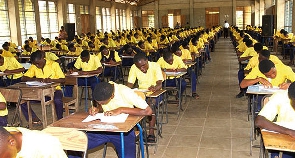 File photo of students writing WASSCE