Opinions of Saturday, 13 December 2025
Columnist: Dr. Isaac Asiedu
The story behind the Burkina Faso-Nigeria aircraft standoff

The story began with no fanfare. A Nigerian aircraft touched down in Burkina Faso, its landing routine enough that few paid attention. But the quiet moment did not last. What followed was an unexpected diplomatic storm that swept across West Africa, raising questions that reached far beyond airport protocols. When Burkina Faso refused to release the aircraft, the incident exposed political tensions simmering beneath the surface — tensions that pointed to something much deeper: Africa’s struggle to find coherent and credible leadership in an increasingly uncertain era.
Very quickly, the issue shifted from aviation procedures to a broader conversation about power, authority, and influence on the African continent. And across capitals from Accra to Abuja, Pretoria to Addis Ababa, people began asking the same question:
Who, exactly, is leading Africa today?
A Turning Point in the Sahel: The ECOWAS Dilemma
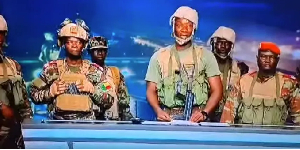
To understand why the standoff matters, the story must turn northward — toward the Sahel. Once governed under the familiar framework of ECOWAS, the region has undergone a dramatic transformation. Burkina Faso, Mali, and Niger, feeling alienated and pressured by sanctions, walked away from ECOWAS and banded together to form a new alliance: the Alliance of Sahel States (AES).
This was no minor reshuffling of paperwork. It was a declaration — a rejection of ECOWAS’ authority and a direct challenge to Nigeria’s long-standing leadership within the bloc.
Seen through this lens, Burkina Faso’s decision to hold onto the Nigerian aircraft takes on a new meaning. It reads almost like a statement of independence, a reminder that the political order in West Africa has shifted. The subtext is clear: “We no longer operate under the assumptions of the old West African hierarchy.” This realignment has left ECOWAS struggling to maintain relevance in a geopolitical environment where its influence was once taken for granted.
The Missing Voice: Where Is the African Union?
As the standoff intensified, many expected the African Union — the continent’s designated guardian of peace and stability — to step forward. Instead, the AU’s silence became one of the most striking elements of the entire episode. Days passed with no statement beyond the routine. No emergency meeting. No visible attempt to mediate or de-escalate.
The quiet was deafening.
Behind this silence lie deeper challenges that have long plagued the AU: political fractures among member states, heavy reliance on external funding for peace operations, and a lack of strong enforcement mechanisms. In crucial moments like this, these weaknesses surface sharply.
And so Africans are left to wonder:
Is the AU still capable of steering the continent in times of crisis? Or has it gradually become an institution present symbolically, yet absent when it matters most?
A Continent Experiencing Leadership Fragmentation
Africa once leaned on a constellation of regional giants — Nigeria, South Africa, Ethiopia, Kenya — each playing a strategic role in shaping continental diplomacy. But today, each of these nations is weighed down by its own internal battles.
Nigeria is wrestling with economic instability and security threats. South Africa is struggling under political and economic strain. Ethiopia is healing from a brutal conflict.
Kenya, active in diplomacy, still lacks the broad leverage needed to anchor the continent.
As these states face inward, new actors step in to fill the leadership vacuum. Russia deepens its reach through military cooperation in the Sahel. China continues to influence economic direction and infrastructure. Western powers rethink their involvement on the continent. Meanwhile, military governments in the Sahel assert themselves with a confidence unseen in decades. In this shifting landscape, Africa’s institutional leadership — especially the AU — increasingly appears sidelined.
A Warning Sign: What the Aircraft Standoff Reveals
What may have looked like a simple aviation dispute quickly revealed structural cracks in Africa’s political order. The aircraft crisis highlighted several dangers:
•Diplomacy is becoming militarized •Security cooperation is weakening •Governments are losing trust in one another •External actors are shaping local decisions •The threat of direct conflict between African states can no longer be ignored
Without strong, coordinated continental leadership, disputes like this do not remain isolated. They multiply.
Charting a Way Forward: What Must Happen Now
To prevent further fragmentation of Africa’s political system, several urgent steps must be taken:
1. The AU Must Step Forward Immediately
The Peace and Security Council cannot remain silent. A clear position and a mediation effort are needed before the crisis deepens.
2. ECOWAS Needs a New Playbook
Sanctions alone cannot hold the region together. The bloc must engage in serious negotiations with the Sahel governments that have left.
3. Nigeria Must Rebuild Its Diplomatic Role
As a historical heavyweight in West Africa, Nigeria must modernize its foreign policy and rebuild trust.
4. Africa Needs Clear Aviation and Security Protocols
The continent lacks uniform rules for military aircraft operations — a gap that must be closed urgently.
5. Stronger Institutions, Not Stronger Individuals
Africa must move away from leadership centered on personalities toward leadership grounded in credible institutions, shared norms, and collective responsibility.
A Defining Moment for Africa
The Burkina Faso–Nigeria aircraft incident is not merely a diplomatic disagreement; it is a mirror held up to the continent, revealing the fragility of its political systems and the urgency of reform. It is a reminder that without coordinated leadership, even small sparks can ignite broader instability.
This moment calls for clarity. For courage. For structural reinvention. Africa cannot afford to drift without direction. And unless the AU finds the will to lead, the continent risks moving into a future where its unity is fragile, its diplomacy unpredictable, and its security increasingly uncertain.
The question hangs in the air, unresolved:
If the AU remains silent and regional powers falter, who will guide Africa through the storms ahead?