In the winter of 1884–1885, representatives of Europe’s imperial powers gathered in Berlin. They sat around polished tables and carefully drawn maps to decide the fate of a continent.
What remains most telling about the Berlin Conference is not just what was discussed, but who was absent. Not a single African was in the room. This was a calculated and profound erasure. By excluding the people of the soil from the very act of defining their own territory, the imperial powers were free to treat Africa as an empty board for a geopolitical game.
They drew lines with rulers, slicing through ancient Ethnic Nations with a total and cold indifference to the civilizations that had existed for millennia.
This was not an accident of geography; it was a strategy of fragmentation. These lines were designed as "wounds" in the landscape.
By carving up the continent into arbitrary territories, the colonizers ensured that many Ethnic Nations were split between different colonial masters, different administrative systems, and different languages. A single people, sharing one ancestry and one tongue, suddenly found themselves "French," "British," or "German" subjects.
This fragmentation effectively broke the back of traditional resistance. If a people are divided by a border and forced to speak different administrative tongues, their ability to unite against the extractor is crippled.
The modern African state, therefore, carries a DNA of division—a structure designed to ensure that the new nations would remain internally fractured, making them easier to manage and their resources easier to extract.
The Catapulted Elite: A New Class of Power
As the colonial era matured, the occupiers recognized they needed a local intermediary to manage this fractured landscape. They intentionally cultivated a new class: the Western-educated intellectual. These individuals were "catapulted" into positions of authority that sat entirely outside our traditional lineage systems.
Unlike the Chieftaincy, which functioned on communal accountability and the sacred bond of the Stool, this new elite held power based purely on their induction into European systems of thought. In our traditional heritage, a leader who failed his people could be destooled; his authority was a custodial trust. By contrast, the new intellectual elite held their authority through a certificate or a colonial appointment.
This created a dangerous and enduring incentive structure. Because this new class derived its status, its language, and its lifestyle from the colonial framework, they became its most devoted guardians. They were not "Custodians" of the land in the ancestral sense; they were "Contractors of the State."
This explains why, at independence, the "handover" often felt more like a "merger." The new leaders were often prepared to divest the inheritance of the unborn—our gold, our timber, and our very sovereignty—simply to maintain the privileges and the "modern" administrative machine that sustained their status.
The Strategic Decapitation: Debarring the Chieftaincy
To ensure the survival of this new administrative class, a strategic "decapitation" of our indigenous society was necessary. This was achieved by debarring the Chieftaincy from active politics—a move later codified in our post-colonial constitutions.
While this is often presented as a way to "protect" the sanctity of the Stool, the colder reality is that it was a political purge.
By legally separating our traditional leaders from the formal political process, the state effectively removed the only figures who held actual "Traditional DNA" and long-term lineage-based accountability.
The Chief, who represents the continuity of the past, present, and future, was silenced to make room for the "Politician," who represents only the next four years. This left a vacuum in our national identity that was quickly filled by a foreign and divisive tool: the modern political party.
The Party as a "Collection Agency"
In a sovereign nation, a political party is usually built upon a cogent philosophy—Labor, Conservatism, or Liberalism. In the post-colonial African state, however, political parties often lack any such intellectual or heritage-based anchor.
Instead, they have become shadows of our ethnic groups.
Because the state engine remained a centralized, extractive machine, political parties did not form around ideas; they formed around identity to compete for control of the "collection agency."
The party became a vehicle for a specific faction to capture the state and its resources. This turns every election into a tribal census rather than a national debate. When leadership is not based on a heritage of service or a lineage of responsibility, but purely on partisan affiliation, "service to the people" disappears the moment the ballot is cast. The leader serves the party that gave them the platform, not the citizens who gave them the vote.
The Inherited Engine and the "General Orders"
When the Union Jack was lowered in 1957, we changed the faces in the high chairs, but we kept the "General Orders"—the literal colonial manual of governance. This manual was written for an occupier, yet it remains the blueprint for our Republic.
It dictates how a civil servant speaks, how a ministry functions, and how a citizen is treated.
We must ask ourselves: Can a tool designed for subjection ever be used for true liberation? If you use a hammer to build a house, you will eventually find that every problem looks like a nail. By keeping the colonial administrative engine, we preserved the "extractive" relationship between the state and the people.
The state continued to look at the citizen as a "subject" to be managed, taxed, and policed, rather than an "owner" to be served.
The Great Disconnect
The result is the "Great Disconnect" that haunts Ghana at nearly seventy years of age. We have a governance system that speaks the language of Westminster, while the heart of the Ghanaian people still beats to the rhythm of the village square.
We have achieved "Legal Independence," but we have yet to achieve "Structural Sovereignty." We are like a man wearing a suit tailored for someone else; it looks professional from a distance, but it prevents him from moving freely, and eventually, it begins to tear at the seams.
The Threshold of 70
As we approach our 70th anniversary, the "Re-Awakening" requires us to be honest about our DNA. We must recognize that the internal divisions, the ethnic tensions, and the lack of accountability in our parties are design features of the Berlin logic. They are not "African problems"; they are "Colonial solutions" that we have failed to dismantle.
If we are to move from being a "turnkey" state to a truly sovereign nation, we must have the courage to write a new "General Order"—one that finally reconciles our modern aspirations with our ancestral wisdom. We must move beyond the "Myth of Independence" to the reality of Ownership.
Opinions of Monday, 23 March 2026
Columnist: Ben Brako
The colonial DNA of the African state
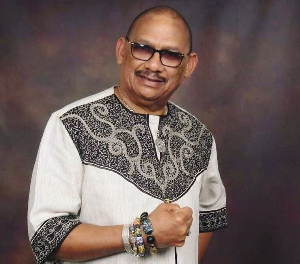 Ben Brako is a Ghanaian Highlife legend