The just-ended NDC constituency elections across the country were largely peaceful, except for a few isolated incidents of chaos in some constituencies, which often characterise internal party elections, albeit unacceptably.
To the victors, your victories present an opportunity to justify the confidence reposed in you by delegates. It is also a test of your ability to contribute meaningfully to the growth of the party and, ultimately, Ghana's development.
To the unsuccessful contestants, the outcome presents an equally important test of your loyalty to the political party you belong to, as your contribution to the party goes beyond occupying an executive position.
My write-up here is not about diagnosing the elections without any prognosis before the polls, or examining why Chairman Fuel's comeback did not see the light of day, the alleged interference of the Wa MCE in the election of the constituency secretary, or the blockbuster contest between a lawyer and a teacher for the position of Communication Officer, which left observers on edge and the airwaves buzzing with unending expectations.
Rather, my concern is about an incident that emerged from the contest and has continued to occupy my thoughts.
The 'bravery' of a party communicator
As someone whose couch-potato status had made radio my best companion until recently, when I hardly listened to political programmes, certain developments during the recent elections in the Wa Central Constituency made me reconsider that decision, at least for the time being.
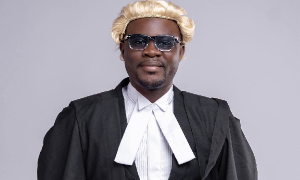
Of particular interest was the contest for Communication Officer between the former Deputy Communication Officer, Lawyer Kotia Nurideen Abubakar Bitis, and Umar Tieni, a teacher. Not because I had a preferred candidate, but because I was eager to know who would have his prayers answered and receive the mandate of the delegates amid the claims, campaign promises, allegations, accusations, counter-accusations and name-calling.
Then came a rather startling disclosure by the former Deputy Communication Officer, Lawyer Abubakar Kotia Bitis, during a live radio interview. It was a revelation I am still struggling to comprehend.
The declaration caught me off guard, prompting me to question whether I had heard correctly. I wondered whether I was indeed listening to the newly trained lawyer and aide to Dr Rashid Pelpuo, the Wa Central Member of Parliament, or someone else.
Speaking in an interview on Home Radio, a local radio station, in the run-up to the elections, Lawyer Bitis, in what appeared to be an attempt to recount the financial struggles he endured during his legal education and dispel claims that he had resorted to begging at the time, made a startling disclosure.
He reportedly told his host, Ibrahim Karky Tuorosung, that the Principal of Wa Technical Institute, Mr Saaka Adams, who also doubles as the Upper West Regional Director of Technical and Vocational Education and Training (TVET), had allowed him to continue receiving his salary as a teacher of the institute while he was away pursuing his law course in Accra.
According to his account, this arrangement continued even though he was on study leave without pay and was therefore not entitled to continue receiving the salary. He further indicated that the Principal eventually had to discontinue the arrangement after coming under pressure from certain quarters.
He made this disclosure on radio, where it could be heard by anyone tuning in.
No! Wait!!! Did I say anyone tuning in?
The interview was also being streamed online, meaning his comments were accessible beyond the immediate geographical reach of the radio station.
How does one make such a sensitive disclosure on a radio platform with an internet presence and assume that the conversation is limited to party members or constituents simply because it is conducted in a local dialect?
Perhaps it is high time journalists stopped overlooking sensitive comments made by politicians and other public figures in the name of "we are one people", especially when such statements have wider implications.
Of course, not everything said on radio must necessarily become a news story. However, when a public figure makes a potentially damaging admission in the public domain, it is difficult to justify ignoring it simply because of political affiliations or personal relationships.
Lawyer Bitis reportedly emphasised that the Principal, whom he described as an NPP sympathiser, had to inform some leading NDC members in the region before taking the decision, apparently to avoid being accused of stopping his salary because the two belonged to different political parties.
Following the disclosure, several questions arise.
What informed such a disclosure on the airwaves by a party communicator seeking to win the confidence of delegates?
Was there no other way he could have explained the financial difficulties he encountered during his legal education without making a statement that could raise questions about the propriety of the salary arrangement?
Was he fully conscious of the implications of what he was saying, particularly considering that the matter involved a public institution and its Principal?
Or was he so emboldened by his political position, his membership of the NDC's national communications team and his association with a prominent Member of Parliament that he assumed nothing could happen to him?
What example does such conduct set for young politicians within the party who may be looking up to him?
Does it not raise questions about the judgment expected of someone who has just qualified as a lawyer?
More importantly, does the disclosure not potentially expose Mr Saaka Adams to public scrutiny over an arrangement which, according to Bitis' own account, allowed him to continue receiving a salary while on study leave without pay?
Would those who hitherto held the Principal in high esteem and regarded him as a person of integrity continue to view him in the same light after such a revelation?
These are some of the questions lingering in the minds of many who may be struggling to make sense of the disclosure.
As a trained lawyer, many would have least expected such commentary from him, particularly given its potential implications for the Principal and even the reputation of the MP he works with.
I must, however, emphasise that the allegations surrounding the salary arrangement require independent verification, and the Principal deserves an opportunity to explain his side of the matter. What Lawyer Bitis reportedly said on radio should not, by itself, be treated as conclusive proof of wrongdoing by either party.
Furthermore, in his attempt to emphasise the financial difficulties he encountered during his legal education, Lawyer Bitis also made comments that could inadvertently draw his benefactor, Dr Rashid Pelpuo, into a political conversation.
Although he credited the MP and Alhaji Broni with paying his school fees, he indicated that he did not want to burden them with all his financial difficulties. He claimed there were times when he struggled to feed himself, to the extent of taking his tea without sugar.
As absurd as it may sound, student life can indeed be challenging, particularly for someone with family responsibilities navigating the hustle and bustle of Accra amid the high cost of living.
On the surface, there is nothing particularly wrong with recounting such personal experiences. However, politicians must appreciate that their public statements can easily be interpreted differently by political opponents.
The simple response from an opponent could be to question why an MP of Dr Pelpuo's standing, having paid his aide's tuition fees, could not also support his upkeep to ensure that he studied without such difficulties.
Whether such criticism would be fair is another matter. However, politicians must understand that public statements can be interpreted, twisted and exploited for political advantage.
To my dear reader, before finding fault with me for expressing these concerns, perhaps you should first ask yourself whether I have misrepresented what Lawyer Bitis reportedly said.
My intention is not to run him down but to draw attention to a matter that offers important lessons for all of us, particularly young and upcoming politicians.
I believe any reasonable person approaching this matter with an open mind, free from partisan considerations, would appreciate the concerns being raised.
For, I was sitting somewhere in my small corner, as our people would put it in our unique local vocabulary, when the learned lawyer made the comments that eventually rekindled my interest in writing after almost two years of inactivity.
Perhaps the incident also serves as a reminder that political allegiance, personal connections and proximity to power should never be mistaken for immunity from public scrutiny.
Nonetheless, may I cease this opportunity to congratulate Lawyer Bitis on his call to the Bar and wish him well in this new chapter of his life.
To our politicians
As politicians, it behoves you to guard your utterances carefully, as what you say today could return to haunt you tomorrow.
We must understand that there are conversations best suited for our usual meeting points in inner cities, neighbourhoods and roadside gathering places, popularly known in our local vocabulary as "camps" or "dangboglo", and others suitable for public consumption.
Let's learn to differentiate between the two.
In this digital age, our utterances are rarely erased. They can remain accessible for years and follow us throughout our public lives. The internet never forgets.
Our damning, bizarre and irresponsible statements can resurface at the least expected moment, sometimes with consequences we never anticipated.
As young politicians seeking to grow and bring positive change, humility must be our watchword. We must be willing to learn from our political forebears and identify experienced political figures who can offer guidance as we navigate the political landscape.
The dynamics of internal party elections are different from those of general elections and require an entirely different approach.
Knowing what to say, how to say it and when to say it, even before granting an interview, is one of the surest ways to avoid straying into areas capable of generating unnecessary controversy.
Political communication is not merely about winning arguments or attracting applause from party supporters. It is also about demonstrating sound judgment, responsibility and an appreciation of the wider implications of one's words.
To fellow journalists and political hosts
Tell yourself that the era in which handouts from politicians and acquaintances influence our willingness to ask probing questions must be over.
Let us learn from best practices.
Your failure to ask important follow-up questions does not bring out the best in your resource persons. It deprives listeners of the depth and clarity they expect from professionally hosted programmes and may eventually drive discerning audiences elsewhere.
Those occasional financial inducements from politicians must never compromise your professional independence or influence your willingness to ask difficult but necessary questions.
You must appreciate that your station provides politicians with valuable airtime to communicate their messages, propagate their party policies and reach their intended audiences. This should not be mistaken for a licence to surrender your professional responsibilities.
Your inability to challenge questionable assertions, seek clarification or ask the necessary follow-up questions gives the impression that you have not adequately researched the subject before inviting your resource persons onto your programme.
Our failure to research issues thoroughly before discussing them does a disservice to listeners. It also fails to encourage interviewees to prepare adequately, particularly when they know they are appearing before a host who is unlikely to challenge their assertions.
Oftentimes, many of our local political hosts appear to accord politicians excessive deference during interviews, either because of personal relationships or the favours they occasionally receive from them.
Consequently, they allow some politicians to mislead listeners, particularly elderly people and vulnerable members of society who may regard everything they hear on radio as sacrosanct and consume it hook, line and sinker.
Let your listeners feel and appreciate the professionalism in your work.
Journalistic ethics must be your driving force whenever you sit behind that microphone to host a programme, despite the myriad challenges confronting practitioners, particularly the persistent remuneration difficulties that remain a major concern for the Ghana Journalists Association.
Your output must speak for itself.
It does not matter whether the radio station belongs to a politician or has affiliations with a particular political interest. Your listeners must be able to hear, see and appreciate fairness, balance and accuracy in your delivery.
Let your programmes be informative, educational and entertaining. You never know where your impactful work could lead you in the future.
To those of us who continue to defy the odds and give our best despite the numerous challenges confronting the profession, more grease to your elbows.
Ultimately, political allegiance should never become a shield against accountability, just as professional relationships should never become an excuse for journalists to abandon their responsibilities.
Those who occupy public and political spaces must appreciate that their words carry consequences. In an age where virtually every public utterance can be recorded, circulated and preserved, caution, integrity and sound judgment must remain indispensable companions.
Opinions of Thursday, 5 November 2026
Columnist: Ilyaas Al-Hasan
When political loyalty overshadows accountability
 Lawyer Bitis