Introduction
In the heart of our beloved Ghana, the chieftaincy institution has long been the pillar upon which our society stands. Chiefs, the custodians of our rich cultural heritage, have historically been entrusted with the responsibility of preserving traditions, maintaining peace, and ensuring the well-being of their people.
However, the winds of time blow with new demands, and it is no longer enough for a chief to remain within the confines of his palace, shielded from the pressing
needs of his people. The role of the modern chief has changed significantly.
Chiefs have become agents of development through partnership with government, NGOs, Philanthropist and foreign donors. They can do this through research-based proposals, collaborating with state agencies in the implementation of government policies for the welfare and development of their people.
They may also do so by effective public engagement, advocacy, activism and community mobilization. Indeed, Chiefs largely use traditional festivals as the platform to champion the agenda of development.
They have a reason for the celebration of a festival beyond the historical
reason for the celebration of that festival. Yes, that has been the strategy of many successful traditional rulers. To execute this effectively, they make themselves relevant to every government.
My Observations on The Chieftaincy Institution in My Beloved Region
The Upper West Region is known as one of the relatively peaceful regions in Ghana with countless intellectuals and politicians. These accolades have however not saved the situation of endemic frustration and poverty among its people. A Region that is known for its bad roads and slow pace of infrastructural development.
The Region is not equally exonerated from the infamous illegal mining. Though such illegal mining activities have not assumed a large scale like we see in other region, we could get there if we fail to be proactive.
The Region is blessed with many distinguished traditional leaders. Unfortunately, many of these traditional rulers limit their roles, sitting in their palaces receiving visitors while looking on the many community challenges begging their attention.
Perhaps, they think that development is just the role of government and so they must wait for it from government. I, sadly, cannot see development projects initiated by these traditional leaders.
Less advocacy, policy discussions, research, activism and sensitization is done, leaving the space for politicians as the only key players in community development.
Of the numerous big traditional festivals, our traditional leaders in most cases become praise singers through their speeches. Festival grounds are the best
platforms for serious developmental discussions. An invitation to a festival is considered an invitation to donate.
Sad to say, some of these festivals are dying because of complains lack of
accountability by chiefs and their failure use proceeds from such festivals for physical investments.
I think we can still do better by looking at how we reposition our chiefs to become key players in the overall development of the people. We cannot continue to measure the success of a chief base on how long they reign but what developmental impact they have made.
A New Era of Leadership
Today, more than ever, the chieftaincy institution must evolve. Our communities are bedeviled with a myriad of developmental predicaments – from poverty and unemployment to inadequate infrastructure and social disintegration.
We are also faced with illegal mining and its existential threats, land and chieftaincy disputes. The solution to these challenges, however, lies not in
isolation, but in the active involvement of our chiefs in the development processes.
Chiefs are not just the keepers of customs, but also the torchbearers of progress. It is imperative for chiefs to go beyond traditional rites and ceremonies.
The time has come for them to be at the forefront of advocacy, using their influential positions to speak for development. A chief who remains cloistered in his palace is a chief who has abandoned his duty to his people.
Just as the great Namine and their elders of old moved from village to village,
gathering wisdom and forging alliances, today’s leaders must step out from behind the walls of their palaces to engage, unite, and propel their communities forward.
Championing Community Development through Advocacy
In the Ghanaian context, the chief is the father of his people, the head of the family. As a father provides for his children, so too must a chief provide for his subjects.
This provision is no longer limited to food, shelter, or spiritual guidance. It now includes opportunity, empowerment, and infrastructure.
A chief’s voice carries weight. Through strategic advocacy, chiefs can champion the needs of their communities to the government, development partners, and even to private investors.
Chiefs can be the vital link that connects the grassroots with higher echelons of power, ensuring that resources are directed where they are most needed.
Collaboration and Partnership: A Call to Unity
True progress cannot be achieved in isolation. Chiefs must not only advocate but also collaborate and form partnerships that will enhance their communities' development.
Whether it is forging ties with local government officials, NGOs, or business leaders, it is through collaboration that tangible change will occur. Be proactive in finding strategic partners who share in the vision for
a prosperous community.
By discharging these roles, chiefs command dignity and authority. It is
demeaning for any chief to become literally a beggar, demanding peanuts from politicians instead of engaging them in compelling projects through partnership and collaboration.
The village that is united, with a common vision, is the village that thrives.
Fulfilling the Sacred Trust of Leadership
Leadership is not merely a title, but a sacred trust passed down through generation. A chief who answers this call is one who leads with foresight, who champions the cause of progress, and who ensures that the spirit of unity, development, and prosperity is felt not only in the palace but in
every home and hearth within the community.
The time for action is now. Chiefs must take their rightful place at the forefront of the developmental journey, not just as symbols of authority, but as active agents of change.
The walls of the palace, once a symbol of power, must now serve as a vantage point from which to see the greater world of opportunities, partnerships, and progress.
It is often said that “The elders must not sit idle while the children struggle.” so our must chiefs step out of their comfort zones to secure a prosperous future for their people.
I wish to conclude by calling on the traditional rulers in the Upper West Region to reposition and do more. Those who are already trying their best must not give up. Lets all of us with the reverence we have for them support them. The palace of the chiefs should have lobbyists, researcher, development experts and communicators to help in this direction.
Our politicians fail us because most of our traditional leaders to not use their authority, giving political opportunist the audacity to undermine them and all of us. We can do better.
Opinions of Wednesday, 8 October 2025
Columnist: Denis Andaban
The Evolving Role of Chiefs in Community Development: A call to action
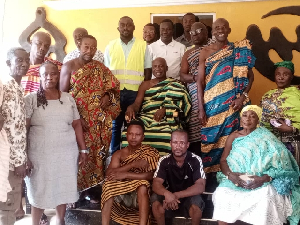 Chieftancy in Ghana has evolved