Between February and May 2024, a scientific investigation into popular Ghanaian soap brands revealed a hidden threat in products used by millions of Ghanaians daily. The culprit? Free Caustic Alkali (FCA) — a leftover chemical from soap production that can severely damage skin if present in high concentrations.
In basic chemistry, FCA refers to the unreacted portion of strong alkaline substances such as sodium hydroxide (NaOH) or potassium hydroxide (KOH) that remain in soap after the saponification process.
While these bases are essential for converting fats or oils into soap, any excess left uncontrolled acts as a corrosive agent. On skin, this residue can cause pH imbalance, strip away natural oils, and trigger irritation or burns.
According to the Ghana Standards Authority and global safety guidelines supported by the World Health Organization, the allowable limit of FCA in finished soap should not exceed 0.10% by weight.
In this study, 20 locally made soaps were randomly selected from markets in Accra, Kumasi, and Tamale. The soaps were analyzed in a controlled laboratory environment using a refined acid- base titration technique, following international protocols adapted from the Association of Official Analytical Chemists (AOAC) and Ghana Standards Authority.
This method involved dissolving the soap in an alcohol-water solution, filtering, and titrating with a standardized hydrochloric acid solution using phenolphthalein as an indicator.
This method enabled accurate quantification of residual free alkali (NaOH) in each sample. All measurements were carried out in triplicate to ensure reliability and reproducibility of results. Results showed that 45 percent of the soaps contained FCA above the safe limit, with some exceeding it by more than threefold.
To assess real-world health effects, a survey involving 150 soap users revealed a strong link between high-FCA soaps and common skin problems including itching, dryness, peeling, and burning. Several users had to stop using certain brands altogether due to skin discomfort.
“Soap is supposed to clean, not harm,” says chemist Titus Puorizaa, who led the study. “While promoting local industries is vital, we must also ensure that public health is protected.”
These findings raise important concerns about quality assurance in Ghana’s cosmetic industry. To address the issue, several actions must be taken. Regulatory agencies like the GSA and FDA should increase the frequency of market testing and enforce penalties for non-compliant products. Small-scale soap producers should be given targeted training in formulation chemistry and safe manufacturing practices. Additionally, consumers should be empowered through education campaigns that teach how to recognize safe, pH-balanced soaps and report unsafe ones.
As the Akan proverb reminds us, “If the mouth turns rotten, it is the nose that smells it,” and in the words of a Dagaare saying, “You cannot cure a wound by ignoring it.” When our most basic hygiene products harbor unseen chemical dangers, the effects ripple far beyond individual users, putting national skin health and public well-being at risk unless we act decisively.
Opinions of Friday, 8 August 2025
Columnist: Titus Puorizaa
Soap or Skin Hazard? New study uncovers chemical risks
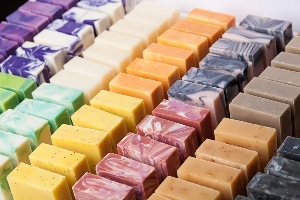 New study has uncovered chemical risks