After a historic decision by the United Nations General Assembly, President John Mahama is raising the alarm—but the real question is whether Africa will turn recognition into real power.
The world has finally said it clearly: the transatlantic slave trade was the gravest crime against humanity. But history teaches us something uncomfortable—recognition alone changes nothing. If Africa does not act decisively now, this historic moment could fade into yet another symbolic gesture, remembered more for what it promised than what it delivered.
The recent decision by the United Nations General Assembly marks a profound shift in global acknowledgement. For centuries, the suffering of millions of Africans and their descendants was either minimized, distorted, or ignored. Today, the world has taken a step toward truth. But truth, on its own, does not deliver justice.
President John Mahama’s warning about the gradual erosion of Black history in parts of the world adds urgency to this moment. When historical truths begin to disappear from classrooms, museums, and public discourse, it is not merely an academic concern—it is a political one. It shapes how future generations understand identity, justice, and power. If the narrative is lost, the foundation for justice weakens.
For Africa, this moment demands more than celebration. It demands strategy.
The first challenge is to move beyond moral recognition into structured engagement. The resolution provides a legitimate platform for advancing discussions on reparations, but without clear legal and diplomatic direction, those discussions risk remaining symbolic. Africa cannot afford to approach this issue as fragmented national voices. A unified continental position, led by the African Union, is essential if the continent is to negotiate from a position of strength.
Reparations must also be defined with clarity and purpose. Too often, the conversation is reduced to financial compensation alone. Yet the damage caused by slavery and colonialism was far more complex—affecting economies, institutions, cultures, and identities. Any meaningful framework must therefore extend beyond money to include debt restructuring, investments in education, technology transfer, and the return of cultural heritage taken from Africa. Without a clearly articulated African framework, external actors will shape the agenda—and likely dilute it.
Equally critical is the question of narrative. Africa must take ownership of its own story. If it does not, others will continue to define it—sometimes inaccurately, and sometimes deliberately. Strengthening educational systems, investing in research, and supporting African scholars, writers, and historians are not optional—they are essential. The struggle over history is, in many ways, a struggle over the future.
At the same time, Africa must recognize that it does not stand alone. The African diaspora, Caribbean nations, and global civil society share a common interest in this cause. Strategic alliances can transform what might otherwise be a regional issue into a global movement for justice. In unity, there is strength.
Yet there is a more difficult truth that must also be confronted. Africa’s credibility in demanding justice is closely tied to the strength of its own institutions. Calls for reparations will carry far greater weight when African nations demonstrate transparency, accountability, and effective governance. Without this, even the most legitimate claims risk being undermined by questions about implementation and stewardship.
This is where the conversation must deepen. Historical justice cannot be separated from present responsibility. The recognition of past wrongs must be matched with a commitment to building stronger systems today—systems that can transform opportunity into real progress for African societies.
The danger now is complacency. History has shown that global attention is fleeting. What is urgent today can easily be forgotten tomorrow. Africa must therefore act with urgency, coordination, and long-term vision.
This is not simply about correcting the past. It is about shaping the future.
The recognition of slavery as the gravest crime against humanity has opened a door. Whether Africa walks through it—or allows it to quietly close—will depend on the choices made today.
Opinions of Friday, 27 March 2026
Columnist: Dr Isaac Asiedu
Slavery declared humanity's gravest crime - But will Africa act or stay silent?
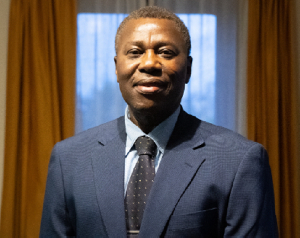 Isaac Yaw Asiedu PhD is the author