When I assumed office as United Nations Resident Coordinator, I was immediately struck by the remarkable strength of Ghanaian women.
Across homes, workplaces, and communities, women and girls are shaping families, driving businesses, inspiring classrooms, and leading innovation.
They are farmers, entrepreneurs, teachers, and leaders, making up more than half of the nation’s population. Yet, as in many parts of the world, true equality for women remains an unfinished promise.
This year’s global theme, “Rights. Justice. Action. For ALL Women and Girls,” is a clarion call to transform commitments into concrete change.
Rights must be real:
Ghana has made important strides.
The country has ratified major international human rights conventions and aligned national development priorities with the United Nations Sustainable Development Goals, particularly SDG 5 on gender equality.
The United Nations in Ghana has ably walked with Ghana to chalk these feats.
Nevertheless, available data from UN Women suggest that women hold just 14.6% of
parliamentary seats, significantly lower than the global average and below the average for Sub- Saharan Africa.
This must change because when women are missing from decision-making tables, policies risk overlooking the realities women face including challenges in maternal health to market access to protection from violence.
The passage of the Affirmative Action (Gender Equity) Act, 2024 marks a historic step forward, signaling Ghana’s commitment to increasing women’s participation in leadership and public life.
The review of the country’s 2015 National Gender Policy is a bold step to continually mainstream gender equality into all development sectors to improve the lives of women, children, and vulnerable groups.
Justice must be accessible:
Justice begins with safety and dignity.
In Ghana, approximately one in four women aged 15–49 has experienced physical and/or sexual violence by an intimate partner in her lifetime.
Surveys indicate that up to 40% of women in this age group report experiencing some form of gender-based violence. Each number represents a daughter, a mother, a colleague, a friend.
Child marriage remains another pressing concern. About 16.1% of women aged 20-24 were married before age 18.
Early marriage often ends a girl’s education and limits her economic opportunities, perpetuating cycles of poverty.
Ending violence and harmful practices requires collective responsibility.
Families, communities, traditional authorities, law enforcement and policymakers must work together to ensure protection systems function effectively and survivors receive support.
Public opinion reflects the urgency. Research by Afrobarometer shows that many Ghanaians believe institutions must do more to protect women and girls from harassment and discrimination.
Trust in justice systems grows when accountability is visible.
Action must be relentless:
Equality is about fairness and development.
Women and girls in Ghana perform over three-quarters of unpaid care work, limiting time for paid employment, education or civic participation. Closing gender gaps in employment and leadership could significantly boost household incomes and national productivity.
To advance gender equality and secure women’s rightful access to opportunities and protections, we must fully implement the Affirmative Action Act, ensure policies translate into practice, and invest in survivor-centered services for those affected by gender-based violence.
We must expand girls’ access to education, especially in underserved areas; we must support women entrepreneurs with finance and digital skills; and we must engage men and boys as champions of equality.
Crucially, we must reach rural women, women with disabilities, young women, and those in marginalised communities. Inclusion cannot be selective.
A shared responsibility<:/b>
Gender equality is not a “women’s issue.”
It is a national issue. When women thrive, families prosper. When girls stay in school, communities advance. When women lead, governance improves.
Ghana has the legal frameworks, the vibrant civil society, and the youthful population necessary to accelerate change. What is required now is sustained political will, adequate investment, and societal commitment.
The United Nations in Ghana stands ready to continue partnering with Government, civil society, the private sector and communities to advance rights, strengthen justice systems and drive meaningful action.
The question before us is simple: Will we move from promises to progress?
“Rights. Justice. Action.” must not remain words on a banner. They must become the lived reality of every woman and every girl in every district, every community, and every home across Ghana.
The time is now.
Opinions of Wednesday, 11 March 2026
Columnist: Cynthia Prah
Rights, Justice, Action; for all women and girls — Ghana cannot afford to wait
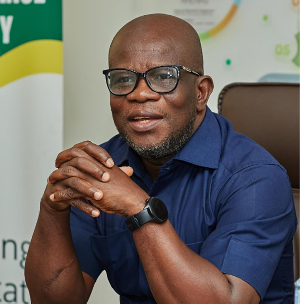
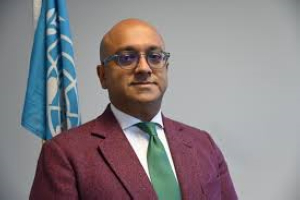 Zia Choudhury is the United Nations Resident Coordinator in Ghana