Recent discussions surrounding the proposed SIM re‑registration exercise have raised deep concerns among many citizens.
Ghana has already undergone a comprehensive SIM registration process, and the rationale behind repeating such an exercise remains unclear.
It is difficult to understand what new objectives this initiative seeks to achieve that were not accomplished previously, especially when earlier efforts - led by the same institutions - were widely reported as falling short of their intended goals.
In a developing country where resources are limited and citizens already face significant socio-economic pressure, policy decisions of this scale must be grounded in evidence, efficiency, and a genuine commitment to public interest.
Unfortunately, this new re‑registration proposal appears to impose additional burdens on ordinary Ghanaians rather than alleviating them.
A responsible government must ensure that major national initiatives undergo thorough impact assessments before being introduced.
This is standard practice in advanced economies, where policymakers rely on data, stakeholder engagement, and expert consultation to prevent unintended consequences. Ghanaian citizens deserve the same level of diligence.
Any nationwide digital identity or telecommunications policy should be accompanied by publicly accessible data:
What challenges were identified with the previous registration?
What corrective measures were explored?
What benefits outweigh the national costs of repeating the exercise?
How will vulnerable groups - such as citizens abroad, those in remote communities, students, military personnel, and expatriates - be affected?
These questions demand clear, transparent answers.
Equally worrying is the issue of data governance. Statements suggesting that personal data - including biometrics - would 'belong to the state' are fundamentally at odds with global data protection principles.
Under internationally recognised standards, governments do not own citizens’ data; they act only as custodians.
Data privacy is a fundamental right, rooted in frameworks such as the European Convention on Human Rights and reflected in Ghana’s own Data Protection Act.
Any collection, storage, or processing of personal information must follow strict rules regarding:
consent
purpose limitation
data minimisation
security safeguards
retention periods and
independent oversight
Citizens have every right to question:
Where will their data be stored?
Who will manage it?
What security protocols will protect it?
For how long will it be retained?
Who authorises its use, and for what purposes?
These are not mere technicalities; they are essential protections in any democratic society.
Moreover, frequent, hastily introduced regulations risk stifling innovation and creating a challenging environment for businesses and individuals.
Recent legislation in areas such as cybersecurity has already prompted debate over its potential overreach.
Ghana must avoid the tendency to adopt policies simply because other nations have done something similar.
What matters is not replicating global trends, but carefully adapting best practices to Ghana’s unique context, capacities, and developmental priorities.
Many countries do not require government-led SIM registration at all; those that do often operate under strict legal frameworks with strong transparency and accountability mechanisms.
Ghana should take the time to learn from these models rather than imposing policies that create inconvenience, economic inefficiencies, and frustration among citizens.
At the heart of the matter is a simple expectation: public institutions exist to improve the lives of citizens, not complicate them.
Policy decisions should reflect competence, humility, and a willingness to engage meaningfully with experts and stakeholders before implementation.
Ghana deserves governance that strengthens trust, promotes innovation, and respects the rights and dignity of its people.
Meanwhile, learn of the story of the man behind the iconic Akwaaba frames in Ghana:
Opinions of Sunday, 22 March 2026
Columnist: Wisdom Aveh
Rethinking Ghana's SIM Re‑Registration: A call for evidence-based policy making
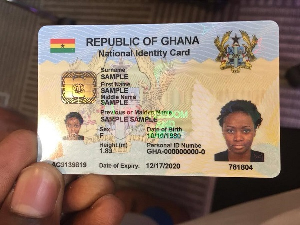 Any collection, storage, or processing of personal information must follow strict rules






Entertainment