Feature article by Benjamin Sackey
Religious inclusion in Ghana’s education system has come under renewed scrutiny following a legal dispute over the treatment of Muslim students at Wesley Girls’ Senior High School (SHS). At the centre of the controversy is a fundamental question: how can faith-based educational institutions preserve their religious identity while respecting the rights, dignity and diverse beliefs of their students?
The case has sparked public debate about religious freedom, institutional autonomy, equity and the responsibility of schools to create environments in which students from different religious backgrounds can learn and thrive.
The Legal Dispute over Religious Freedom
On December 24, 2024, private legal practitioner Shafic Osman initiated legal proceedings at the Supreme Court under its original jurisdiction, invoking Articles 2(1)(b) and 130(1)(a) of Ghana’s 1992 Constitution.
The suit centres on allegations that Muslim students at Wesley Girls’ SHS are restricted from wearing the hijab, fasting during Ramadan and observing other Islamic practices. It also raises concerns about the alleged requirement for students to participate in practices associated with the Methodist Church, which established the school.
The plaintiff argues that such restrictions violate constitutional protections for freedom of religion.
The Attorney-General, however, has defended the school’s position, maintaining that Wesley Girls’ SHS, founded and operated by the Methodist Church of Ghana, has the authority to enforce rules consistent with its religious ethos. This position highlights the tension between the autonomy of faith-based schools and the constitutional rights of students who do not share the religious beliefs of their institutions.
As the legal proceedings continue, the case presents an opportunity to examine how Ghana’s educational institutions can balance their traditions with the principles of religious freedom, fairness, and inclusion.
Why Religious Inclusion Matters in Student Affairs
From a student affairs perspective, the controversy extends beyond the interpretation of constitutional provisions. It raises important questions about student development, belonging, institutional responsibility and the treatment of religious minorities within educational settings.
Schools are not only centres of academic instruction; they also shape students’ identities, values, relationships and sense of belonging. Policies that restrict religious expression may leave affected students feeling excluded or compelled to choose between their faith and participation in school life.
An inclusive educational environment should recognise the diversity of students’ religious, cultural and personal backgrounds. This does not necessarily mean that institutions must abandon their founding traditions. Rather, it requires school leaders to examine whether institutional policies can accommodate legitimate differences while maintaining appropriate standards, discipline and educational objectives.
For student affairs professionals, this challenge underscores the importance of developing policies that protect student welfare, encourage respectful dialogue and provide fair procedures for addressing conflicts involving religion and identity.
It also demonstrates why student voices must be considered when institutions formulate or enforce policies that directly affect their daily lives. Meaningful consultation with students, parents, religious leaders and school administrators can help institutions identify practical solutions that respect both their institutional identities and students’ rights.
Balancing Religious Identity with Student Rights
The Methodist Church’s position must be considered alongside the broader debate about the ownership, governance and religious character of mission schools in Ghana.
In a joint statement issued on November 25, 2025, the Ghana Catholic Bishops’ Conference and the Christian Council of Ghana rejected the suggestion that mission schools had become entirely government-owned public institutions simply because the state provides support.
The organisations argued that Christian churches established these schools as part of their missionary work and that government assistance, including the payment of teachers’ salaries and the provision of a common curriculum, constituted a partnership rather than a transfer of ownership.
The statement emphasised that the schools’ religious identity remained central to their institutional character.
This argument raises a significant policy question: to what extent should the religious identity of a school determine the personal religious practices permitted within its environment, particularly where students of different faiths are enrolled?
While the preservation of institutional identity is an important consideration, it must be examined alongside the rights and welfare of students. A constructive approach would seek to establish clear, fair and transparent policies that enable schools to maintain their traditions without unnecessarily marginalising students from other religious backgrounds.
Muslim Caucus Calls for Engagement
The controversy has also attracted the attention of the Muslim Caucus in Parliament.
In a statement signed by Asawase Member of Parliament Mohammed Mubarak Muntaka, the caucus expressed concern over the Methodist Church’s response to the dispute following reports that Muslim students at Wesley Girls’ SHS were not permitted to fast during Ramadan.
The caucus said it was awaiting feedback from the leadership of the Methodist Church following an earlier engagement at which assurances had reportedly been given.
The intervention highlights the importance of dialogue between educational authorities, religious institutions and public representatives in resolving disputes that affect students’ religious rights.
Rather than allowing disagreements to deepen divisions between religious communities, sustained engagement could help identify solutions that protect students while acknowledging the historical and religious foundations of mission schools.
The Supreme Court’s Role
The legal proceedings have added another dimension to the debate.
On April 29, 2026, the Supreme Court dismissed an application by the Board of Governors of Wesley Girls’ High School seeking to strike out the suit. The Board had argued that it was not a juristic person and therefore could not be sued.
The plaintiff’s side, led by Abdul Aziz Gomda, and the Attorney-General, represented by Deputy Attorney-General Justice Srem-Sai, opposed the application and urged the court to dismiss it.
The dismissal of the application was a procedural development and should not be interpreted as a final determination of the substantive constitutional questions raised by the case.
The court’s eventual consideration of those questions will be important in clarifying the relationship between religious freedom, the autonomy of mission schools and the rights of students within Ghana’s educational system.
A Call for Inclusive Educational Leadership
The Minister of Education, Haruna Iddrisu, and other education stakeholders have an important role to play in promoting constructive engagement on religious inclusion and student welfare.
Beyond the immediate dispute, the case presents an opportunity for policymakers and educational leaders to review how schools accommodate religious diversity, communicate institutional expectations, and resolve conflicts involving students’ beliefs.
For student affairs professionals, the central lesson is that inclusion must extend beyond access to education. Students also need environments in which they are treated fairly, their identities are respected, and their concerns can be addressed through transparent institutional processes.
Religious diversity should not automatically be treated as a threat to a school’s identity. With appropriate policies, dialogue and mutual respect, educational institutions can uphold their traditions while recognising the needs and rights of students from different backgrounds.
Ultimately, the Wesley Girls’ controversy is a reminder that the quality of an educational institution is reflected not only in its academic achievements or historical legacy, but also in how it treats students whose identities and beliefs differ from those of the institution.
As Ghana continues to debate the place of religious freedom in education, the priority should be to pursue solutions that promote constitutional rights, institutional accountability, mutual respect, and the holistic development of every student.
Opinions of Monday, 19 October 2026
Columnist: Benjamin Sackey
Religious Freedom and Student Affairs: Lessons from the Wesley Girls’ case
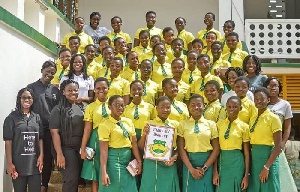 Wesley Girls Senior High School students