Today, Ghana marks its 69th Independence Anniversary, a historic milestone that reminds us of the courage, sacrifice and vision that led to our freedom on March 6, 1957.
Under the leadership of Kwame Nkrumah, J.B Danquah, Emmanuel Obetsebi-Lamptey, Ebenezer Ako-Adjei, William Ofori Atta and Edward Akufo-Addo, our forebears who fought tirelessly for a nation that would be free not only politically but also economically and socially.
I may be young, but I have taken the time to read our histories, listen to the stories of those who lived through earlier decades and observe the realities of our present generation.
Through these reflections, I have come to a sobering realisation: much of what independence promised Ghana has not fully materialised.
The promise of independence
Independence was meant to bring dignity, prosperity and self-determination. It was meant to empower the Ghanaian people to build a nation where resources would benefit citizens, where opportunities would be accessible and where governance would prioritise national development above all else.
To some extent, Ghana has made commendable progress.
We have maintained relative political stability and have become known globally as one of Africa’s democratic examples.
Our elections have largely been peaceful and our institutions continue to evolve.
In many ways, this stability is something we should all be proud of.
However, stability alone is not the full measure of the independence dream.
The gaps between promise and reality
Sixty-nine years after independence, many Ghanaians still struggle with economic hardship, unemployment and limited opportunities.
Development has often been uneven and in some areas, the nation appears to be moving slower than expected.
One of the major issues confronting Ghana today is irresponsible politicking.
Politics, which should be a tool for national development, has increasingly become a battlefield for power struggles. Instead of focusing on long-term national progress, many political actors prioritise party victories over the welfare of the country.
Even more worrying is the role of media bias in deepening political divisions.
The media is meant to inform, educate and hold leaders accountable.
Yet, when sections of the media become aligned with political interests, the result is misinformation, propaganda and unnecessary polarisation among citizens.
This environment makes it difficult for the country to engage in meaningful national dialogue about development.
The untapped power of Ghanaian culture
Despite these challenges, Ghana possesses immense potential especially in its rich cultural heritage. Our traditions, festivals, music, art and historical landmarks are not just symbols of identity.
They are powerful economic assets.
Festivals such as Fetu Festival, Odwira Festival, Homowo Festival, Hogbetsotso Festival, Aboakyir Festival among others attract attention from across the world.
Historic sites like Cape Coast Castle and Elmina Castle hold global historical significance.
When properly managed and promoted, these cultural assets can generate significant tourism revenue, create employment and strengthen Ghana’s global cultural influence.
Our music, film, fashion and creative industries already show that the Ghanaian spirit is vibrant and globally competitive.
What we must do better
While leadership plays an important role, the responsibility of building a nation also lies with its citizens.
As Ghanaians, we must begin to:
1. Put national interest above partisan loyalty.
2. Demand accountability and integrity from our leaders.
3. Reject misinformation and support responsible media practices.
4. Protect public resources and promote civic responsibility.
5. Encourage innovation, entrepreneurship, and creativity, especially among the youth.
We must also remember that patriotism goes beyond waving flags during Independence celebrations.
True patriotism is demonstrated through our daily commitment to building a better society.
A call for renewed national commitment
As Ghana celebrates 69 years of independence, this anniversary should not only be a moment of celebration but also a moment of honest reflection.
The dream of independence was bold and visionary.
It was a dream of a Ghana that would inspire Africa and the world.
While we have made progress, there is still much work to do to fully realise that vision.
As a young Ghanaian, I remain hopeful.
Our nation still has the human talent, cultural richness and natural resources needed to thrive.
What we need is responsible leadership, active citizenship and a shared commitment to the national good.
If we choose unity over division and responsibility over complacency, the Ghana we dream of can still become a reality.
Happy 69th Independence Anniversary, Ghana.
May we continue striving toward the promise that independence once held for us all.
Opinions of Friday, 6 March 2026
Columnist: Isaac Essuman
Reflection On Ghana At 69: My perspective as citizen
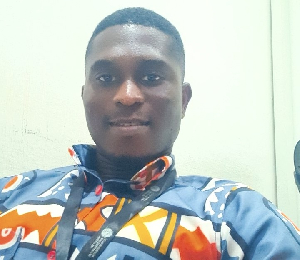 Isaac Eastman is a writer



Entertainment

Singer Chichi survives ghastly Car accident in US

Opinions