On 8th August 2025, Ghana was shaken by the tragic helicopter crash that killed two cabinet ministers, six other public officials, including three crew members. In the wake of national mourning, an all-too-familiar chorus erupted: prophets declaring, “We prophesied it.”
These voices, often loudest after the fact, flooded the airwaves and social media, claiming foresight without accountability. Instead of comforting a grieving nation, they stoked confusion, fear, and mistrust.
In this moment of grief, however, leadership mattered. President John Dramani Mahama must be commended for his dignity and compassion in guiding the nation through mourning. From personally sympathizing with the affected families to addressing the nation and presiding over the final state funeral on Friday, 16th August 2025, his actions helped unify a shocked country and gave the bereaved a measure of closure.
Prophecy is not foreign to faith. In the Old Testament, prophets guided nations long before kings ruled. Samuel, for instance, anointed Saul as Israel’s first king (1 Samuel 10:1) and later David (1 Samuel 16:13). Prophets were God’s chosen mouthpieces, offering guidance and correction.
With the coming of Christ, prophecy took a new form. Jesus promised the Holy Spirit would dwell among all believers (John 14:16–17). As Paul explains in 1 Corinthians 12, prophecy is one of many spiritual gifts distributed by the Spirit, not the preserve of a self-selected elite. True prophecy is to build up, not tear down.
In Ghana today, however, prophecy has often been weaponized. Citizens are told they will die unless they obey strange instructions (“akwankyerɛ” as it is called in Twi) which in many cases involve paying money. Politicians are warned of doom without evidence. And in moments of national tragedy, opportunists rush to claim foresight.
This is no longer revelation. It is fearmongering. Worse still, false prophets often act as amplifiers of fake news. In an age where mis/disinformation spreads faster than fact, their unchecked declarations can destabilize trust in leaders, institutions, and even the faith itself.
Faced with rising alarm, the government has stepped in. Presidential Envoy for Interfaith and Ecumenical Relations, Elvis Afriyie Ankrah, has urged religious leaders to report prophecies that could affect national security.
“We’ve gotten to a point where things seem to be getting out of hand. Every single day, we are picking up messages from different kinds of people,” he told TV3.
The intention may be noble: to prevent panic and disinformation. But the creation of an office to “review” prophecies risks opening the floodgates to charlatans.
Prophecy is spiritual. No government bureaucracy can determine the voice of God. By institutionalizing it, we risk trivializing faith and legitimizing opportunists.
It is important for Christians to understand that prophecy can manifest in three distinct forms: True Prophecy from the Spirit of God: genuine revelations that align with Scripture and glorify Christ.
False Prophecy from Satanic Sources: messages rooted in deception, empowered by demonic influence. As Revelation 12:10–12 warns, Satan was cast to the earth but not stripped of his power, and he still works to deceive.
Fake Prophecy: outright trickery or manipulation. In November 2024, a scandal reported by Graphic Online shows how some people were hired to pose as disabled only to be “healed” in staged miracles, later fighting with the so-called prophets for unpaid fees.
This is why not every “miracle” is divine. Some are manipulations, others are satanic imitations, and only a few are genuine works of God. Like in Egypt, where Pharaoh’s magicians mimicked Moses by turning rods into snakes (Exodus 7:11–12), deception may appear powerful, but God’s truth always prevails.
Instead of government regulation, Ghanaians must learn to discern. Practical markers of false prophets include:
Merchandising prophecy, when revelations come with a price tag (Micah 3:11).
Contradicting Scripture, God’s Word is the ultimate test (Isaiah 8:20).
Spreading fear, not faith, but God has given us a spirit of “power, love, and a sound mind” (2 Timothy 1:7).
Promoting self, not Christ, true prophets exalt Jesus, not themselves (John 3:30).
Vague and shifting predictions designed to fit events only after they occur.
Rotten fruit of character, Jesus said, “By their fruits you shall know them” (Matthew 7:16).
We must also face the reality that many street magicians and tricksters who once entertained crowds in markets have now built places of worship, arrogating to themselves titles like “prophet” and “apostle.” The pulpit has become their new stage.
For Ghana’s politicians and leaders, many of whom are Christians, there is a lesson here. You are far better off seeking Christ in a genuine way than chasing prophecies that bring fear and confusion. True fellowship with the Holy Spirit offers guidance, comfort, and strength beyond what any self-proclaimed prophet can deliver.
It is also not out of place for leaders to have Spirit-filled intercessors, trusted, gifted individuals who pray with and for them regularly. Such grounding ensures that decision- making is covered in prayer, not swayed by fear-driven predictions.
Christian leaders must remember Christ’s words: ‘Seek first the kingdom of God and His righteousness, and all these things shall be added to you’ (Matthew 6:33). True peace, health, and wisdom are found in sincere repentance and a Christ-centred life.
Opinions of Monday, 18 August 2025
Columnist: Daniel Kwame Ampofo Adjei
Prophecy in Ghana: Between revelation and regulation, faith and discernment
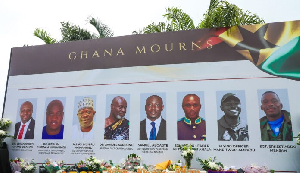 Ghana was shaken by the tragic helicopter crash that killed eight patriots on board