One of the less-publicised but very significant achievements of the NPP under the John Agyekum Kufuor administration was the modernisation of institutions that secure and document ownership rights. These reforms aligned perfectly with the NPP’s philosophy of a property-owning democracy. This is a concept grounded in our Constitution and also grounded in the belief that ownership rights are only meaningful when they can be properly registered, protected, verified, and transferred.
Unfortunately, this philosophy remains widely misunderstood in Ghanaian politics. Critics mischaracterise it as a vehicle for enriching a privileged few or selling off state assets. Nothing could be further from the truth.
It must clearly be understood that property-owning democracy is not about transferring state assets to a select few; it is about creating a society where millions of ordinary citizens can own assets, build wealth, and enjoy the dignity, security, and independence that come with their ownership rights.
Why ownership matters
Credible and well-documented ownership is key to every single business, investment, and economic activity, since in every such activity it is ownership interests that are exchanged. The property-owning democracy philosophy is therefore built on a simple but powerful premise: ownership empowers people to fully participate in the economy. Whether it is ownership of land, a home, a business, a car, shares, T-bills, bonds, pension savings, bank deposits, or intellectual property, when citizens possess productive assets, it gives them economic freedom and reduces their dependency on the state. It enables families to survive economic shocks, invest in the future, and pass wealth to the next generation. The true measure of a successful society is not how much property the government owns and controls, but how many of its citizens securely own productive assets and the economic factors of production.
Constitutional basis for property-owning democracy
The concept of a property-owning democracy is firmly grounded in the 1992 Constitution of Ghana, rather than being merely a New Patriotic Party (NPP) philosophy.
Together, Articles 18 and 36(7) form a strong constitutional foundation for protecting and promoting property ownership. Article 18 guarantees the right to own property and protects its privacy. Article 36(7) explicitly mandates the State to guarantee property ownership and inheritance rights, while fostering an economy driven by private enterprise and individual initiative.
Practically, these provisions underpin secure property and business ownership, investment, entrepreneurship, intellectual property protection, and wealth creation. Even more significantly, Article 36(7) elevates the concept of property-owning democracy and private enterprise from a political slogan to a constitutional economic objective and a guiding principle for Ghana’s national development.
Kufuor built the institutions of ownership
The Kufuor administration translated this philosophy into practical action by strengthening the legal and institutional infrastructure responsible for recording and protecting property rights. Rather than isolated administrative updates, the under-mentioned comprehensive reforms, among others, made it easier for citizens to acquire, register, and grow their assets:
1. The Lands Commission was modernised through the Land Administration Project (LAP) to improve title registration and secure land ownership.
2. The Registrar-General’s Department was reformed to accelerate business registration and secure corporate ownership records.
3. The Ghana Stock Exchange (GSE) and Central Securities Depository (CSD)* were upgraded to protect and streamline the transfer of shares and financial assets.
4. The Driver and Vehicle Licensing Authority (DVLA) was overhauled to improve vehicle registration and ownership tracking.
5. Pension reforms culminated in the landmark National Pensions Act, which secured workers’ retirement assets and established the National Pensions Regulatory Authority (NPRA).
6. Intellectual property ownership and its administration were strengthened to safeguard trademarks, patents, copyrights, industrial designs, trade secrets and other local innovations. The under-listed laws were enacted to this effect:
• Patents Act, 2003 (Act 657)
• Geographical Indications Act, 2003 (Act 659)
• Industrial Designs Act, 2003 (Act 660)
• Trademarks Act, 2004 (Act 664)
• Layout-Designs (Topographies) of Integrated Circuits Act, 2004 (Act 667)
• Copyright Act, 2005 (Act 690)
Musicians are one category of economic actors that benefited hugely from the intellectual property ownership (copyright) reforms undertaken during this era. In short, the NPP and the Kufuor administration did not merely advocate for a property-owning democracy but built the tangible institutions, as well as the legal and regulatory regimes, that made ownership rights meaningful for all citizens.
Akufo-Addo and Bawumia built the digital systems that strengthen ownership
The next phase of this vision emerged through the Ghana Card project, the National Digital Address System (GhanaPostGPS), and the broader digitalisation agenda. Because ownership rights require flawless verification and accurate asset identification, digitalisation became the logical evolution of the NPP’s vision to strengthen institutional frameworks for property ownership rights for Ghanaians, which started under Kufuor’s administration. In particular:
1. The Ghana Card empowered citizens to securely prove their identity, access financial services, protect pension assets, and engage in economic transactions without fraud. For example, the linkage of the Ghana Card to ownership rights in the financial, insurance, and telecommunications services sectors highlights this vision.
2. *The National Digital Address System* assigned unique digital addresses across the country, making properties easier to locate, value, and transact.
While Kufuor modernised the institutions of ownership, Akufo-Addo and Bawumia modernised the identity, location, and digital systems that support them. Together, these two eras reflect a continuous commitment to safeguarding the security of asset ownership by Ghanaians.
A national priority more relevant now than ever
Secure ownership is a powerful engine of national prosperity, regardless of political affiliation. When citizens can easily prove ownership and transfer assets with certainty, economic activity expands, costly land litigation decreases, and access to credit from banks improves, which naturally attracts both local and foreign investment.
At a time when Ghana seeks sustainable solutions to unemployment, poverty, and economic vulnerability, a property-owning democracy is essential. A nation of homeowners, entrepreneurs, investors, and pension holders will always be more resilient than a nation reliant on state dependency.
The future belongs to owners
The NPP’s enduring contribution has been expanding the ability of ordinary Ghanaians to participate meaningfully in the country’s economy. This philosophy is neither a story of privatisation nor of citizens taking over state assets. Rather, it is the story of building the legal, institutional, and digital infrastructure that allows millions of citizens to securely own, verify, and grow wealth.
The path to inclusive prosperity is ownership, not dependency. For this reason, property-owning democracy must be better explained and defended, as it remains the most vital tool for building broad-based wealth among all citizens of Ghana.
Opinions of Wednesday, 3 June 2026
Columnist: Joseph Cudjoe
Property-owning Democracy: The most important but misunderstood NPP philosophy
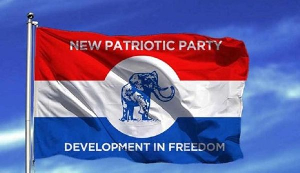 The flag of the NPP