I do not write about women because it is fashionable.
I write because history has always been written about us without us.
It has been written about wars we did not start and peace tables where we were
absent. About economies that grow while our communities fracture.
About rights declared, and rights denied to us.
So I ask the question: How do we write ourselves into the narrative of power?”
Is it through the systems we inherit, or the systems we dare to question?
Is it by participation in name, or participation in numbers?
Is justice a principle we recite, or a practice we enforce?
International Women’s Day 2026 Rights. Justice. Action. For ALL Women and Girls insists that these questions cannot remain rhetorical. They demand answers, action, and new perspectives.
In one of my poems, I asked: “Isn’t it time to break the old patterns? For what you think you know can still be a cage.”
I found myself performing this poem, Break the Old Patterns, on multiple global stages because that line resonated with women globally. Because “cages are not always visible.”
They are assumptions and traditions that outlive their usefulness.
They are also systems that reward conformity over creativity and tokenism over transformation.
Societies are similar, and when half the population is treated as peripheral, potential is lost.
When leadership reflects only narrow perspectives, solutions are limited. When rights exist in theory but not in practice, legitimacy erodes, and impunity thrives.
This is not an ideological claim; it is empirical.
Consider peace processes; during the course of my work, I have advocated within international forums that sustainable peace requires women’s participation, not as symbolic observers but as negotiators, leaders, and decision-makers.
Evidence supports this position:
● Agreements that include women are more durable.
● Communities that engage diverse voices recover faster.
● Security that values human dignity is more stable.
Peacebuilding and governance often focus on systems and structures, and yes, they must. But systems ultimately exist to serve people.
The theme of IWD 2026 challenges institutions and societies to evaluate themselves honestly.
Are women’s rights fully protected?
Are economic opportunities equitable?
Do cultural narratives honor contribution rather than stereotype?
Do security and peace processes reflect diverse perspectives?
These questions are uncomfortable because they demand change, and discomfort is the beginning of growth.
Break the Old Patterns gained global resonance because it named what many already sensed: that transformation requires imagination and courage.
“Watch as the sky learns how to stretch its boundaries,” I wrote.
Boundaries are not permanent; they expand when societies choose to expand them.
I have seen the vast spectrum of what women’s contributions to global systems are, to peace. looks like.
It is boundless, and it is indispensable. And yet it remains unevenly recognised.
This is the paradox of our moment: unprecedented discourse about inclusion alongside persistent gaps in authority.
Women attend negotiations, but they do not always shape outcomes.
Girls access education, but they do not always inherit systems that value their voices.
Communities celebrate progress, but structural barriers remain.
Rights exist on paper, but justice for women and girls often remains aspirational. Whilst action is sporadic.
The question, then, is not whether change is desirable. It is whether we possess the intellectual and political will to make it irreversible.
My work as a United Nations Global Peace Advocate and cultural communicator has taught me that change requires two simultaneous movements:
The first is structural: Policies, budgets, and institutional frameworks that convert ideals on women’s rights and participation into measurable outcomes.
I’ve seen how the United Nations Peacekeeping pursues this daily, from supporting women peacekeepers on the ground to advocating for women’s participation in peace negotiations, working to ensure that women’s place at the table is meaningful, safe, and enduring.
The second is cultural: Narratives that shape how societies imagine possibility, which, through and through, means leveraging imagination as infrastructure.
Because if women are depicted only as beneficiaries, they will remain peripheral to decision-making.
But if they are depicted as architects, their perspectives become foundational.
Women must not just be present at the table; they must be given autonomy to influence the menu.
This is where we must look at International Women’s Day beyond commemoration.
As I once said in my address on the United Nations, persistence of the equality struggle at the UN-CEDAW 45th anniversary of the Convention on the Elimination of All Forms of Discrimination Against Women: “May we keep expanding. May we keep insisting?
May we keep building a world where equality is no longer an ambition, but a norm so natural that future generations wonder why it ever had to be fought for.”
That remains the challenge before us.
And today I write this not as an observer but as a participant in the global conversation about peace, women’s rights, and power.
As someone who has witnessed the courage of women in institutions and communities.
As someone who believes that storytelling shapes policy.
As someone who insists that change is possible.
The task before us is immense.
But history teaches that transformation begins with belief. Belief that better systems can be built, that inclusion strengthens societies, and that women should not be an afterthought but a foundational norm.
Rights. Justice. Action.
For all women and girls.
From all communities.
For a world still striving to become what it promises.
This is the work of our generation.
Let us meet it with conviction.
Opinions of Wednesday, 11 March 2026
Columnist: Cynthia Prah
On women's rights, war and work of our generation
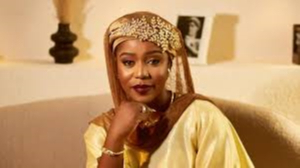 Maryam Bukar Hassan is the United Nations global peace advocate






Entertainment