INTRODUCTION
I sincerely believe and conclude from the bottom of my heart that nothing useful by way of evidential results would come out of any Ghanaian investigation into the Asante–AKSA–Ghana corruption, corruption-related and other criminal offences, such as money-laundering deals, that were consummated between 2014 and 2017, leading to the conviction of the principal facilitator of the corruption transactions, Asante Kwaku Berko, by the United States District Court for the Eastern District of New York on 6 August 2026. The evidence will be suppressed!
The Asante Berko–AKSA–Ghana bribery deal for which Asante Berko was convicted in the US relates only to the bribery and corruption of public officials of the John Mahama government between 2014 and the early part of 2017, after Berko had resigned from Goldman Sachs in December 2016 to enable investigations into his conduct. It had nothing to do with bribery and corruption during the Nana Akufo-Addo government. Of course, the corruption transaction involving AKSA continued, as some payments were made in July 2018, according to the investigation by the OSP.
There is, however, a concerted attempt by the government to present the conviction of Asante Berko in the US for bribery as having been committed during the tenures of the Mahama National Democratic Congress government (2013–2016) and the Akufo-Addo New Patriotic Party government (2017–2024). The AKSA bribery might have continued on a bipartisan basis in Parliament and under the Nana Akufo-Addo government and continues to date, as AKSA has become an institution in Ghana.
But any attempt to extend the conviction of Asante Berko as involving criminal activities beyond December 2016, when he resigned from Goldman Sachs for internal investigations into his misconduct, will be an attempt to establish equalisation, as the government did in 2012 with the Justice Appau Commission of Enquiry.
The Mills/Mahama government, when it was faced by my accusations of suppressing the criminal investigations of the GARGANTUAN CRIMES involving its Ministers of State and financier, Alfred Abesi Woyome and others, set up the Commission of Enquiry into Judgement Debt to pre-empt my intended action in the Supreme Court. I beat the government to the game by commencing my constitutional actions against Woyome and Isofoton before the Commission could be established. I won Amidu v Attorney-General & 3 Others (the Woyome case) and Amidu v Attorney-General (the Isofoton case) in the Supreme Court. The findings and recommendations of the Commission of Enquiry were never implemented by the government.
The Mahama government should deal separately with investigating the public officials and the politically exposed relative of President Mahama indicted for the trial of Asante Berko in the US in the Asante Berko–AKSA–Ghana bribery deal for which Asante Berko was convicted in the US. The OSP commenced investigations in April 2020, while Asante Berko had resigned from Goldman Sachs in December 2016 to enable investigations into his conduct to establish credentials of incorruptibility.
This had nothing to do with any continued bribery and corruption by AKSA under the Nana Akufo-Addo government’s tenure from 7 January 2017 to 7 January 2025, which was not the subject of the US convictions of the Mahama government’s chief corruption facilitator from Goldman Sachs. Mixing the two cases will be an attempt at equalisation again and not impartial investigation and prosecution.
I started writing this discourse on Monday, 17 August 2026, after I had read calls and admonitions in the media from well-meaning and seemingly non-partisan members of the public demanding impartial investigations into the Asante Berko–AKSA–Ghana bribery deal. In particular, today’s news in Joy News and other media — “act swiftly, decisively, and ensure that this matter is nipped in the bud,” and “don’t fail Ghana because this opportunity of a perfect storm to nip corruption at its most fertile centre, ministries and Parliament, may never come in another hundred years” — are but only two of the demands by Mr Abdulai and Dr Amoah that I wish to refer to as a sample of the calls and admonitions.
Nonetheless, I still believe from the qualitative data at my disposal that any investigation will just be one of the usual strategically ambiguous exercises in this government’s psychological operations to divert public attention, ending in thin air and with no prosecutions when the public has again forgotten this episode and moved on. Six years was not enough for the OSP, so how can the remaining two years of the government’s active tenure yield any results?
Time will tell whether my beliefs and conclusions are wishful thinking or derived from an impartial qualitative analysis as a participant observer of the evolving democratic practice that has turned all the guarantees provided in the 1992 Constitution for good democratic governance into a partisan electoral democracy machine of the ruling government, using the fight against corruption as a smokescreen for winning at the next elections.
THEORETICAL FRAMEWORK AND ANTECEDENT FACTS
In the study of conflicts and conflict resolution, the personality and antecedents of decision-makers have been established to influence the decisions they make in all interactive socio-political-economic or other environments, be it interaction in interpersonal, intra-group, inter-group, community, other social formations, national or international relationships.
That is why objectifying and reifying socio-political-economic facts or ideas as objective phenomena for purposes of any discourse, without reference to the social facts or reality making up the personality of the decision-maker or makers, yields only abstract results, not reflective of transparent everyday interaction in society.
Constitutions are mere words on paper requiring operationalisation by various human actors with varied personality traits and behaviour within particular societies to achieve the end results the framers envisaged and embodied in the constitutional document. The lesson of history is that no constitution lasts forever. Its survival depends mostly on whether those entrusted by the electorate with the mandate to operationalise and serve the general good do so sincerely or put their personal interests and those of their associated political formations above the general will.
On 9 August 2026, I wrote a discourse on the Asante Berko–AKSA–Ghana bribery deal in which I called on President Mahama, as the repository of the executive power and branch of government, to tell Ghanaians, “What happened to the OSP investigation into the AKSA bribery deal?”
The premise of my discourse was my knowledge that the OSP had in April 2020 opened “a preliminary investigation into the...allegations of bribery and corruption contained in the...SEC suit against Asante K. Berko and his cohorts under the supervision of the Deputy Special Prosecutor....”
The style which I had cultivated and internalised through decades of experience as a lawyer and public official from the professional ethics of investigators and prosecutors was to presume every suspect to be innocent until the investigation leads to a charge fileable in a court of law against the suspect and a charge subsequently filed in a court of law. The media was then at liberty to access the charge sheet, which had become a public document, or seek an interview limited only to the charges, excluding the evidence intended to be adduced against the suspect.
The OSP changed the professionally acceptable ethical standards of investigating and prosecuting cases by trying suspects in the court of public opinion during the process of investigations and before charges are filed in the courts of law.
While the OSP during my tenure published only cases that had been filed in the courts of law, the OSP under William Kissi Agyebeng as the Special Prosecutor adopted the unethical method of briefing the media on all cases under investigation except those in which the Special Prosecutor had a personal interest, whether as a lawyer before his appointment as the Special Prosecutor or involving relatives, friends and cronies.
Investigations and prosecutions were reduced to transactions. It was under these circumstances of personal interests of the leadership of the OSP that “the investigation into...the allegations of bribery and corruption contained in the...SEC suit against Asante K. Berko and his cohorts under the supervision of the Deputy Special Prosecutor....” disappeared from the list of cases under investigation by the OSP’s periodic briefings to the media under Kissi Agyebeng as the Special Prosecutor.
I have written about the unlawful and unprofessional manner in which the Special Prosecutor oversaw the Airbus SE–Ghana Bribery scandal and then absconded from Ghana until after the 2024 elections. The Asante Berko–AKSA–Ghana bribery deal, which is the subject of our present discussion, shares the same modus operandi, environmental circumstances, and time period with the Airbus SE–Ghana Bribery scandal.
THE SCAM OF EOCO TAKING OVER THE INVESTIGATION OF THE AKSA BRIBERY DEAL AND THE DEATH OF THE CASE
Ghanaians have, however, been told since the conviction of Asante Berko in the US on 6 August 2026 in relation to the Ghana bribery deals of 2014 to 2016 that the OSP and the Attorney-General collaborated with the US authorities in the investigation and prosecution of the convict in the US without any criminal investigation docket in existence either in the OSP or the Attorney-General’s Office or EOCO during the period of the collaboration with the US authorities leading to the conviction.
This is, of course, a tale to be told to idiots and the marines, which was why, not being an idiot, I demanded that the President, with whom the buck stops in the execution of the laws of Ghana, should “tell us what happened to the OSP investigations into the AKSA-bribery deal.”
The answer to my demand from the President to the electorate, which is the sovereign public, has been eerie silence.
I have, however, been asked quietly what the President has done for me to ask him to “Stop deceiving Ghanaians and tell us what has happened to the OSP investigation into the AKSA bribery deal.”
My answer is that the buck under our Constitution in matters pertaining to the execution of the laws of Ghana stops with the President, and the only way I can talk to our “God” without direct access to him personally is to talk to the wind through publications in the media.
Worse constitutional abuses have taken place whilst I remained quiet in the teeth of the public asking why I have been silent for lengthy periods. My role in the 2024 election campaign has been restraining. There are elders in the NDC who know that I tried diplomacy so that the Constitution is not abused, to no avail.
The buck stops with the President is my answer: I will speak truth to him through the media.
The disclosure in my discourse of 9 August 2026 that the Asante Berko–AKSA–Ghana bribery deal had been under investigation by the OSP since April 2020 and the demand for the public to be told what has happened to those investigations have further been met with an ingenious deflection of responsibility.
After six years of investigation by the OSP, President Mahama’s government, during whose tenure the bribery transaction was hatched and operationalised, is informing the public that the Economic and Organised Crime Office (EOCO) is to assume responsibility for the intended investigation of the Asante Berko–AKSA–Ghana bribery deal.
EOCO as presently constituted is the worse vehicle for impartial, apolitical investigation and prosecution of the Asante Berko–AKSA–Ghana bribery deal, whether for corruption or money laundering.
The OSP has better security of tenure against political interference from the Attorney-General and the President than EOCO, as the Supreme Court recently determined on 29 July 2026. A Special Prosecutor who performs the functions of his office professionally and impartially is more secure than even the Attorney-General, who can be removed from office by the President at will.
I will return to this issue in my impending discourse on the recent Supreme Court Judgment upholding the constitutionality of the OSP.
The OSP has investigated the Asante Berko–AKSA–Ghana bribery deal for upwards of six years, and the government cannot tell the electorate the results of those investigations. How then is the electorate to believe that the leadership of EOCO, which was handpicked by this government by eliminating the existing professional and career leadership that had risen through the ranks of serving employees of the EOCO establishment, can impartially investigate and prosecute the government officials and the politically exposed person involved in the AKSA–Ghana bribery deal from 2014 to 2016?
I watched how the Executive Director of EOCO, Raymond Archer, was “smuggled” into EOCO with no previous public service experience in law enforcement in Ghana as Acting Deputy Executive Director (DED) on 6 February 2025.
In short order, in April 2025, Mr Archer was promoted to take over from Chief Staff Officer (CSO) Mr Abdulai Bashiru Dapilah, who had been promoted as the Acting Executive Director effective 27 January 2025 after having joined EOCO from the starting commissioned rank of Assistant Staff Officer (ASO) in 1998 and rising through the ranks on merit to the position of CSO, DED, and Acting Executive Director of EOCO.
I watched how others were also “smuggled” into EOCO and elevated over serving senior officers to the ranks of Deputy Executive Directors and other senior ranks, all to the end of the political weaponisation and control of the investigative machinery of EOCO.
Finally, EOCO is under the absolute control of an Attorney-General who acts more politically as a Minister of Justice than as an Attorney-General.
I must own up that this is not the first government to weaponise and seek to control law enforcement for political ends as part of their conception of denuding the 1992 Constitution to the level of a mechanism for using criminal justice administration for convicting adversaries to facilitate their winning the next elections as incumbent governments.
It started with Mr John Agyekum Kufuor’s governments and continues today and may continue in the next governments until the Constitution implodes.
But it is equally true that I have always opposed the weaponisation and politicisation of the law enforcement agencies under the 1992 Constitution as instruments for unfairly winning elections.
REDUCING CONSTITUTIONALISM AND DEMOCRACY TO AN ELECTORAL DEMOCRACY MACHINE FOR THE NEXT ELECTIONS ONLY
I wish the history of operationalisation of the 1992 Constitution supported the fact that presidents of Ghana think beyond how to win the next elections for themselves or their political parties to really taking seriously the demands of the Constitution in fighting corruption, encompassed in their oath of office to impartially supervise the investigation and prosecution of politically tainted crimes involving their political parties or government appointees in the courts of law.
Even in the few cases where public opinion and pressure have compelled presidents to refer suspected crimes involving their appointees or political party members for investigation, it has been done to assuage the public openly as psyops, while backstage the investigating agencies appointed and dismissible by the government are pressured to clear the suspects of any criminal offences even in the teeth of overwhelming evidence.
I am a crocodile from both waters, so do not challenge me on this.
Former President Jerry John Rawlings referred Paul Victor Obeng, Col. (Rtd.) E. M. Osei-Owusu, Ibrahim Adam, and Dr Isaac K. Adjei-Maafo to the Commission for Human Rights and Administrative Justice for investigation in 1996, which resulted in the resignation from office of those suspects still serving in the government and the refund of monies to the public purse.
Former Chairman Rawlings signed the warrant for the execution by firing squad of his own nephew, Richard Nii Amoo Addy, the son of his half-brother of the same mother, Richard Nii Lante Addy, during the 31 December Revolution and imprisoned or dismissed appointees of his government for corruption and other offences or misconduct.
Former Chairman Rawlings did the same when it came to the warrant for the execution by firing squad of his bosom friend, comrade and compatriot, Flt Lt Robert Kojo Lee.
President Rawlings treated crime as crime without fear or favour, affection, or ill will.
President John Agyekum Kufuor, upon assuming the reins of government on 7 January 2001, weaponised law enforcement and the judiciary, and then went for Victor Selormey, Dan Abodakpi, Kwame Peprah, Ibrahim Adam, Sipa Yankey, Tsatsu Tsikata, and others as battering rams from the National Democratic Congress towards his perception of democracy as an election-winning machinery to be used against an adversary political party.
Professor Mills declared “father for all”; nonetheless, the hawks associated with him went after perceived suspects from the NPP without any success before his death.
But when Alfred Agbesi Woyome and his associates were suspected of corruption, the government mobilised in their defence and refused to prosecute its own. An Attorney-General lost his job for daring to prosecute them.
The matter eventually ended in a constitutional suit in Amidu v Attorney-General & 3 Others. The NDC Government refused to execute the judgment and orders of the Court for the refund of the loot with interest until it lost the 2016 elections.
In the interim, a Commission of Enquiry had been set up to deflect attention from the Woyome and Isofoton crimes and suits in the Supreme Court, but the findings and recommendations of its own Appau Commission went unimplemented as well.
Nana Akufo-Addo, like the NPP government of the Kufuor government of which he was Attorney-General, determined to investigate, prosecute and convict only adversaries, including the convictions in the National Communications Authority procurement case and the Airbus SE–Ghana Bribery scandal referral to the OSP for investigation.
Members of his government and political party suspected of grand corruption, including the Agyapa Royalties Transaction, were either cleared by investigating agencies appointed by the President or no action was taken.
The re-entry of John Mahama as President for a second term on 7 January 2026 has seen the entry of nolle prosequi and the withdrawal of pending cases against former Ministers, public officeholders and other operatives of the NDC, and the hyped investigation and prosecution of the adversary political party and government first in the court of public opinion and in the courts of law supervised by the government’s chosen Chief Justice.
The objectives underpinning these investigations and prosecutions partake of what Kufuor started during his tenure, continued under the tenure of Nana Akufo-Addo — using electoral democracy as the battering ram called the fight against corruption to win the next elections for oneself or one’s political party.
John Mahama and the NDC are eyeing election 2028, whether Mr Mahama qualifies to contest or not, just as Kufuor eyed election 2004 for himself and 2008 for the NPP presidential candidate.
In the scheme of reducing constitutionalism and democracy to the electoral democracy machine for winning the next election in the name of fighting corruption, it will be suicidal to investigate, prosecute and convict suspects from the ruling government and political party.
The opposing political party is waiting in the wings for such prosecutions and convictions to use them as narratives of corruption and looting in the ruling government and political party to the end of convincing the electorate to vote for the political party in opposition.
This explains why, since the campaign for the 1996 elections, the perceived corruption of the ruling government has been an attractive campaign tool for the parties in opposition.
Corruption as a partisan democratic electoral mechanism for winning the next election has produced alternating governments of the NDC and the NPP underpinned by perceptions of corruption since 1996.
No government in power since then has investigated, prosecuted and convicted its own for corruption or other offences of dishonesty against the state.
President Mahama’s government will not prosecute his own within the less than two years remaining to the 2028 elections and give ammunition to the NPP for the political campaign towards those elections.
Mr Justice Abdulai and Dr Kofi Amoah, mark my words!
CONCLUSIONS
The examination of the qualitative research data available to me, my experience as a participant observer in the Ghanaian political and constitutional process, which extends into decades, and my analysis of the extant data in this discourse ground in me the sincere belief and conclusion from the bottom of my heart that nothing useful in the nature of a thorough professional investigation will come out of any Ghanaian investigation into the Asante Berko–AKSA–Ghana corruption, corruption-related and other criminal offences, such as money laundering deals, that were consummated between 2014 and 2017, leading to the conviction of the principal facilitator of the corruption transactions, Asante Kwaku Berko, by the United States District Court for the Eastern District of New York on 6 August 2026.
All the Ghanaian public officials and politically exposed relative of President Mahama will be cleared of any wrongdoing for the crimes committed between 2014 and 2016.
I have demonstrated from the examination and analysis of the facts and environment surrounding the Asante Berko–AKSA–Ghana bribery deal and the evolved scheme of reducing constitutionalism and democracy to the electoral democracy machine for winning the next election, introduced into Ghanaian politics by the Agyekum Kufuor government, that governments in Ghana now consider it suicidal to investigate, prosecute and convict suspects from the ruling government and political party.
EOCO, as presently constituted and controlled by the Attorney-General, is the worse vehicle for impartial, apolitical investigation and prosecution of the Asante Berko–AKSA–Ghana bribery deal, whether for corruption or money laundering.
EOCO under its present leadership, it has been contended in this discourse, has been weaponised as the Ghanaian Gestapo for hunting down perceived adversaries through the process of criminal justice administration and protecting the government’s own appointees and supporters from prosecution.
I campaigned for John Dramani Mahama to win the 7 December 2024 elections because I took the view that he had learnt his lessons from being the only President to have been defeated at the polls after one four-year term as President of Ghana.
The ongoing partisan developments of protecting party members and going after political adversaries are not vindicating me; they put me to shame.
But I still write to contribute to the founding ideals I was part of establishing in the Consultative Assembly, 1991, which became the 1992 Constitution, and to uphold the founding ideals of the NDC in 1992, which I helped to found, because I still have hope that President Mahama can redeem himself within the one and a half years left for him to become a lame duck and leave a legacy of incorruptibility.
President Mahama needs to vindicate the trust the electorate placed in him when it preferred him over the candidate of the NPP at the 7 December 2024 election.
Forces of nature, save Ghana!
Opinions of Saturday, 22 August 2026
Columnist: Martin A. B. K. Amidu
Nothing useful will come from Ghana-AKSA probe
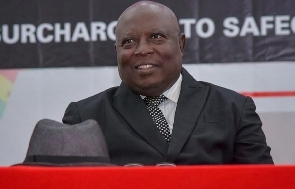 Martin A. B. K. Amidu is the author of this article