When the President rose in Parliament on Friday, 27 February 2026, to deliver his constitutional Message on the State of the Nation, it was not just another ceremonial address. It was a moment of accounting. A moment to measure rhetoric against reality. A moment to ask whether Ghana is merely stabilizing, or truly transforming.
There is no doubt that the address projected confidence. The macroeconomic indicators presented were impressive. Inflation has dropped dramatically. The cedi has been appreciated significantly. Public debt has declined from 61.8% to 45.3% of GDP. Ghana’s economy has crossed the 100-billion-dollar mark. These are not small achievements. After the economic trauma of 2022, such recovery signals are welcome.
But beyond the numbers, two issues stood out for me: corruption and the fight against high-tech galamsey. On both fronts, the government deserves commendation for effort. Yet on both fronts, Ghana needs more than effort. We need urgency. We need deterrence. We need consequences.
Corruption: Progress, But the Public Wants Justice
The President reaffirmed that the fight against corruption remains a defining priority of his administration. We were told that EOCO has recovered over GHS 600 million, that criminal and asset forfeiture proceedings are ongoing, and that specialised High Courts have been established to handle financial crimes.
These steps are positive. The Public Officers Code of Conduct Bill and the Value for Money Office Bill signal institutional reform. Strengthening procurement rules and banning sole-sourced contracts except in exceptional circumstances is long overdue. However, the Ghanaian public is not just asking for systems. They are asking for justice.
The President himself acknowledged that many citizens are impatient to see those who abused public trust brought to book. That impatience is not reckless. It is rational. When a nation goes through debt default, currency collapse, and hardship, and no high-level official is visibly held accountable, confidence in democracy begins to erode.
Yes, the rule of law must prevail. Yes, investigations must be thorough. But the message must also be clear: public office is not a shield. If former appointees are found culpable, prosecutions must move decisively. Not selectively. Not symbolically. But decisively. Corruption without consequence becomes policy.
High-Tech Galamsey: Enforcement Without Emergency
On illegal mining, the President outlined several measures. Over 1,600 Blue Water Guards have been deployed. Hundreds of case dockets are pending in court. Equipment is being tracked at the ports. NAIMOS is maintaining coordinated operations across 21 hotspots.
Again, these are commendable actions. But here is the uncomfortable truth: galamsey has evolved. It is no longer just young men in muddy pits. It is organised. It is financed. It is protected. It is high-tech.
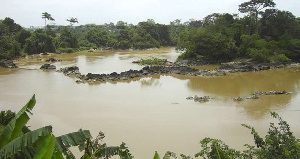
Drones are deployed. Heavy earth-moving equipment is imported in large quantities. Forest reserves are invaded with calculated precision. River bodies are destroyed in broad daylight. This is not a small-scale nuisance. It is an environmental war. And wars are not fought with routine patrols alone.
Ghana may need to consider what many have been reluctant to say openly: a targeted state of emergency in severely affected mining zones. Not nationwide panic. Not blanket military rule. But a constitutionally grounded, time-bound emergency in hotspot areas where water bodies are collapsing and forest reserves are under siege.
Business-as-usual enforcement has not been enough. Temporary deployments have yielded positive results, but they have not delivered sustained deterrence. When our rivers turn brown and our future drinking water is poisoned, gradualism becomes dangerous.
Economic Gains Must Not Be Undermined
There is a deeper connection here. The impressive economic recovery presented in the SONA rests heavily on gold exports. The establishment of the Ghana Gold Board has helped formalise artisanal exports and boost foreign exchange inflows.
But what is the long-term cost if illegal mining destroys cocoa farms, contaminates water sources, and undermines agricultural productivity? We cannot stabilise the cedi with one hand and poison our rivers with the other.
If Ghana is serious about the Resetting Ghana Agenda, then environmental governance must sit at the heart of macroeconomic stability. Without ecological security, there is no economic security.
The Moment Calls for Courage
The 2026 SONA was confident. It was detailed. It showed a government that understands macroeconomic discipline and continental positioning. But leadership moments are defined not only by statistics. They are defined by courage. Courage to prosecute powerful former officials if evidence demands it. Courage to declare exceptional measures where the nation’s ecological survival is at stake. Courage to move from administrative reform to visible accountability. Ghana has stabilised. That is commendable.
Now Ghana must demonstrate that impunity is over. That high-tech galamsey will meet high-level consequences. That corruption will not outlive electoral cycles. The President ended his address with optimism, declaring that the dawn is breaking. Indeed, dawn is not automatic. It is built.
And if this administration matches its economic discipline with fearless anti-corruption enforcement and a bold environmental crackdown, then history will record 2026 not merely as a year of recovery, but as the year Ghana chose integrity over inertia.
The country is watching.
Opinions of Monday, 2 March 2026
Columnist: Dr John-Baptist Naah
Mahama's 2026 SONA: Promises, progress, and the unfinished war
 Dr John-Baptist Naah is the author of this article





Entertainment