Introduction
In the tumultuous landscape of human existence, language emerges as a potent tool for navigating the complexities of peace. It is a paradox that the very instrument of communication, born of the human need to connect, can also be the source of discord and division. Yet, it is in the nuanced deployment of language that we find the keys to unlocking the gates of understanding and forging pathways to peace.
Indeed, one could also argue that, in the vast expanse of human experience, language stands as a powerful tool, capable of building bridges or erecting barriers. It is a medium that can either unite or divide, bring about understanding, or sow seeds of discord. As we navigate the complexities of our globalised world, it is imperative that we recognise the role of language in shaping our perceptions, our relationships, and our very reality.
The Double-Edged Sword of Language
The great African and a Nobel Laureate in Literature, Wole Soyinka, indicates that, “language, like the mythical Yoruba god Oko, wields the power to create and destroy. It can be a balm that soothes the savage beast or a sword that cuts down the unsuspecting adversary”. The words we choose, the tone we adopt, and the context in which we communicate can either inflame passions or calm troubled waters. The onus is on us to wield this double-edged sword with wisdom and responsibility.
The Labyrinth of Meaning
Soyinka further argues that language is the Labyrinth of Meaning. Where meaning is a mercurial entity, shifting and morphing with the sand in context and culture. Soyinka also indicates that words, seemingly innocuous, can become landmines of misunderstanding, detonating unintended consequences. The challenge lies in navigating this labyrinth of meaning, where the threads of intention and interpretation are intricately intertwined. It demands of us a deep understanding of the complexities of human communication and a willingness to listen with empathy.
The Power of Inclusive Language
In the quest for peace, language must be inclusive, embracing the diversity of human experiences and perspectives. It must be a language that listens, that seeks to understand, and acknowledges the humanity in every individual. The rhetoric of exclusion and demonisation can only lead to further division and conflict. In contrast, language that is grounded in empathy and compassion can be a powerful catalyst for healing and reconciliation.
Navigating the Path to Peace
As we navigate the complex terrain of human conflict, language emerges as a vital tool for building bridges and forging pathways to peace. It requires of us a commitment to dialogue, active listening, and empathy. We must be willing to engage with the narratives of others, to challenge our own assumptions, and to seek common ground. In doing so, we can create a language of peace that is inclusive, nuanced, and powerful.
Along similar lines of thinking, Ngugi Wa Thiong’o argues that “language can also be a powerful tool for peace, unity, and social transformation. By embracing and promoting our indigenous languages, we can foster a sense of pride and ownership among our people. Language can be used to promote dialogue, understanding, and empathy, bridging the gaps between different communities and cultures. It can be a medium for sharing experiences, storytelling, and preserving our collective memory and ideas.”
While Ama Ata Aidoo also indicates that, “in the midst of our complex and often contentious world, it's imperative that we reflect on the role of language in shaping our relationships and fostering peace”. As a medium of communication, language has the power to bring us together or drive us apart. The words we choose, the tone we adopt, and the context in which we communicate can either inflame passions or calm troubled waters.
The Power of Language
Language is not merely a means of communication; it is a reflection of our collective ideals, a repository of our cultural heritage, and a potent symbol of our identity. Through language, we convey our thoughts, our emotions, and our experiences. We use it to build communities, forge alliances, and create a sense of belonging. Conversely, language can indeed be used to exclude, to marginalise, and to oppress.
Language and Colonialism
According to Ngugi Wa Thiong’o, “the legacy of colonialism has left an indelible mark on the linguistic landscape of many African nations. The imposition of foreign languages as the medium of instruction, governance, and commerce has contributed to the marginalisation of indigenous languages and cultures. This has resulted in a disconnection between the people and their heritage, perpetuating a cycle of dependency and cultural alienation”.
Empowering Communities through Language
For Ama Ata Aidoo, “to harness the power of language as a medium of peace, we must prioritise the development and promotion of indigenous languages. This requires a commitment to linguistic diversity, cultural preservation, and community empowerment. By valuing and celebrating our languages, we can build stronger, more resilient communities and promote a more inclusive and equitable society.”
The Weight of Words
Perhaps, I would argue that, in my own experiences, I have seen how language can be both a source of strength and a tool of oppression. The colonial legacy has left us with languages that are often at odds with our own cultural identities. Yet, it's in the interstices of these linguistic encounters that we find opportunities for connection and understanding. By embracing our multilingualism and celebrating our linguistic diversity, we can begin to forge a more inclusive and equitable society and hope for all.
The Power of Storytelling
Consequently, one other important point Ama Ata Aidoo makes is the power of using language in storytelling. Storytelling is a powerful way to harness the potential of language for peace. Through stories, we can share our experiences, our cultures, and our perspectives. We can humanise others and find common ground. By listening to each other's stories, we can begin to break down the barriers that divide us and build bridges of understanding and share our common experiences.
Language as a Tool for Empowerment
Profoundly, one could argue that language can also be a tool for empowerment, particularly for women and marginalised communities. By claiming our voices and using language to assert our rights and dignity, we can challenge the status quo and create a more just society. It's a powerful way to resist oppression and promote social change.
Conclusion
From the above analysis and invoking the thoughts of Sonyika and Ama Ata Aidoo, one could conclude that language is a medium for navigating peace, but it is not a panacea. It is a tool that must be wielded with care, compassion, and wisdom. As we strive for a more peaceful world, let us recognise the power of language to shape our reality and to forge our futures. Let us choose words that heal, that unite, and that empower. As Soyinka evokes this powerful Yoruba proverb: "A kì í se ìkòkò fún ara ẹnu," – "One does not pour medicine into one's own ear in vain." The words we choose will either heal or harm; the choice is ours.
Similarly, Ngugi Wa Thiong’o indicates that, in the end, language is a medium for peace because it has the power to shape our perceptions, our relationships, and our world. Let us use language in a way that promotes understanding, empathy, and inclusivity. Let us celebrate our linguistic diversity and harness the power of storytelling to build bridges of understanding. By doing so, we can create a more peaceful and just world for all.
Nonetheless, Soyinka pontificates that language is a double-edged sword, capable of cutting both ways. It can be used to divide or unite, to oppress or liberate. Yet, Ama Ata Aidoo argues that, as we strive for a more peaceful and harmonious world, let us recognise the power of language as a medium of peace. Let us celebrate our linguistic diversity, promote our indigenous languages, and harness the power of language to build a brighter future for all. This is a call to action.
Opinions of Wednesday, 12 November 2025
Columnist: Kwasi Kordson Ayrakwa
Language, a medium for navigating peace
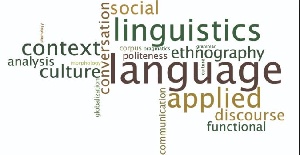 The writer says language stands as a powerful tool, capable of building bridges or erecting barriers