There is a saying that cleanliness is next to godliness; thus, the significance of cleanliness and hygiene cannot be overlooked by any society.
Every faith and civilisation stresses the importance of cleanliness. Historically, cleanliness has been considered one of the important factors by which to judge a civilisation or society’s development, but it is sad to notice that the people of Kumasi can no longer use this adage when they talk about their garden city.
The act of cleaning, both in nature and our everyday lives, is defined by the removal and relocation of accumulated debris. Such debris is often in the form of dust, pollen, and liquid droplets that readily adhere to a wide range of surfaces.
The daily cleaning of our environment, proper disposal of refuse and the like contribute a lot to our sanitation.
Kumasi is the capital of the Ashanti Region and one of the fastest-growing urban areas in Ghana. Kumasi was named ‘Garden City’ by our consanguinities because of its beautiful, clean and green environment.
However, it is inconvertibly sacrosanct sacred facts that the garden city has now turned to the city of garbage due to the negligence of some autochthonous towards their sanitation.
Sanitation refers to the maintenance and delivery of clean, hygienic conditions that help prevent disease through services such as drinking water supply, garbage collection and safe disposal of human waste. Kumasi as a city has performed badly in the aspect of sanitation due to many factors.
Repugnant attitudes of its intractable inhabitants, lack of education on the importance of sanitation, inappropriate planning by local authorities and pliant government agencies in charge of sanitation, failure to enforce sanitation laws by the Local Authorities as well as other stakeholders are some of the factors that result to necessitous sanitation in the city.
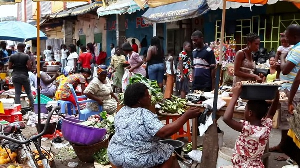
Sawaba, Alabar, Asawase and Aboabo station are some of the areas in Kumasi with impecunious sanitation that does not happen cataclysmically. The place is being flooded with refuse all over. Interactions with a few people from there throw more light on how they lack education on sanitation.
Some of these people blamed the government for not enforcing sanitation laws in the country. Throwing garbage surreptitiously in the streets, roads or parks has become a common practice in our society. In public places, dustbins are seldom found. Even if dustbins are installed, very egregious people do not use them properly. Rather, they prefer to throw garbage outside them.
It is also observed that people clean their homes and shops and throw the garbage on the street with impunity without considering its implications. It is evident that even perfidious students of elite schools throw garbage on the ground even in the presence of garbage bins.
This shows our turpitude attitude towards cleanliness and hygiene. Due to this, all our pernicious open gutters are choked with solid waste. This blocks the drainage of water when it rains and results in the water being stagnant and cajoling a breeding place for mosquitoes.
The people suggested that there should be public education on sanitation and waste management. Again, the existing laws should be enforced vigorously, and people who litter around should be punished severely. They also suggested that the government should inexorably introduce systems and methods of recycling waste. Open gutters should also be closed.
More sanitation workers should be employed, respected, motivated enough to enable them to perform their duties dispassionately to stymie their supercilious effect.
Adequate waste carriage bins and vehicles should be provided, and they should be emptied as soon as they are full. In conclusion, sanitation in Kumasi is very poor, which needs immediate attention to curb this challenge.
The government and its agencies, as well as the local authorities, must pay attention to its causes and effects on the people and the city as well, and the solutions stated above to help them plan properly on sanitation issues.
Opinions of Thursday, 11 September 2025
Columnist: John Antwi Boasiako
Kumasi, the 'garden city' turning into a 'garbage city'
 John Antwi Boasiako is the news editor at OTEC FM, Kumasi and author of this piece