The removal of Chief Justice Torkonoo from office has run its course under Article 146 of the 1992 Constitution. At the end of the process, Justice Torkonoo’s removal has been sanctioned by President Mahama in accordance with Article 146 of the Constitution.
Some have had issues with the processes followed to remove Justice Torkonoo; however, one can say that the processes have been comprehensive and transparent and have followed Article 146 of the Constitution to the letter. In addition, the processes have been challenged in court at various stages and on each occasion have been endorsed by court decisions at the Supreme Court and High Courts.
The lessons to be learnt from the removal of Justice Torkonoo from office as Chief Justice are as follows:
1. The 1992 Constitution did not envisage a Chief Justice’s position to be one that was immune from removal from office. The Constitution has taken the position under its Article 146 that the Chief Justice can be removed from office and has clearly indicated the grounds for such removal from office. It has also further detailed the procedures to be followed to remove the Chief Justice from office if need be.
The lesson, therefore, going forward is for every Chief Justice to be mindful that his or her position is subject to certain minimum standards of conduct, misbehaviour and competence which need to be taken into consideration accordingly.
Prior to the advent of Justice Torkonoo’s era and to some extent Justice Anim Yeboah’s era, no Chief Justice had been the subject of any removal proceedings or serious speculation relating to his or her removal from office. This was because they generally held their positions in compliance with the minimum standards of conduct required of Chief Justices.
The same could not be said of Chief Justice Torkonoo, who handled her position in ways which emboldened some to test the waters of Article 146 on the removal of Chief Justices against her status.
Justice Torkonoo took controversial positions on especially politically inclined cases, and even in some civil cases, as referenced in Daniel Ofori’s petition, which easily made her the target of Article 146 proceedings. Let’s remember that Justice Georgina Wood, though not appointed by the NDC, was largely accepted by all sides of the political divide and was never the subject of Article 146 proceedings for her removal.
The manner in which Justice Torkonoo reacted to the Article 146 proceedings for her removal did not also help matters. Her resort to openly challenging the proceedings, which were expected to be in camera, was perceived as constituting a disrespect of Constitutional provisions.
The open disrespect for the Council of State and its committee set up to undertake the proceedings for her removal was also unacceptable for a Chief Justice. It created the perception that she viewed herself as above the law, if not the law unto herself.
The fact that she largely resorted to using NPP-inclined lawyers for her defense also created the perception that she was politically tainted and therefore unfit to further hold onto her position of Chief Justice after going through the proceedings.
2. No position created under the 1992 Constitution is immune from removal proceedings, including the Presidency. If conditions for removal from office are breached by a Chief Justice and proper procedures for his or her removal are followed, the Constitution sanctions such removal from office. Indeed, in certain countries around the world, the establishment of Judicial Complaint Authorities and Commissions where ordinary citizens can petition for the removal of judges for acts of misconduct are sanctioned by law. The US and Zambia are examples.
The perception, therefore, that judges once appointed cannot be removed is not sanctioned by the 1992 Constitution, and any measures implemented to make their removal from office difficult are not prudent. Article 146 proceedings, as followed in the Torkonoo case, were detailed and transparent with proceedings on the issues before a Council of State Committee and should serve as a useful precedent going forward.
Chief Justices should therefore be nonpartisan and know their limits in the exercise of their discretion and duties. They should be conscious of the fact that the Constitution sanctions their removal for misbehaviour, misconduct and incompetence within the context of Article 146 of the Constitution.
The Spirit and letter of Article 146 of the 1992 Constitution have been followed by President Mahama as required by the Constitution in Justice Torkonoo’s Article 146 proceedings and should serve as a guide to future Chief Justices. Thank you.
God bless our Homeland, Ghana and make our Nation great and strong.
Long live President Mahama, long live Ghana.
"Ghana’s democracy has come to stay”.
cmdekportor@gmail.com
Opinions of Friday, 19 September 2025
Columnist: Mensah Dekportor
Issues relating to the removal of Chief Justice Torkonoo
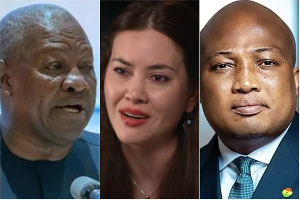
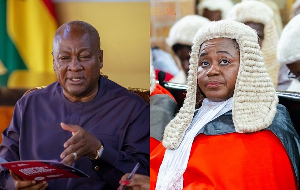 President Mahama (L) and sacked Chief Justice Torkornoo