Ghana has secured about US$380 million after the International Monetary Fund (IMF) approved the fifth review under the Extended Credit Facility (ECF) programme.
Government officials say the economy is stabilising.
Inflation is falling. Growth is improving. Foreign reserves are rising.
But Ghanaians are right to ask:
If the economy is back on track, why the IMF again?
Is this money free—or will it be paid back with interest?
And why borrow more when Ghana is already drowning in debt?
These are not political questions. They are survival questions.
Let’s Clear the Confusion: IMF money is not free
There is a growing public misunderstanding about IMF support.
Let us be clear:
IMF money is not free money.
It is a loan.
Even under concessional arrangements like the ECF, the money must be repaid with interest, over many years. That repayment will come from:
1. Taxes paid by citizens
2. Reduced government spending
3. Higher utility tariffs
4. Long-term fiscal tightening
So when Ghana receives US$380 million today, it is not a gift. It is another addition to the national debt.
Ghana’s Debt Reality: This is the real problem
Ghana is already facing serious debt distress.
The debt-to-GDP ratio remains dangerously high, even after debt restructuring efforts.
So the obvious question arises:
Why go back for more loans when debt is already choking the economy?
If Ghana claims it wants fiscal sovereignty—the ability to manage its finances
Independently, then repeatedly borrowing under IMF supervision sounds contradictory.
Sovereignty cannot be achieved by permanent dependence.
The Lomé Irony: Talking Sovereignty, Practising Debt
The contradiction becomes even more troubling when placed in the recent political context.
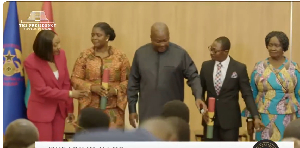
President John Dramani Mahama was in Lomé attending the African Union.
Conference on Fiscal Sovereignty, where African leaders openly discussed:
1. Africa’s debt trap
2. IMF and World Bank conditionalities
3. Loss of policy independence
4. The need to reclaim fiscal control
At Lomé, Africa admitted that excessive borrowing has weakened its future.
So Ghanaians must ask a fair question:
If our leaders fully understand Africa’s debt problem, why is Ghana still taking on loans that increase its existing debt?
You cannot condemn debt dependency in Lomé and quietly deepen it at home without raising serious credibility issues.
Debt Sustainability: The IMF Math That Fails Africa
Africa’s debt crisis—including Ghana’s—has exposed the weaknesses of IMF and World Bank debt sustainability frameworks.
These frameworks rely heavily on narrow indicators, especially the debt-to-GDP ratio, while ignoring critical African realities such as:
1. Weak institutions
2. Governance challenges
3. Development needs
4. Political economy constraints
5. Overdependence on raw commodities
African economies are judged using formulas designed for developed countries, not for nations still trying to industrialise.
The result is austerity without development, stability without transformation, and discipline without growth.
What Is the IMF Money Actually Being Used For?
This is the question the government must answer clearly.
Is the US$380 million being used to:
1. Pay old debts?
2. Plug budget deficits?
3. Support the cedi temporarily?
4. Build reserves?
5. Or simply buy time until the next crisis?
IMF money does not build factories.
It does not create industries.
It does not transform economies.
If it is mainly being used for damage control, then Ghana is only postponing the next IMF return.
Who Pays the Price? Ordinary Ghanaians
IMF programmes always come with conditions. Citizens feel them immediately:
1. New taxes and levies
2. Removal of subsidies
3. Rising electricity and water tariffs
4. Tight limits on public spending
Yet the public is rarely told in simple terms how much this loan will cost Ghana over time, or how it will stop future IMF visits.
If sacrifices are demanded, transparency is not optional.
This Is Not an IMF Problem—It Is a Governance Problem
The IMF does not force Ghana to overspend in election years.
It does not weaken fiscal discipline.
It does not undermine institutions.
The IMF steps in after governance failures occur.
As long as fiscal discipline depends on IMF supervision, Ghana will never truly stand on its own.
Africa’s bigger question
Ghana’s case reflects a continental crisis.
After more than 60 years of independence, Africa still turns to the IMF for economic survival.
This raises an uncomfortable truth:
Until African countries fix governance, productivity, and political discipline, IMF loans will remain a revolving door.
Conclusion: Questions that cannot be dodged
Let us ask plainly:
1. Is IMF money free? No.
2. Will it be paid back with interest? Yes.
3. Is Ghana already heavily indebted? Yes.
4. Does borrowing again advance fiscal sovereignty? That is doubtful.
If Ghana truly wants economic independence, then borrowing again—while already deep in debt—demands an honest explanation, not celebration.
Until words about sovereignty match actions at home, IMF approvals will continue to raise more alarm than confidence.
Opinions of Thursday, 18 December 2025
Columnist: Isaac Yaw Asiedu
IMF: Is this free money or another debt trap for Ghana?
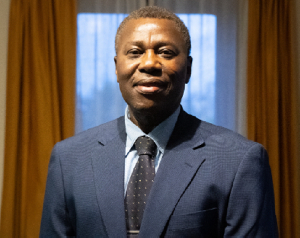 The author, Dr Isaac Yaw Asiedu, is a Development Researcher and Policy Commentator