A new investigative report is drawing attention to a troubling trend across Africa: the recruitment of young men into Russia’s military to fight in the war in Ukraine.
The report, titled “The Business of Despair,” was released in February 2026 by All Eyes on Wagner (AEOW), a French open-source intelligence project now operating under a Swiss-based NGO, INPACT. It provides one of the most detailed examinations yet of how African nationals are being recruited to serve in the Russian armed forces.
Based on a database of 1,417 African recruits, the report sheds light on the scale of the recruitment effort, the methods used to enlist men from the continent, and the human cost of their involvement in the conflict.
A Hidden Pipeline to the Frontlines
Since Russia launched its full-scale invasion of Ukraine in 2022, investigations by journalists and human rights groups have increasingly pointed to the presence of African fighters in Russian ranks.
According to the AEOW report, recruitment has steadily increased over the past three years. Dozens of Africans were enlisted in the early stages of the war, but the numbers rose sharply in 2024 and 2025 as Russia sought to replenish its fighting force.
The researchers believe the actual figure may be significantly higher than the documented cases. During their investigation, they discovered additional African fighters posting images and videos from the battlefield who were not listed in the database.
Many of those recruited appear to have been drawn from countries facing economic hardship, where promises of employment, travel opportunities, or financial incentives can be highly attractive.
Targeting the Economically Vulnerable
Investigations suggest that recruiters often target young men who are unemployed or seeking opportunities abroad.
Some recruits reportedly believed they were traveling to Russia for legitimate work or study programs. Others were approached through informal networks, including social media platforms and messaging groups.
The report also points to the role of recruitment agencies and intermediaries who present themselves as travel facilitators or employment brokers. In some instances, these recruiters claim to work with Russian authorities or military contractors.
Another recruitment pathway highlighted in the report involves migrants already in Russia. Some individuals reportedly intercepted by immigration authorities were allegedly offered a choice between deportation and signing contracts to serve in the military.
The Human Cost
One of the most striking findings of the investigation is the high casualty rate among African recruits.
According to the report, hundreds of African fighters have already been killed in action, with many reportedly dying within months of deployment. The average duration of service among those killed was only about six months.
Researchers found that a significant number of African recruits were deployed to frontline units that suffered heavy losses, raising concerns that foreign fighters may be placed in particularly dangerous positions.
The scale of these losses has heightened fears among families across Africa, many of whom may not even know where their relatives have gone.
Ghana Among Countries Affected
Ghana is among the countries identified in the report as having a significant number of nationals recruited into the Russian army.
Researchers estimate that more than 200 Ghanaians have been enlisted, with dozens believed to have died in the conflict.
The report also references claims that some Ghanaian recruits appeared in online videos encouraging others to travel to Russia through a travel agency that allegedly facilitated the journey. When contacted by investigators, the agency reportedly gave conflicting responses about its role in recruitment.
In another example cited by the report, a Ghanaian worker abroad was allegedly approached by a recruiter offering relocation to Russia. After arriving in the country, he reportedly signed a military contract. His family later lost contact with him after he sent images of himself in military uniform.
Growing Alarm Across Africa
The revelations have sparked growing concern among governments and civil society groups across Africa.
Authorities in several countries have already begun warning citizens about suspicious travel offers linked to recruitment for the war. Some governments are also investigating networks suspected of trafficking young men into military service abroad.
Analysts say the issue highlights the intersection of global conflict and economic inequality. For many young Africans facing limited opportunities at home, the promise of work overseas can be difficult to resist—even when the risks are unclear.
The AEOW report argues that stronger public awareness campaigns and tighter monitoring of recruitment agencies are needed to prevent vulnerable individuals from being drawn into foreign conflicts.
A War Reaching Far Beyond Europe
Although the war in Ukraine is geographically distant from Africa, the report shows how its consequences are reaching deep into communities across the continent.
For families who have lost contact with loved ones or fear they may be fighting in a distant war, the conflict is no longer an abstract geopolitical struggle—it has become a personal tragedy.
As investigations continue and more information emerges, the issue is likely to remain a growing diplomatic and humanitarian concern for African governments seeking to protect their citizens from exploitation in conflicts far from home.
Opinions of Sunday, 15 March 2026
Columnist: Abiodun Alero
How economic hardship is pulling African men into Russia's war
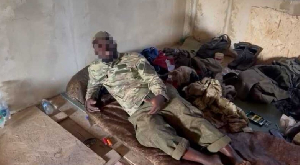 Some recruits reportedly believed they were traveling to Russia for legitimate work or study program