I am not surprised to hear that citizens of some neighboring countries are coming to Ghana for medical treatment.
That may be because our system may be slightly better than what they have at home in some respects. However, this should not be a reason to brag. Our health system can and ought to do better.
Yes, Ghana has made notable progress over the years. Institutions such as Korle Bu Teaching Hospital, Okomfo Anokye Teaching Hospital, and the University of Ghana Medical Centre have expanded specialized services and improved training for health professionals.
The National Health Insurance Scheme has also increased access to healthcare for millions who previously could not afford treatment. These are achievements worth acknowledging.
Yet some of these facilities, particularly the older ones, are so dilapidated that it is difficult to call them premier hospitals with confidence.
At places like Korle Bu, peeling paint, broken fixtures, dry taps, and buckets and cups placed in lavatories for handwashing create an image that sharply contradicts the status we proudly proclaim.
How can a referral hospital of national importance struggle with something as basic as sanitation and maintenance?
There are examples of what visionary leadership can achieve. Okomfo Anokye Teaching Hospital has undergone significant refurbishments, some of which may still be ongoing, largely through the bold initiative and commitment of The Asantehene, Otumfuo Osei Tutu II.
His intervention demonstrates what is possible when leadership, civic responsibility, and collective will converge around the public good. For this, the nation owes him a deep debt of gratitude.
If one traditional leader can mobilize resources and attention to transform a major teaching hospital, then surely the state, with all its machinery, can do better. The contrast should not merely inspire praise; it should provoke reflection and action.
Across many districts and regional hospitals, the story is painfully different. Poor infrastructure, outdated or non-functional equipment, shortages of essential medicines, and overcrowded wards are not rare exceptions; they are common realities.
In some facilities, basic diagnostic tools are unavailable. Patients are sometimes asked to buy gloves, syringes, or medications that should be readily supplied.
Ambulances are delayed, referral systems are weak, and emergency response is often dangerously slow, sometimes virtually non-existent.
Despite all the noise about “one ambulance per district,” many communities still struggle to access timely emergency care. Vital resources that could have been used to upgrade and maintain existing hospitals were diverted into politically attractive projects under the banner of “one district, one hospital.” As the old saying goes, “Please cut your coat according to your size.”
Beyond infrastructure, there is the human factor. Our doctors, nurses, and allied health professionals work under intense pressure. Long hours, high patient volumes, limited staff strength, and emotional strain contribute to burnout.
Yet new nursing graduates wait as long as two years to be posted. One suspects that may be because the government has no money to pay them, or is it simply incompetence?
There are moments when one may question the competence of some professionals, not necessarily because they lack foundational training, but because continuing education, periodic recertification, and systematic skill upgrading are either nonexistent or consistently enforced.
The field of medicine is changing at breakneck speed, and we need periodic upskilling for these personnel.
Meanwhile, we fund scholarships to support hundreds of students pursuing graduate studies abroad across various disciplines. It raises an uncomfortable question about national priorities.
When healthcare workers are exhausted or inadequately supported, patient care inevitably suffers. Errors increase. Compassion declines. Communication breaks down. The system becomes reactive rather than proactive.
The result? Hospitals that should be sanctuaries of life sometimes feel like places of uncertainty and fear. Families arrive with hope but leave with grief, asking whether more could have been done.
I do not intend to make a wholesale indictment of our health professionals, despite some grievances. On the contrary, many of them perform daily miracles under extremely difficult conditions.
The problem is systemic. Chronic underinvestment, a weak maintenance culture, politicization of health projects, and poor accountability structures continue to undermine service delivery.
If Ghana truly wants to position itself as a medical destination in West Africa, we must go beyond mere comparisons with weaker systems.
We must benchmark ourselves against global standards. That means sustained investment in infrastructure, consistent supply chains for essential medicines, strengthened emergency care systems, and deliberate attention to the well-being and professional development of health workers.
We must also embrace data-driven governance. Health outcomes, not political cycles, should guide policy decisions. Hospital management must be professionalized. Maintenance budgets must be ring-fenced and protected. Procurement systems must be transparent and accountable.
Most importantly, patient dignity must become non-negotiable. Clean wards, functioning toilets, respectful communication, and timely attention are not luxuries. They are the minimum requirements of humane care.
The question remains: Are our hospitals sanctuaries of life or highways to eternity?
The answer depends on the choices we make today. If we confront our weaknesses honestly and commit to sustained reform, our hospitals can truly become places where life is preserved, restored, and dignified.
However, if we continue to settle for being “better than others,” we risk normalizing mediocrity.
Ghana deserves better. Our health workers deserve better. And most importantly, every patient and family who walks through hospital doors deserves not fear, uncertainty, but hope.
Opinions of Friday, 13 February 2026
Columnist: Henry Adobor
Hospitals of hope or highways to heaven?
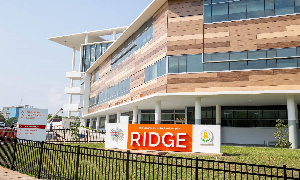 The Greater Accra Regional Hospital is one of the leading health facilities in Ghana

![Wontumi allegedly appeared emotional and requested for water [This image is AI generated]](https://cdn.ghanaweb.com/imagelib/pics/975/97547141.295.jpg "Wontumi allegedly appeared emotional and requested for water [This image is AI generated]")