I spent this week doing something I had not done in years. I sat with Judge Koboo.
Clip after clip. The swagger, the courtroom-without-a-courtroom wisdom, the lines half of Ghana can still finish before he does. Seth Kwame Dzokoto, the man behind Judge Koboo of Efiewura and the cheerful face of TV3's Edziban, left us on Thursday, 22 October 2026. He was 51. He collapsed during a radio panel discussion in Tarkwa. Less than two years earlier, his on-screen wife, Benyiwaa, played by Mercy Little Smith, had gone ahead of him.
And I have to give it to the Efiewura family; they have sent him off with so much love. Every time I opened my phone, there he was again: an old scene I had forgotten, a photo of Judge and Benyiwaa side by side, one of his co-stars saying goodbye in their own words. For days, my timeline felt like one long funeral house, the kind where everybody is crying and still somehow laughing at the stories.
And that is exactly what troubled me.
Because somewhere between laughing and tearing up, a quieter question sat down beside me: why do we only seem to discover our geniuses at their funerals?
We know how to mourn. We know how to organise tributes and circulate photographs. What we have not built are the institutions that document, preserve, teach and pay for the work of our creative people while they are still alive to benefit from it. So it is not just that we forget to say thank you. We forget, full stop. And a nation that keeps forgetting will one day wake up and not recognise itself.
He was a curriculum, and we treated him as a comedian
Efiewura has run since 2001 and is widely celebrated as one of the longest-running local productions on Ghanaian television. On the surface, it was a sitcom about a landlord and his tenants. Underneath, it was a sociology class. Anyone who has lived in a compound house recognised that yard: the bathroom queue politics, the rent wahala, the gossip, the quarrel at dawn and the soup shared at dusk. Judge Koboo, flawed and funny, held a mirror to the Ghanaian man, and we laughed because we recognised ourselves.
That is what great local television did. It did not lecture. It reflected. And by reflecting, it corrected.
Go further back. Obra and Keteke on GTV, with Ghanaman, the Station Master and Maame Dokono, dressed in kaba and slit and speaking to the ordinary Ghanaian's struggle. Grace Omaboe gathering children around the fire on By the Fireside, passing on folklore, drumming and the moral spine of Ananse stories.
David Dontoh's Agoro, where Saturday entertainment meant answering questions on our history, languages and culture. Osofo Dadzie. Thursday Theatre. Later, family dramas like Home Sweet Home.
When GBC TV went on air in 1965, it was born into a national project that saw broadcasting as a tool for education, development and the forming of a people. That era had its blind spots and its politics, and I will not pretend otherwise. But it had something we have lost: intention.
The screen in the Ghanaian living room knew who it was talking to, and it knew what it wanted that person to become.
Television is not dying. It is being starved
People say TV and radio are dying. I disagree. They are not dying; they are being emptied.
Attention follows value. When the screen gave us Obra, families arranged their evenings around it. Platforms do not lose their audiences because a new app arrives.
They lose them when they stop offering what no one else can. And the one thing no foreign platform can offer Ghanaians better than Ghanaians is us: our stories, our humour, our languages, our truth.
Instead, much of what fills our airwaves is borrowed: imported programmes, imported formats and, most dangerously, imported values and definitions of what is normal. Conflict sells, so we sell conflict. Vulgarity trends, so we chase it.
Our news has been so politicised that the ordinary citizen can no longer tell the report from the propaganda. When a people cannot trust the voice that informs them, they stop listening to all voices, and then they are ready to believe anything.
This is not because Ghanaians stopped wanting Ghanaian stories. Our media policy already commits to local content. The problem is that those commitments are weakly enforced and poorly financed, and quality local production has no sustainable money behind it. A broadcaster cannot commission the next Efiewura on goodwill alone.
"But we are only telling the truth"
Let me take on the strongest objection, because I respect it.
Some will say the old days were not as innocent as we pretend. That our parents' silence hid real pain, abuse and suffering that nobody named. That today's frankness about sex and relationships is honesty finally arriving.
Part of that is true. Our parents knew about sex. They kept it private, and some children paid for that privacy. I do not want that silence back.
But we keep confusing two different things. Talking honestly about life is not the same as selling it for clicks. Sex education is not the same as sexual spectacle. Exposing abuse is not the same as packaging intimacy as content for views and money. Our parents' generation held certain things as sacred, not because they were ignorant of them, but because they understood their weight.
Today, in the name of "exposing the truth," much of our media strips everything of its weight, and repeated exposure slowly makes the extreme look ordinary. The question we should be asking is this: when does entertainment stop reflecting society and start rewarding the very behaviour it puts on display?
Truth without values is not enlightenment. It is just exposure. The goal is not to return to silence. It is to return to intention.
Culture is first a thing of the mind
We often reduce culture to kente on Fridays, a durbar, a festival. Those matter. Culture is how we dress, how we speak, how we eat, how we greet. But before all of that, culture is a way of thinking: how we understand family, elders, land, authority, success and the sacred. To know who you are is, first, a matter of the mind.
So let us ask the questions we keep avoiding. Who is a Ghanaian? How does a Ghanaian think? What does a Ghanaian believe in? And how do we institutionalise those answers so they outlive any one government?
Let me be clear about one thing: the answer is not one tribe's story. Ga, Ewe, Akan, Dagomba, Nzema, Gonja, Frafra, Krobo and many more: our ethnic plurality is not a fault line to be managed. It is our richest resource. Think of it as an orchestra. Every ethnic group carries its own notes: its own proverbs, its own drum language, its own system of justice, its own cuisine and wisdom. A Ghanaian identity worth building does not flatten those notes into one sound. It lets the whole nation sample, taste and take pride in all of them. Diversity is not our weakness. It is our wealth, and our media should present it that way rather than turning it into fuel for politics.
They taught us to read, but not to read ourselves
I will be firm here. Colonial education opened some doors: literacy, new sciences and the consciousness that eventually fed the independence struggle. But its larger design pulled us away from our own reality. It taught us to measure ourselves by someone else's history, someone else's language, someone else's idea of civilisation.
When you are trained to admire a reflection that is not yours, you slowly learn to despise your own face. You can see it today in how we dress for prestige, how we rank our own languages below English, and how we treat our spirituality and indigenous knowledge as backward.
Yes, precolonial kingdoms appear in today's curriculum. But they appear as a chapter, not as a foundation. Ask a well-educated young Ghanaian about the French Revolution and you may get a lecture. Ask about Bono, Denkyira, the Ga state, Dagbon, the Ewe migrations or the trade routes that tied our lands to Timbuktu, and too often you get silence. They can recite every political scandal of the last decade but cannot name five heroes who existed before Ghana was Ghana.
The same question applies to how we govern ourselves. Our constitutional architecture was largely borrowed rather than built from the governance our people actually practised: councils of elders, consensus and accountability to lineage and land. Chieftaincy, the institution closest to the people for centuries, is guaranteed by the Constitution but kept outside the main structure of power. Political independence did not automatically bring intellectual independence. That is the unfinished business.
Whoever holds the record holds tomorrow
Here is what keeps me up at night.
Today, when someone says something false about who we are, those of us alive can still argue back. The next generation will not have us. They will inherit whatever has been recorded, digitised and made searchable. And increasingly, they will ask machines.
AI systems do not absorb everything we post. But they are shaped by what has been digitised and selected, and Ghanaian languages, archives and oral histories are thinly represented in that record. When a young Ghanaian asks a machine what it means to be Ghanaian, the answer will come from whatever is most visible, not from what is most true. Our proverbs, our oral histories and the GBC tapes gathering dust do not exist to a machine until we put them there, with their context intact.
Colonial narratives were once stamped as truth and took generations to question. A distortion repeated long enough stops looking like a distortion. It becomes heritage.
So, what do we do now?
So this is my challenge, addressed with respect and with urgency:
1. To the Ministry responsible for Culture, the National Commission on Culture and the National Media Commission: audit how our existing local-content commitments are actually being met, especially in prime time and across our languages, and attach enforcement and funding to them. Protect the conditions for Ghanaian creativity without dictating its content.
2. To GBC: you were once the nation's classroom. Restore, digitise and open the archive: Obra, By the Fireside, Osofo Dadzie, Agoro, and the regional productions too. A generation has never seen them.
3. To the Ministry of Education: move our kingdoms, heroes, languages and indigenous knowledge from footnote to foundation, with every region represented.
4. To broadcasters, producers and investors: commission the next Efiewura in many languages, for TV, YouTube, radio and podcasts. Purpose and profit are not enemies.
5. To the creative industry and the State together: build real legacy systems for our creators, covering documentation, copyright, royalties and estates, so honour arrives before the eulogy.
6. To every conscious Ghanaian, and especially the young: you are not containers waiting to be filled. You are co-creators. Learn your history, speak your language, ask your elders, and carry the culture forward in your own voice. A nation does not need everyone to wake up at once. It needs at least one generation that remembers.
Before the next tribute
Judge Koboo made us laugh at ourselves so that we could see ourselves. That was his gift. The best way to honour him is not another week of reposting clips. It is to build the institutions that can tell our stories tomorrow, a screen and a record that know who we are and are not ashamed of it.
We clap loudly at our funerals. Let us learn to clap while our geniuses are still on stage.
Damirifa due, Judge. Rest well.
Opinions of Tuesday, 3 November 2026
Columnist: Creppy Emmanuel
He Made Ghana Laugh: Why didn't we preserve what he taught us?
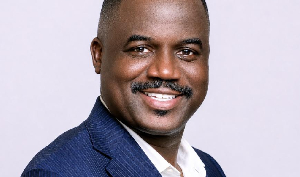
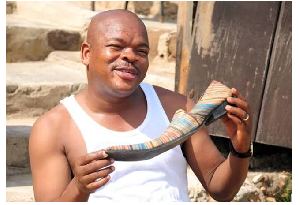 The late Seth Kwame Dzokoto