A few years ago, as a young woman with wild hopes and dreams, when I began losing my sight, I feared that my world would become smaller.
Simple things like reading a document, sending an email, and completing a school assignment suddenly felt daunting and uncertain. During that phase of my life, I wondered whether I would still be able to continue my education, pursue my goals, or live independently.
Then I discovered assistive technology.
Today, using screen readers like Job Access With Speech (JAWS) on my computer and VoiceOver on my iPhone, I can read documents, write reports, attend meetings, order rides, and chat and connect with people across the world on WhatsApp, and connect on social media.
Technology helped me reclaim my independence. However, while digital technology has opened doors, it has also revealed how far we still must go to achieve true inclusion.
Technology as an Enabler
When I began losing my sight in 2020, I wondered if returning to school would even be possible. That changed when I was introduced to assistive technology at the Ghana Blind Union’s Assistive Technology Lab. There, I learned how to use screen readers to access online platforms, browse the internet, and work with software such as Microsoft Word and Excel.
These tools became essential to my academic journey. I used them to read course materials, complete assignments, and even take online exams. Today, as I undertake my national service, the same technologies enable me to write reports, take notes during meetings, and carry out my daily responsibilities.
Technology has also expanded my world beyond work and school. It allows me to communicate with friends, stay informed, and participate in conversations happening across the globe. It has opened unexpected opportunities, from training students with visual impairments to participating in international discussions on digital inclusion and internet governance.
In many ways, digital tools have empowered me. Yet empowerment is only possible when digital spaces are designed with everyone in mind.
The Hidden Barriers in the Digital World
The digital divide is not only about internet access. It is also about accessibility.
Many digital platforms are not designed to work effectively with assistive technologies such as screen readers. For example, when the buttons on an app are not properly labeled, my screen reader simply announces, “unlabeled button,” leaving me unable to understand its function.
This happens frequently on mobile apps and websites. Even ride-hailing apps sometimes contain unlabeled features that make it difficult to request a driver or complete a transaction independently.
Financial services present another barrier. Most ATMs do not have voice features, meaning I cannot withdraw money independently. Instead, I must rely on someone else, which requires sharing sensitive information such as my PIN - compromising both privacy and independence.
The challenges also extend to education. During my final semester at the University of Ghana, many course readings were shared as scanned images within PDF files. To most people, they appeared perfectly normal.
But for my screen reader, the documents were simply images - unreadable and inaccessible. To complete my assignments, I often had to rely on others to read the material aloud.
Imagine being ready to learn, but the digital materials in front of you remain silent.
Women with Disabilities Face an Even Wider Gap
In Ghana, about 8% of the population, that is over two million people, live with some form of disability, yet many digital platforms are still not designed with accessibility in mind.
For women with visual impairments, the digital divide extends into everyday experiences that many people take for granted.
Online shopping, for instance, is often inaccessible. Product images are rarely described in detail, making it difficult to know what is being sold. A listing may show a dress and a price, but without descriptive text, I cannot tell its style, color, or design.
Lifestyle and social platforms also rarely prioritize accessibility. When images, descriptions, and navigation features are not compatible with screen readers, entire digital spaces become inaccessible.
These may seem like small inconveniences. But collectively, they reinforce exclusion.
The Skills Gap in Digital Learning
There is also a significant gap in digital skills training. The sad truth is that even access to assistive technology reflects gender inequality. Research in Ghana shows that only 43.4% of women with disabilities use assistive technologies compared to 56.6% of men.
While I have been fortunate to receive training in assistive technology and digital rights advocacy, many online learning platforms are not designed with accessibility in mind. Courses often assume that learners can see diagrams, charts, and demonstrations without alternative descriptions.
For someone like me who wants to build skills in areas such as data analysis, the lack of accessible learning platforms has become a barrier to professional growth.
Through the Mastercard Foundation’s We Can Work program, a partnership with Light For the World and the Ghana Federation for Disability Organizations (GFD), aimed at supporting young women and men with disabilities to transition to dignified and fulfilling work and empower them as agents of change toward a more inclusive society, I had the opportunity to access digital skills training and see firsthand how transformative inclusive learning can be for persons with disabilities.
My experience with the program and how it has empowered me gave me every belief that no one should be left behind, and digital learning, which is being gradually mainstreamed in our societies, post-COVID, should empower people with disabilities and no have strengthened my belief that no one should be left behind, and that digital learning, which is being gradually mainstreamed in our societies post-COVID, should empower people with disabilities rather than leave them behind.
A Deliberate Change and Shift is Required
In a country where there is a lot of talk about challenges but little or no action to resolve them, I believe true digital inclusion requires concrete and committed action from policymakers, technology companies, and society.
To begin with, Ghana must adopt and implement clear digital accessibility guidelines similar to those used globally. Developers and designers should follow international standards such as the Web Content Accessibility Guidelines (WCAG) when building websites and apps.
Additionally, technology companies must prioritize accessibility from the very beginning of the design process. Accessibility should not be treated as an afterthought. It must be a fundamental feature and deliberately embedded in our systems and processes.
Developers themselves also need training and awareness. Many software creators simply do not understand how assistive technologies work or how their design decisions affect accessibility.
Finally, accessibility laws must not only exist on paper; they must be implemented and enforced.
Give to Gain and commemoration of IWD should move beyond poses and photos
This year’s International Women’s Day theme, “Give to Gain,” carries a powerful message. It reminds us that meaningful progress often requires intentional investment.
In the context of digital inclusion, giving means designing technologies that are accessible from the start, investing in assistive technologies, and ensuring that websites, apps, financial services, and digital learning platforms can be used by everyone, including women with disabilities.
When we give space, resources, and attention to accessibility today, we gain a more inclusive society tomorrow: one where persons with disabilities can study, work, innovate, and participate fully in economic and social life.
When we make the world accessible for people, especially young people with disabilities, today, we create a more inclusive world for everyone tomorrow. Accessibility benefits not only persons with disabilities but also older adults, people with temporary injuries, and anyone whose abilities change over time.
Inclusion is not a favour.
It is a commitment to a future where no one is left waiting on the outside of the digital world. In many ways, designing for accessibility means designing for our future selves.
It means ensuring that persons with disabilities now and in the future are not an afterthought but are central to the digital transformation shaping our society. When we do this, we gain a stronger economy, more diverse innovation, and a society where everyone can participate fully. The question is no longer whether inclusion is possible; it is whether we are willing to design a digital future that truly belongs to everyone; perhaps even you.
Opinions of Friday, 13 March 2026
Columnist: Sarah Kekeli Akunor
Give to Gain: Why digital inclusion for women must centre accessibility and lived experience
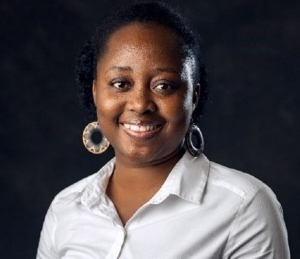 Sarah Kekeli Akunor is the author of this article