Ghana is a constitutional democracy, and Parliament exists to reflect the will, values, and priorities of the people.
In recent years, few issues have generated as much debate in Parliament as the LGBTQ-related bill.
What is striking is that more than half of the elected representatives—across party lines—have consistently opposed the normalisation of LGBTQ practices, citing cultural values, religious convictions, and social cohesion.
Yet despite this parliamentary position, the issue has lingered, creating hesitation, external pressure, and even difficulty for the President in assenting to legislation that reflects widely held societal norms.
This prolonged uncertainty raises a deeper question: why has this matter assumed such prominence in Ghana’s national discourse at all?
A question of national focus and mindset
Ghana’s development challenge has always been less about the absence of ideas and more about where we place our collective attention.
Nations rise or stagnate based on the issues they choose to prioritise.
At a time when Ghana is grappling with debt distress, youth unemployment, educational decline, weak industrial capacity, and worsening urban disorder, it is legitimate to ask whether prolonged national debate on LGBTQ issues represents the best use of political and intellectual energy.
This is not merely a legal or moral debate—it is a mindset issue.
A society confident in its identity does not allow itself to be distracted from its foundational values and urgent development tasks by issues that are neither indigenous nor central to its survival.
Our traditions existed long before this debate
One cannot ignore a simple historical fact: Ghana existed, functioned, and progressed as a society long before LGBTQ debates entered public consciousness.
Families were formed.
Communities thrived. Moral codes—shaped by tradition, religion, and communal responsibility—guided social life.
The nation produced teachers, farmers, engineers, traders, and leaders without redefining its cultural foundations.
The emergence of LGBTQ issues as a dominant public concern is a relatively recent phenomenon, largely imported through global ideological shifts rather than arising organically from Ghanaian social experience.
This does not mean individuals did not exist in private.
It means society did not revolve around redefining norms to accommodate minority ideologies at the expense of collective values.
Cultural sovereignty is not intolerance
Opposition to LGBTQ normalisation in Ghana is often mischaracterized as intolerance.
This framing is misleading.
Every society has the sovereign right to determine the moral and cultural boundaries that govern public life.
Ghana’s values—rooted in family, lineage, communal responsibility, and moral restraint—are not accidental.
They are the product of centuries of social organisation.
Respecting human dignity does not require abandoning cultural self-definition.
Tolerance does not mean compulsory endorsement, nor does it require elevating a non-indigenous issue into a national obsession.
The cost–benefit question we must ask
Development thinking demands a simple but powerful question: what do we gain, and what do we lose?
What measurable economic benefit accrues to Ghana from centering national debate on LGBTQ issues?
1. Will it create jobs?
2. Improve education outcomes?
3. Strengthen industry?
4. Reduce corruption?
5. Build ethical leadership?
Conversely, what do we lose?
1. Time and focus
2. Social cohesion
3. Cultural confidence
4. Policy attention to urgent economic reforms
A nation struggling to stabilise its economy cannot afford repeated diversions into ideological debates with no clear developmental payoff.
Parliament’s Signal and the People’s Voice
Parliamentary opposition to LGBTQ normalisation is not accidental. It reflects the sentiments of constituencies across the country—urban and rural, Christian and Muslim, north and south.
When elected representatives consistently signal resistance, it is a democratic expression of collective values.
Leadership, in such moments, requires clarity and courage—not prolonged indecision driven by external pressure.
Conclusion: Ghana Must Choose Its Priorities Wisely
Ghana’s future will not be secured by importing cultural debates from elsewhere.
It will be secured by discipline, focus, ethical leadership, and a mindset anchored in our own values.
The real national task before us is to rebuild institutions, empower the youth, restore economic dignity, and cultivate a development-oriented mindset.
These goals demand unity, not distraction.
History will not judge Ghana by how closely it mirrored Western social debates, but by how wisely it defended its identity while confronting its real challenges.
At this critical moment, Ghana must choose focus over distraction, purpose over pressure, and development over ideological diversion.
That choice begins with mindset.
Opinions of Monday, 19 January 2026
Columnist: Isaac Yaw Asiedu
Ghana's development challenge is mindset issue, not culture war
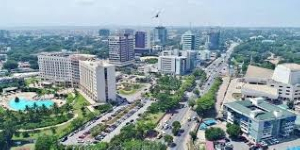 Ghana is a constitutional democracy reflecting the will, values, and priorities of the people