In recent years I have observed something deeply troubling in Ghanaian homes and communities. I have seen children under the age of ten who cannot understand or speak their own local language. A child is given a simple instruction in Twi or Ga and immediately turns to a parent and asks, “What does that mean?” The parent then translates the instruction into English.
This should alarm us all.
If this trend continues, in thirty years we will have Ghanaian parents who cannot speak their own language to their children—and worse, children who cannot communicate with their grandparents. A society where generations cannot speak to each other is a society slowly disconnecting from itself.
This is not simply a linguistic issue. It is cultural erosion.
And in my view, it represents one of the most extreme forms of neo-colonialism. Neo-colonialism refers to a situation in which a country is politically independent but continues to be shaped or influenced by external powers through economic systems, cultural dominance, and institutional structures inherited from colonial rule. The colonial administrators may be gone, but their language, systems, and norms continue to dominate society.
When a society begins to abandon its own languages while elevating the colonial language as the sole marker of intelligence, prestige, and opportunity, it reflects a deeper psychological dependency.
This is neo-colonialism of the mind.
Yet Ghana’s educational progress over the past sixty years is something we should celebrate. At the time of independence, literacy in the Gold Coast was estimated to be roughly 4 percent. Since then Ghana has built schools across the country, expanded access to education, and dramatically improved literacy rates.
Today Ghanaians compete globally in medicine, science, technology, business, and academia. English proficiency played an important role in that success. Those of us who grew up in the 1970s remember clearly what schools were like. Speaking vernacular in school could lead to punishment. Students who spoke Twi, Ga, Ewe, or other local languages in the classroom were disciplined.
The policy was simple: immersion in English would prepare Ghanaian students to succeed globally. In many ways, it worked. Our education in mathematics, science, literature, and government was delivered entirely in English. But when we returned home, we spoke our local languages with our parents and grandparents.
We lived comfortably in two linguistic worlds
English in school. Mother tongue at home. Today that balance is disappearing. Many young parents in urban Ghana—especially in middle-income households—now speak only English to their children at home. Their children respond only in English. When the child cannot understand Twi or Ga, the parents laugh it off—or even seem proud.
What exactly are these parents trying to prove?
Some parents themselves are no longer comfortable expressing complex thoughts in their own language. English has become the language of prestige and perceived intelligence, while local languages are treated as inferior.
We have reached a point where we laugh at people who speak excellent Twi or Ga but make grammatical errors in English.
Think about the absurdity of that.
There are deeply wise people in our communities who cannot participate fully in leadership or governance simply because they do not speak English fluently.
Language has become a gatekeeper of power.
Meanwhile, our children are losing the ability to communicate with the very people who carry our cultural memory. Grandparents now attempt to speak broken English to their grandchildren because the grandchildren cannot understand their own language. Yet the English spoken in these exchanges is often imperfect—broken English replacing a perfectly functional native language. It is a tragic exchange.
Imagine a German child claiming they cannot understand German but can speak only English. Or a Chinese child saying they cannot follow instructions in Mandarin but only in English.
Such a situation would be considered absurd.
Yet in Ghana, we are slowly normalizing it.
Research confirms this worrying trend. In some urban communities, many children now use English as their primary home language and have little or no proficiency in their mother tongue.
A study in Winneba found that only about 50% of children born to native speakers could speak the local Efutu language, while about 30% could not speak it at all. UNESCO has also warned that several Ghanaian languages are at risk because younger generations are no longer learning them.
Among the diaspora the situation is even more alarming. Reports suggest that up to 95% of Ghanaian children raised in the United Kingdom cannot speak any Ghanaian language.
However, as I reflected more deeply on this issue, I realized that my original concern was shaped largely by what I was seeing in urban Ghana. When we examine the entire country more holistically, a different but equally serious challenge emerges.
In many rural communities, the problem is the opposite. Children speak their local languages fluently, but their ability to read, write, and understand English is weak. Yet English remains the language of textbooks, examinations, higher education, and professional advancement.
My own experience during national service in 1989 illustrates this challenge vividly.
I was posted to teach science in Nuamakrom in the Central Region. My students were about 12 to 14 years old, roughly equivalent to ninth grade internationally.
I had prepared what I believed was a thoughtful and engaging lesson plan on the states of matter: solids, liquids, and gases. I had demonstrations and experiments carefully designed to help the students visualize the concepts.
But the lesson quickly came to a halt. The students could not spell the words solid, liquid, or gas. Many of them struggled even to pronounce the words.
And at that moment I asked myself a fundamental question: How could I explain the concept of the three states of matter if the students could not even pronounce the words describing them? How could I then proceed to discuss their characteristics—the shape of solids, the flow of liquids, the expansion of gases—if the foundational vocabulary itself was unfamiliar?
My well-prepared experiments became useless.
Instead of teaching science, I found myself teaching English. I became so deeply concerned about the future of those students that I threw myself into helping them improve their English comprehension.
In fact, I became so absorbed in that mission that I nearly missed my own medical school interview. My father eventually had to send my brother several times to Nuamakrom to convince me to return and pursue my career path. That experience stayed with me.
It revealed something important: Ghana’s language challenge is not simple. It is not just about preserving local languages or promoting English. It is about ensuring that our children can understand concepts while also gaining access to global knowledge. Urban children are losing their mother tongues. Rural children are struggling with English proficiency.
Both trends are dangerous. International experience provides useful guidance.
Singapore, a country with multiple ethnic groups and languages, adopted English as the primary language of education while still teaching Chinese, Malay, and Tamil as mother-tongue subjects. This pragmatic strategy helped transform Singapore into one of the world’s most competitive economies while preserving cultural identity.
India adopted a similar hybrid approach.
English is widely used in higher education, technology, medicine, and international business, while regional languages such as Hindi, Tamil, Bengali, and others continue to thrive culturally and academically.
This balance has helped produce millions of globally competitive graduates and supported India’s emergence as a major technology and pharmaceutical powerhouse.
These examples demonstrate an important principle: countries succeed when they balance global language proficiency with cultural language preservation. What Ghana truly needs is balance.
Research in child development shows that children can comfortably learn three languages simultaneously, and sometimes even four, when they receive consistent exposure. For conversational fluency, a language generally needs to occupy about 20–30 percent of a child’s waking hours.
Multilingualism is not a burden for children. It is natural.
One practical step Ghana could take is relatively simple. Many Ghanaian languages include five or six additional alphabet characters that do not exist in the standard 26-letter English alphabet. By formally introducing these additional letters alongside the English alphabet in early childhood education, children could begin learning to read both English and their local languages simultaneously through phonics.
Reading is fundamentally a phonetic skill. If children can recognize and sound out the additional characters used in Twi, Ga, Ewe, and other Ghanaian languages, they can begin developing literacy in their mother tongue at the same time they are learning English.
This approach strengthens both languages rather than forcing a choice between them.
Parents should speak their mother tongue at home.
Schools should teach English strongly. Local languages should be taught alongside English—not instead of it.
At the same time, the current swing in policy toward using local languages as the primary medium of instruction for all subjects must be approached carefully. Ghana is a multilingual nation with more than 80 languages, and implementing such a policy across diverse regions presents enormous logistical challenges. Without careful planning, teacher training, standardized materials, and clear transition pathways to English, such a policy could unintentionally isolate Ghanaian students from the global economy where English remains the dominant language of science, technology, research, and international commerce. The goal should not be linguistic isolation. The goal should be strategic bilingualism.
Parents must take responsibility first.
Speak your language to your children. Tell stories in Twi. Give instructions in Ga. Share proverbs in Ewe. Language survives through daily use. Schools must also improve structurally. Ghana needs better school infrastructure, adequate furniture, quality textbooks, and well-trained teachers who are respected and properly paid. Education reform cannot succeed without investing in the fundamentals.
At the policy level, Ghana should adopt a flexible bilingual education model. Urban schools may need stronger reinforcement of mother tongues to prevent cultural loss. Rural schools may need stronger English instruction to ensure academic progression.
One rigid policy cannot solve both problems. Ghana’s future depends on raising children who are culturally grounded and globally competitive. Our children should be able to speak comfortably with their grandparents in their mother tongue while writing research papers, building companies, and negotiating globally in English.
That future is possible. But only if we embrace balance. Teach English. Preserve our languages. Strengthen our schools. Prepare Ghanaian children for the world without losing their cultural soul.
A Personal Reflection
I say all this not as someone who opposes English or fears global engagement. On the contrary, I read, write, and speak English fluently, and I am comfortable communicating in both American and British accents. At the same time, I speak Twi and Ga fluently and can read both languages as well—though I read Ga a bit more slowly. I have not yet attempted to write full articles in Twi or Ga, and I suspect it would take some effort.
But that is exactly the point.
It is possible to be globally competent in English while remaining rooted in our mother tongues. My own experience demonstrates that multilingual ability is not a barrier to success—it is an advantage. In fact, I am able to communicate complex ideas—including medical concepts—clearly in Twi and Ga when speaking with patients, families, or community members who may not be comfortable with English.
Ghana should be raising millions of children who are just as comfortable speaking Twi, Ga, Ewe, Dagbani, or Fante with their grandparents as they are writing academic papers or conducting business in English. That is the balance we should strive for.
The goal should never be to replace one language with another. The goal should be to raise a generation of Ghanaians who can confidently move between cultures, languages, and ideas—without losing their identity.
Opinions of Tuesday, 10 March 2026
Columnist: Dr Bertha Serwa Ayi
Ghana's Language Crisis: Preserving our mother tongues without sacrificing our global future
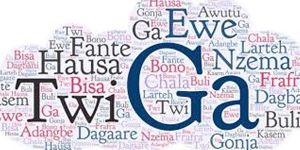 File photo of mother langauge

Sports