I extend sincere diplomatic courtesy and appreciation for your prompt humanitarian response following the missile strike that wounded Ghanaian peacekeepers in southern Lebanon.
In times of shared sorrow, words carry profound weight.
Your description of the attack as “tragic” and “catastrophic,” along with your wishes for the swift recovery of the injured soldiers, reflects genuine compassion.
Ghana receives such gestures with gratitude, for they affirm our shared humanity amid the smoke of conflict.
Yet only two days earlier, on March 5, during a public briefing in Accra, you urged Ghana to “join its voice” in confronting Iran and to support a strategic change in its leadership to end threats and instability.
That appeal, understandable from Israel’s perspective, now stands in painful contrast to the fresh wounds suffered by Ghanaian soldiers serving under the United Nations.
Tragedy, once named, requires more than sympathy—it demands reflection.
The attack of March 6 tore through the Ghanaian battalion headquarters in southern Lebanon, leaving two soldiers critically injured and another traumatised.
Ghanaian peacekeepers have served in Lebanon for decades, often under dangerous and unpredictable conditions.
These events revive older concerns about the security of our personnel abroad and the broader risks that accompany escalating regional conflict.
They also follow a troubling incident in December 2025 at Ben Gurion International Airport, where several Ghanaians, including members of an official delegation were detained for hours and subjected to questioning and searches that Ghana later described as humiliating and degrading.
Such incidents, when repeated, inevitably strain trust.
Reciprocity, transparent investigation, accountability, and credible assurances against recurrence are essential to rebuilding confidence.
Your Excellency, during the Israel–Hamas War in November 2023, I addressed an open letter to your predecessor, Shlomit Sufa, cautioning that if the conflict escalated unchecked, it “may not be like other wars; it may be apocalyptic in scope and possibly destructive of our globe.”
That warning was offered not in division, but in concern for the safety and future of all peoples caught in the widening arc of war.
Recent missile exchanges between Israel and Iran demonstrate the growing lethality of modern warfare and the alarming vulnerability of civilian populations - even in countries equipped with advanced defense systems.
Ghana, however, does not possess such protections.
Our security priorities focus primarily on internal stability and peacekeeping obligations.
We do not have missile interception systems, sophisticated air defenses, or the strategic infrastructure necessary to withstand retaliatory strikes in a wider regional confrontation.
Alignment in conflicts of this magnitude, without equivalent protection, exposes vulnerabilities that Ghana cannot afford.
Our ports, markets, infrastructure, and communities would all be at risk should tensions expand beyond the Middle East.
Precisely because great powers often allow strategic rivalries to overshadow the urgency of peace, middle powers like Ghana carry a different kind of responsibility.
Our diplomatic tradition, shaped by the non-aligned vision of Kwame Nkrumah, strengthened through decades of peacekeeping, and inspired by the global statesmanship of Kofi Annan, places upon us a quiet but meaningful moral authority.
We can call for restraint without appearing weak, advocate dialogue without conceding defeat, and remind the world that wisdom in diplomacy is often measured not by the volume of power, but by the courage to prevent catastrophe.
The Hebrew Scriptures offer a powerful reminder of the difference between victory and legacy.
In 1 Chronicles, King David is told he cannot build the temple because he has shed too much blood.
Instead, that task falls to his son Solomon, whose name signifies peace and rest.
True greatness, the text suggests, lies not only in the victories of war but in the achievements of peace.
History also remembers another figure: Samson, the blinded warrior who in despair pulled down the pillars of the temple, destroying himself and his enemies alike.
If modern conflicts are pushed toward such desperation; if nuclear doctrines or catastrophic retaliation ever become reality, the consequences would extend far beyond the borders of any single nation.
Ghana therefore pleads for wisdom over pride and restraint over escalation.
In moments such as this, the measure of leadership is not found in the power to escalate conflict, but in the wisdom to pause, reflect, and choose the harder path of peace.
May the calm voice of diplomacy silence the roar of war.
May the wounded recover before new wounds are inflicted.
May the pain of mistrust fade like morning mist across the savanna.
And may history remember not the clash of weapons, but the courage of those who chose dialogue over destruction.
With respect for your office, hope for the recovery of the injured, and a shared aversion to catastrophe.
Opinions of Monday, 9 March 2026
Columnist: Seth Awuku
Ghana must choose diplomacy over alignment in the Israel-Iran crisis
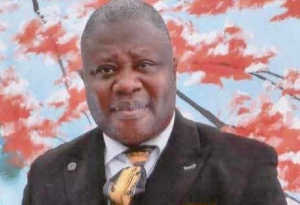 Seth K Awuku is a writer on international law, diplomacy, and refugee governance