Over the past few months, the Ghanaian Cedi has shown encouraging signs of strength against the US dollar. For many, this brings hope for economic stability and improved purchasing power.
Yet, while financial analysts celebrate this development, ordinary citizens often report a frustrating reality: prices of everyday goods, fuel, food, and household items, remain stubbornly high.
“The cedi is stronger, but at the market, I still pay the same for rice and cooking oil,” says a trader in Accra.
Understanding this apparent disconnect is crucial. Why doesn’t a stronger cedi immediately translate to cheaper goods? And how does this currency strength benefit the economy in the long run?
1. The Strengthening Cedi: A Snapshot
The exchange rate of a currency reflects a country’s economic health. A stronger cedi means that each Ghanaian Cedi can purchase more US dollars.
Why this matters:
• Imported goods, priced in dollars, become cheaper for local businesses and consumers.
• Ghana’s heavy reliance on imports—fuel, medical supplies, machinery, and some food—means that the cost of these essential items decreases in local currency terms.
• Government debt denominated in foreign currencies becomes easier to manage, freeing resources for public investment.
For example, if the cedi moves from GHS 14 to GHS 12 per US dollar, this improves Ghana’s purchasing power and can reduce the cost of imports over time.
In theory, lower import costs should lead to lower retail prices and reduced inflation.
2. Why Citizens Don’t Yet See Cheaper Prices
Despite the cedi’s improvement, everyday prices often remain the same due to: a) Delayed Transmission of Benefits • Retailers and distributors may still sell imported goods bought months ago at higher exchange rates. • Price reductions occur gradually as new imports arrive at lower costs.
b) Persistent Domestic Inflation
• Costs of local production, transportation, and wages remain high.
• Even with cheaper imports, domestic inflation can offset potential savings.
c) Market Caution
• Traders may delay adjusting prices, anticipating future currency fluctuations. • Limited competition in some sectors may reduce incentives to lower prices.
d) Domestic Goods Costs
• Many items, like locally produced food, services, and construction materials, are influenced more by domestic factors than by foreign exchange rates.
e) Indirect Effects Take Time
• Currency strength improves fiscal health and investor confidence gradually. • These benefits may not be immediately visible in consumer prices but lay the groundwork for economic stability.
Citizens may not notice immediate changes, but the foundations for longer-term improvements are being set.
3. Positive Impacts of a Stronger Cedi
Even if prices haven’t dropped yet, a stronger cedi offers several advantages:
• Lower Cost of Imports: Reduces business costs and eventually retail prices. • Reduced Inflationary Pressures: Helps stabilize prices over time. • Improved Fiscal Health: Makes foreign debt service cheaper, freeing resources for development. • Investor Confidence: Signals economic stability, attracting investment and boosting entrepreneurship. • Enhanced Savings and Planning: Citizens and businesses can plan with more certainty, fostering economic activity.
4. Ghana and Africa’s Fiscal Agenda
Ghana’s cedi strength coincides with a broader push for fiscal autonomy across Africa.
In May 2025, the African Union held its First Debt Conference in Lomé, Togo, with former President John Mahama representing Ghana. The conference emphasized:
• Moving beyond crisis management • Reclaiming fiscal self-determination • Strengthening local currencies • Building resilience against external shocks
Ghana’s rising cedi reflects this continental momentum: improved currency strength enhances fiscal space and reduces vulnerability to external debt pressures. This alignment positions Ghana to benefit from African Union initiatives aimed at sustainable debt management and economic resilience.
5. Why Price Reductions Take Time
The cedi’s impact on everyday prices is delayed due to:
• Food: Seasonal cycles, transport, and storage costs influence prices. • Fuel: Global oil prices, taxes, and logistics may offset currency gains. • Services: Wages and operational costs dominate pricing in transport, education, and healthcare.
The stronger cedi benefits the economy indirectly. Citizens will notice gradual improvements over months, not immediately at the checkout.
6. Opportunities Ahead for Ghana
Even before retail prices fall, the strengthening cedi creates opportunities:
• Encouraging Local Investment: Lower import costs enable businesses to upgrade machinery and expand production. • Promoting Value-Added Exports: Stable currency strengthens Ghanaian goods in international markets. • Debt Management: Savings from cheaper debt service can fund infrastructure, education, and healthcare. • Policy Support: Government policies can complement currency gains with competition regulation and supply chain strengthening. • Continental Integration: Ghana’s currency stability aligns with AU initiatives on fiscal self-determination, boosting investor confidence in Africa’s growth story.
Conclusion
The strengthening of the Ghanaian Cedi against the US dollar is a positive signal for the country’s economy. It promises:
• Lower import costs • Reduced inflationary pressures • Improved fiscal health • Greater investor confidence
Yet citizens may not immediately notice lower prices due to persistent domestic inflation, market behavior, and delayed benefits.
Patience is key. As new imports enter the market, domestic production stabilizes, and policies leverage the stronger cedi, tangible improvements in daily life will follow.
Moreover, Ghana’s rising cedi aligns with Africa’s broader fiscal autonomy agenda, as discussed at the AU Lomé Debt Conference. This shows that currency strength is not just a local phenomenon—it is part of a continental strategy to empower African nations, reduce external vulnerabilities, and build a more prosperous future.
A stronger cedi today may not immediately lighten the household basket, but it lays the foundation for sustainable economic growth and greater financial independence for Ghana tomorrow.
Opinions of Wednesday, 3 September 2025
Columnist: Dr Isaac Yaw Asiedu
Ghana cedi strengthens against the US Dollar: What it means for citizens and economy
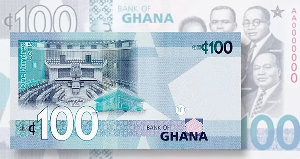 File photo of GH¢100 Cedi note