Opinions of Tuesday, 16 December 2025
Columnist: Issaka Sannie
Ghana, Nigeria and the case for a shared African future

The Ooni of Ife, Oba Adeyeye Enitan Ogunwusi, installed Ghana's President, John Dramani Mahama as Aare Atayeto Oodua Akoko. The ceremony carried weight beyond protocol because Ile-Ife holds profound significance within Yoruba consciousness thus, president Mahama's installation spoke to something broader: the deep historical entanglement of African societies that colonial boundaries never fully severed.
His excellency’s childhood years in Nigeria add personal dimension to this recognition. His formative experience mirrors the reality of millions whose lives, families and economic activities have always moved across borders inherited from European cartography. These movements predated nation-states and continue despite them.
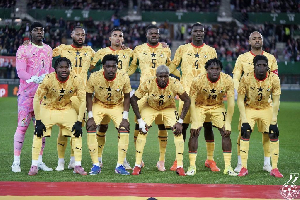
The playful rivalry over jollof rice and football supremacy captures something genuine about Ghana-Nigeria relations. Social media erupts periodically with passionate defences of each country's culinary and football superiority nonetheless, this banter masks deeper truths.
People arguing over sports and jollof rice preparation share cultural reference points that transcend national identity. The debate exists precisely because both countries recognise themselves in each other's traditions. The love for and protection of collective identity. African.
West Africa operated through fluid networks of exchange long before colonial partition. The ancient Ghana Empire, Mali Empire and Oyo Empire sustained themselves through trade routes, institutional learning and cultural transmission across vast territories.
Commerce and kinship bound people together more effectively than modern passport systems. Colonial rule disrupted this organic order, yet the underlying social fabric proved resilient.
Ghana's independence in 1957 inspired continental liberation movements, whilst Nigeria's demographic weight positioned it as central to African diplomatic architecture.
Both countries shaped ECOWAS and advanced regional stability. Cultural and economic migration followed naturally from these centuries of interconnection. Ghanaians built communities across Nigeria for decades and Nigerians established parallel structures in Ghana.
The mass deportations of the early 1980s represent painful rupture, that failed to permanently redefine the relationship. Trade resumed, people-to-people exchange continued, reflecting bonds that survived policy failures.
Contemporary tensions around criminal activity, regulatory compliance and trade disputes involving some Nigerian nationals within Ghana deserve serious attention. Every sovereign state maintains legitimate authority to uphold legal frameworks.
However, history warns against allowing specific offences to calcify into collective suspicion. Criminal behaviour requires targeted institutional response, not ethnic categorisation for collective punishment leading to stereotyping.
Ghana and Nigeria together anchor West Africa's economic weight. Their policy alignment strengthens regional commerce, improves investor confidence and expands opportunities across the sub-region. When bilateral trust deteriorates, markets contract and shared progress stalls.
ECOWAS protocols governing free movement and trade harmonisation depend on functional cooperation between Accra and Abuja. Diplomatic friction creates ripple effects throughout the region.
President Mahama's installation acknowledges leadership that resonates across national boundaries, reflecting shared destiny rooted in centuries of interconnection.
Contemporary challenges demand dialogue grounded in mutual respect, consistent legal enforcement and renewed commitment to pan-African solidarity. The deportations of the 1980s should function as historical warning rather than policy template for the continent of Africa and beyond.
West Africa's prosperity depends on Ghana and Nigeria recognising themselves as powers with combined demographic weight and diplomatic influence that positions them as regional anchors. The choice facing both countries involves acknowledging structural reality: they succeed together or struggle separately. Pan-African unity functions as practical necessity.
Ghana and Nigeria built this reality through centuries of exchange. Contemporary policy should align with these enduring patterns, whether the jollof rice comes with tomato stew or party rice accompaniment, the collective identity and shared future thus and must remain intact.

![Wontumi allegedly appeared emotional and requested for water [This image is AI generated]](https://cdn.ghanaweb.com/imagelib/pics/975/97547141.295.jpg "Wontumi allegedly appeared emotional and requested for water [This image is AI generated]")