Introduction
For years, Ghana has fought illegal small-scale mining—known locally as galamsey—through soldiers, task forces, equipment seizures, and public awareness campaigns. Yet despite these efforts, the problem persists: illegal pits multiply, rivers run polluted, forests disappear, and communities remain caught between survival and legality.
The truth is this: galamsey did not begin under any one president or political party. It has deep roots in traditional gold-winning practices. Still, it escalated into a national crisis with the rise in global gold prices, the influx of excavators, weak regulation, and political protection.
While law enforcement remains necessary, it is no longer sufficient. The crisis is not only legal—it is deeply human, social, and economic. What Ghana has underutilized is a nationwide educational strategy that targets illegal miners not just to teach safer techniques, but to foster a mindset that values long-term sustainability over short-term gain.
Many illegal miners see galamsey as the quickest way to earn a living. However, what often goes unseen is the true cost of their actions—to the environment, public health, food production, and Ghana’s future. Until miners see themselves not merely as diggers of gold, but as guardians of the nation’s natural wealth, no amount of enforcement will bring lasting change.
How did Galamsey begin?
Long before colonial rule, gold won by local communities sustained trade across the Akan goldfields. Modern Ghana attempted to formalise rather than criminalise small-scale mining in the late 1980s by creating a licensing path and regulating mercury. But licensing stayed slow and costly, pushing many miners to operate outside the law. Over time, informal panning hardened into a parallel industry.
When did it become a national crisis?
The crisis most Ghanaians recognise today—large pits, river dredging, and heavy
machinery—accelerated in the late 2000s and early 2010s as gold prices rose and foreign capital and equipment poured in. Successive governments responded with crackdowns and reforms, from military task forces to community mining programmes and new traceability ideas. But without a clear, accessible legal pathway and skills to mine responsibly, the cat-and-mouse cycle continues.
What Galamsey Has Done—Pros and Cons
The Pros (often ignored)
1. Livelihoods and inclusion: Small-scale mining is one of the few cash sources in many rural districts, supporting traders, transporters, artisans, and households.
2. Local multiplier effects: Money circulates locally, keeping small towns alive where large-scale investment is scarce. The Cons (why it’s a crisis)
3. Water destruction: Siltation and chemical pollution damage river basins, raise treatment costs, and threaten fisheries and irrigation.
4. Forest and farm loss: Cocoa and food crops give way to open pits; forest reserves and buffer zones are degraded.
5. Public health risks: Unprotected mercury use and contaminated water harm miners and communities.
6. Fiscal leakages: Smuggling and off-book sales starve the state and districts of revenues.
Who is to blame?
Blame is shared—and systemic.
1. Politics: Alternating cycles of crackdown and quiet tolerance, sometimes shielding allies at election time.
2. Local power brokers: A mix of local officials, traditional authorities, and security actors benefiting from rents or silence.
3. Financiers and buyers: Those who supply excavators, fuel, and off-take routes for illicit gold.
4. A broken licensing regime: Slow, centralised processes that leave willing miners outside the law. No single party or presidency owns this problem. Networks of profit and impunity do.
The Missing Piece: Education that changes incentives
Enforcement matters. But we can’t police our way out of a skills and incentives problem. Education—designed with miners, delivered where they work, and tied directly to licences and better prices—can reduce harm quickly while protecting livelihoods.
A Practical “Miner’s Basic Certificate”
Short, hands-on training every small-scale miner must complete to get or renew a licence:
1. Legal basics & ethics: No-go zones, permits, penalties, community relations.
2. Basic geology & prospecting: Sampling, reading the ground, avoiding blind digging.
3. Safer mining methods: Pit stability, timbering, dewatering, accident prevention.
4. Mercury-free processing: Gravity concentration, retorts, and safer alternatives.
5. Water protection: River setbacks, tailings, and turbidity control.
6. Land reclamation: Backfilling, topsoil, contouring, re-vegetation.
7. Occupational health & first aid: PPE, heat stress, emergency response.
8. Business skills: Costing, record-keeping, taxes, shared equipment management.
9. Environmental monitoring: Simple field tests, GPS/photo logging, reporting.
10. Community & child protection: Zero tolerance for child labour; grievance channels.
Duration: 30–40 guided hours for workers; ~120 hours for pit supervisors/owners.
Assessment: Practical demonstrations and brief quizzes; certificate linked to Ghana Card.
How to Deliver It (so it actually reaches the pits)
1. Community Mining Schools (CMS): District-level hubs (Tarkwa, Obuasi, Dunkwa,
Wassa, Enchi, Bibiani, Konongo, etc.) hosted by Assemblies; curriculum support from UMaT and TVET Service.
2. Mobile Training Units: 4×4 vans with demo kits (sluices, centrifuges, retorts) running weekend clinics at sites.
3. Peer Trainers: Experienced miners fast-tracked as certified trainers (1 per 50 miners).
4. Radio & WhatsApp micro-lessons: Daily 10-minute tips in local languages; short video modules and checklists.
5. Women-only cohorts: Target support for women in washing/processing chains.
6. Chiefs & faith leaders: One-day awareness sessions to align community authority with the rules.
7. TVET internships: Plumbing, welding, electrical, and surveying students support safer, legal operations.
Tie Learning to Real Rewards (and Real Consequences)
Training only works if compliance pays:
1. Licence-on-Learning: No licence or renewal without the Basic Certificate; instant digital verification at Minerals Commission desks.
2. Clean Gold Premium: Certified mercury-free gold earns a small bonus per gram
through registered buyers.
3. Equipment Vouchers: Graduates will receive partial subsidies to buy safer mining tools—retorts (for capturing mercury fumes), sluice box mats (which trap fine gold without chemicals), and protective gear such as helmets, boots, gloves, and masks (PPE)—all provided through approved suppliers.
4. Fast-Track Permitting: Certified sites get priority processing and a one-stop district helpdesk.
5. Group Insurance: Discounted cover for certified teams only.
6. Reclamation Bond Refunds: Stage-based refunds after verifiable pit closure and re-vegetation.
Enforcement, smarter: If you learn, certify, and comply, you mine legally. If you refuse and dig in rivers, buffers, or reserves, you lose equipment and face a special mining court. Publish monthly district dashboards (trainings completed, licences issued, seizures, court outcomes, hectares reclaimed) to keep the system honest.
Who Does What (clear roles, no excuses)
1. Minerals Commission: Lead agency; digitise licensing; run compliance dashboards; manage traceability and buyer accreditation.
2. UMaT & TVET Service: Design curricula, certify trainers, examine and certify miners.
3. EPA, Forestry, Water Resources Commission: Set red-line zones; monitor water and forests; verify reclamation.
4. District Assemblies & Traditional Authorities:
5. Large Mines & Buyers: Fund equipment vouchers and pay clean-gold premiums through CSR and offtake contracts.
6. Police/Military: Focus on no-go zones, high-risk sites, and repeat offenders.
How to Pay for It (without new burdens on ordinary Ghanaians)
1. Minerals Development Fund allocations for CMS setup and mobile units.
2. A modest traceability levy on small-scale gold sales to finance training and monitoring.
3. CSR pools from large-scale mines to underwrite equipment and reclamation tools.
4. Approved-supplier co-pays (discounts in exchange for exclusive vendor status).
5. Development partner support for mercury-free technology pilots and water-quality labs.
A 12-Month Pilot with Measurable Targets
Where: Six hotspots—Tarkwa-Nsuaem, Obuasi East, Wassa Amenfi (East/West), Upper
Denkyira (East/West).
Targets:
a. Enrol 30,000 miners; certify 20,000.
b. Cut mercury uses by at least 30% in pilot districts.
c. Reduce average river turbidity on monitored stretches by 20%.
d. Reclaim 10,000 hectares under verified bonds.
e. Bring 70% of active small-scale sites in the pilot into legal status.
Pros and Cons of an Education-First Push
Pros: Rapid harm reduction; safer, higher-yield work; stronger community trust; more gold into legal channels; better district revenue.
Cons: Upfront costs; resistance from entrenched interests; need for disciplined coordination.
Verdict: The benefits far outweigh the obstacles when learning is welded to licensing, market incentives, and transparent enforcement.
Conclusion
Galamsey is not merely lawlessness; it’s a market shaped by poverty, profit, and bureaucracy. It began long ago but became a national emergency when mechanisation and impunity outpaced our institutions. Ghana can protect rivers and protect livelihoods if we stop treating galamsey as a partisan talking point and start treating it as a whole-of-society problem: create legal pathways that are fast and fair, draw bright red lines for nature, prosecute enablers, trace the gold, and—above all—teach miners how to mine right. Learn, certify, comply—or don’t mine at all. That is how we turn a national headache into a national skill set.
References
Hilson, G A Contextual Review of the Ghanaian Small-Scale Mining Industry.
International Institute for Environment and Development (IIED).
Government of Ghana. Small-Scale Gold Mining Law (PNDCL 218, 1989).
Government of Ghana. Mercury Law (PNDCL 217, 1989).
Government of Ghana. Minerals and Mining Act, 2006 (Act 703) and subsequent
amendments.
Minerals Commission of Ghana. Licensing Guidelines and Framework for Artisanal and Small-Scale Mining.
Environmental Protection Agency (EPA) Ghana. Environmental Standards and
Reclamation Guidance for Mining.
University of Mines and Technology (UMaT), Tarkwa. ASM Training Materials and
Mercury-Free Processing Guides.
Water Resources Commission (WRC) Ghana. River Buffer Regulations and Monitoring Reports.
Reports and policy briefs on community mining, enforcement actions, and gold
traceability in Ghana (various).
Opinions of Wednesday, 17 September 2025
Columnist: Dr Isaac Yaw Asiedu
Galamsey in Ghana: How it began, what it has become, and why education must lead the way
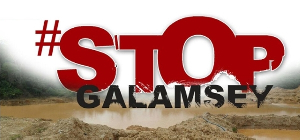 Galamsey in Ghana has become a national canker