With less than five years left to achieve the Sustainable Development Goals, Ghana must confront uncomfortable truths about systems that continue to exclude the most vulnerable. One such system lies at the intersection of healthcare and justice, where women and children who report, abuse are required to pay for medical evidence before their cases can proceed.
In Ghana, survivors of domestic and sexual abuse are routinely referred by the police to hospitals for medical examination and completion of police medical forms. These forms are critical to investigations and prosecutions.
Yet, according to widely cited Ghana Medical Association fee schedules, doctors charge between GH¢300 and GH¢800 to complete and sign police medical forms for rape, defilement, and other sexual offences. In some cases, particularly where a formal medical opinion is required for court, the cost can rise to GH¢1,000 or more. These fees are typically paid directly by victims and are not covered under the National Health Insurance Scheme.
For many women and families, these costs are simply unaffordable. The result is predictable and tragic. Survivors withdraw complaints, parents abandon cases involving abused children, and investigations collapse before they can begin. The message unintentionally sent is that justice in Ghana is not a right, but a service reserved for those who can pay.
This reality undermines Ghana’s commitment to the Sustainable Development Goals, particularly Goal 5 on gender equality, Goal 10 on reducing inequalities, and Goal 16 on peace, justice, and strong institutions. It also contradicts the spirit of Ghana’s 1992 Constitution and the Domestic Violence Act, which were designed to protect victims, not burden them with financial obstacles.
The issue is not about blaming medical professionals, who deserve fair compensation for their work. Rather, it is about state responsibility. When the justice system requires medical documentation, the state must ensure that the cost of obtaining that documentation does not fall on traumatised victims who cannot afford to pay. In a few districts, local authorities have absorbed these costs, proving that alternatives are possible when there is political will.
As Ghana counts down to 2030, the question is no longer whether this system is flawed, but how long it will be allowed to persist. Every abandoned case represents not only a failure of justice, but a breach of trust between the state and its citizens. If women and children cannot access justice because they cannot afford a doctor’s signature, then the promise of the SDGs remains unfulfilled.
Removing medical fees as a barrier to justice is not radical. It is necessary. It is achievable. And it is long overdue.
Opinions of Tuesday, 23 December 2025
Columnist: Michael Sarfo
Five Years to the SDGs: Is Ghana pricing women and children out of justice?
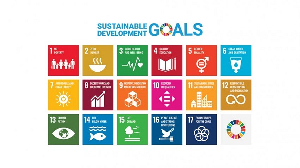 The SDG focuses on hunger, education, gender equality, climate action