For many Ghanaian parents, the phrase "extra classes" no longer means voluntary academic support. It has become a coded word for extortion, a compulsory levy imposed by schools under threat of punishment, exclusion, and academic sabotage.
Across public basic schools and Senior High Schools, headteachers and teachers have institutionalized a system where pupils are forced to pay for lessons held before school, after school, on weekends, and during vacations. These fees, often labelled as "intervention fees," "remedial levies," or "teacher motivation," are illegal under the Free Compulsory Universal Basic Education (FCUBE) and Free SHS policies. Yet they persist because defiance carries no consequence.
The mechanism of extortion is simple and ruthless. Teachers deliberately underperform during normal contact hours, rushing through the syllabus or withholding key explanations. The real teaching is then reserved for the paid extra class.
A child whose parent cannot pay is left deliberately behind. In some schools, non-payers are made to sit outside, given menial punishments, denied mock examinations, or publicly shamed. Fear does the rest. Parents pay not because they see value, but because they fear victimization of their children.
This is not about improving learning outcomes, it is about financial engineering. With government intervention grants paid inconsistently since 2017 up to date, school heads have turned to parents as ATMs. What began as a GH¢30 PTA levy has mutated into termly demands of GH¢100 to GH¢300 per child, a crushing burden when low-income households already spend up to 40% of earnings on a single child's education. For families with three or four children, it is an impossible arithmetic that forces dropouts, child labour, and early marriage for girls.
The Ghana Education Service issues directives every term cautioning against illegal fees, but they are ignored because the chain of benefit protects the perpetrators. When heads are sanctioned, regional directors and teacher unions plead for them, because the proceeds flow upward. Accountability has collapsed.
Compulsory extra classes are therefore not an educational intervention, they are a regressive tax on poverty, a betrayal of the teacher's calling, and a direct sabotage of free education in Ghana. Until the Ministry of Education enforces sanctions, including dismissal and prosecution, Ghanaian classrooms will remain markets where grades are sold to the highest bidder and the poor are priced out of their right to learn.
Opinions of Monday, 21 September 2026
Columnist: Awudu Razak Jehoney
Extortion through compulsory extra classes in Ghanaian schools
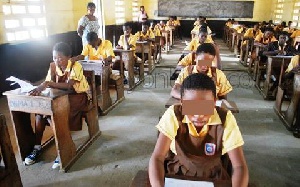 Compulsory extra classes spark concerns among parents