Every Ghanaian knows that our biggest problem is not money, not government, and not lack of resources.
It’s our mindset.
We all say it every day — “Ghana will never change.”
But when it comes to doing something about it, everybody is waiting for someone else to start.
We love to blame
We have become experts in blaming others.
Politicians blame their predecessors, citizens blame politicians, and workers blame “the system.”
But the truth is, we are the system.
And let’s not forget — politicians are also citizens.
They come from our families, our churches, our schools, and our communities.
They didn’t drop from the sky. If society is dishonest, selfish, and undisciplined, then the people who rise into leadership will carry the same attitudes with them.
That’s why changing leadership alone won’t change the country — we must change the people’s mindset that produces the leaders in the first place.
When we throw rubbish into drains, when we take bribes, when we show up late to work, when we use our positions for personal gain — we are all part of the problem.
As Professor Stephen Adei once said, "Ghana’s problem is not a lack of plans, but a lack of discipline and responsibility."
A report by the National Commission for Civic Education (NCCE) found that most people know corruption and indiscipline are wrong, yet they still take part in them because “that’s how things work here.”
Wrong has become normal
We’ve made wrongdoing so normal that doing the right thing now looks strange.
According to Afrobarometer (2022), 85% of Ghanaians believe corruption is everywhere, but only 22% say they would report it.
Why?
Because people think nothing will change.
This is the mindset that keeps us stuck — when we know something is wrong but accept it anyway.
Education without change
Our schools train us to pass exams, not to solve problems.
We memorize and repeat facts, but we don’t learn values.
We chase certificates instead of skills.
As Dr Kwame Nkrumah once said, “The educated Ghanaian must not become a superior clerk but a creator of progress.”
Sadly, today’s education often produces people who seek comfort instead of challenge, and position instead of purpose.
Ghana is not a private company
In a country where everyone is working for their own pocket, how can we expect progress?
Ghana is not a private company.
It belongs to all of us.
Yet, many treat public office as personal property and see state resources as theirs to enjoy.
Let me share a simple experience from Japan that taught me something powerful.
When my family joined me here, I went to the city hall to register my two daughters for preschool.
The staff who attended to me was very kind, patient, and helpful.
I was so grateful that I later sent him a small coffee gift set with a thank-you note.
To my surprise, the parcel was returned to me with a short message: “It was my job and pleasure to serve you. I cannot accept this gift.”
I couldn’t believe it.
In Ghana, that would be almost impossible.
Even when people are just doing their job, they expect “something small.”
In Japan, even when employees receive gifts during business trips, they return them to the company because gifts are considered for the organisation, not for personal benefit.
That’s how strong honesty and discipline are here.
The people have their nation at heart.
One thing I admire most about them is that they don’t say “I”, they say “We”.
Can Ghanaians do the same?
Can we be honest and responsible even when no one is watching?
Until we learn this spirit, no government change will help.
No government can succeed with this mindset
The World Bank’s 2023 Report on Governance shows that weak accountability and poor civic responsibility are key barriers to Ghana’s progress.
These are not technical problems — they are mindset problems.
The truth is, no government, no matter how visionary, can succeed if the people’s mindset remains unchanged.
When citizens think only of themselves, even the best policies will fail, institutions will weaken, and reforms will eventually crumble.
Without a change in attitude, even the promising 24H+ Economy will not succeed.
Every government will fail when citizens believe that change is someone else’s job.
When politics becomes a battlefield
What makes the situation worse is that Ghanaians no longer debate ideas — we fight over personalities.
Every day on social media, people pour hate and insults instead of reason and understanding.
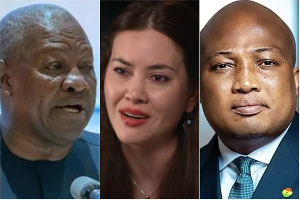
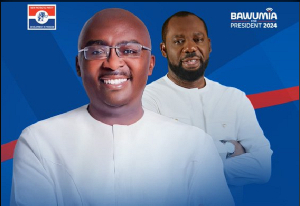
One recent post that caught my attention said: “Envious and hateful NDC, you think John Mahama and his brother Ibrahim Mahama alone are supposed to have money in Ghana? Any other wealthy politician is corrupt, right? The majority of NPP politicians were wealthy before joining politics, unlike John Mahama, Sammy Gyamfi, Okudzeto Ablakwa, and co.”
Comments like this show how far we’ve fallen. We no longer discuss corruption, fairness, or public accountability — we defend “our side” blindly.
We hate those who disagree.
We excuse wrongs when they benefit our political color.
This kind of mindset destroys nations.
It divides communities, kills truth, and turns national progress into a team fight.
Changing begins with us
Change doesn’t need to start with a revolution.
It starts with small, honest actions:
1. In schools: teach respect, service, and honesty — not just exams.
2. In offices: reward people for discipline and hard work, not for loyalty to bosses.
3. In families: raise children to believe that honesty is strength, not foolishness.
When I worked with a company in Japan after graduation, I saw how everyone — from the cleaner to the manager — felt personally responsible for the organization’s success.
You could see efficiency in everyone’s work.
That is what we need in Ghana: the spirit of togetherness, the Ubuntu way — I am because we are.
The hard truth
We all know what is wrong. We talk about it on the radio, on social media, and even in church.
But talk alone won’t fix anything.
Ghana will only change when we do.
Politicians are citizens, and citizens create politicians.
If our society continues to celebrate greed, dishonesty, and shortcuts, we will keep producing the same kind of leaders.
Our nation’s success will not come from slogans or plans.
It will come from citizens who think differently and act responsibly.
Until Ghanaians change how we think about work, honesty, and service, every government will stumble on the same stone.
The mirror is in front of us.
The question is not whether Ghana can change — it’s whether we will.
References:
1. Afrobarometer Round 9 Survey, 2022. Corruption, Trust, and Accountability in Ghana.
2. National Commission for Civic Education (NCCE), 2022. Annual Civic Survey Report.
3. World Bank, 2023. Ghana Governance and Public Sector Diagnostic Report.
4. Adei, S. (2021). Leadership and Integrity in Ghana. Pentecost University Lecture.
5. Nkrumah, K. (1961). I Speak of Freedom. Heinemann.
Opinions of Monday, 27 October 2025
Columnist: Isaac Yaw Asiedu
Everyone knows Ghana's problem is mindset - but nobody wants to change
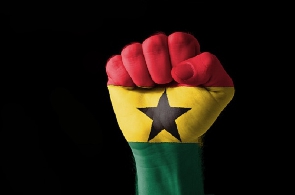 The author says Ghana's biggest problem is nothing but our own mindset