Opinions of Saturday, 8 November 2025
Columnist: Nana Akwah, Contributor
Duty and Desertion: A military analogy for marital abandonment

A Civic Invocation on Widowhood, Inheritance, and the Ethics of Presence
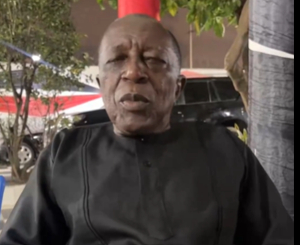
Nana Akwah - Retired Regimental Sergeant Major (WO1),
Ghanaian Army - Mentor, Legacy Architect, and Steward of Civic Ethics
I speak not from sentiment, but from service. I speak as one who has stood at the post of duty, who has witnessed the cost of absence, and who understands that fidelity, whether in uniform or in union, is not a feeling, but a discipline.
In the military, we are taught that every post is sacred. It is not merely a location, it is a covenant. To abandon it is not simply to leave — it is to breach. A soldier who disappears without leave is not merely absent; he is derelict. And the longer the absence, the deeper the breach.
A few days may be forgiven. A month may be punished. But when absence stretches into months - sixty, ninety, or more, it becomes desertion. The soldier is presumed to have forsaken duty. He is dismissed, disgraced, and stripped of rank and entitlements.
So too in marriage. A spouse who departs the marital home for a brief season may be reconciled. But one who vanishes for years — ten, fifteen, even twenty — without support, without reconciliation, without return — has not merely left. They have deserted. They have vacated the post of covenant.
And when such a deserter returns — not in life, but at the hour of death — to claim property, dignity, or widowhood, I ask: what honor remains? What entitlement survives abandonment?
Widowhood, I have come to understand, is not a certificate. It is not a document held in hand, nor a claim made at the hour of death. Widowhood is a covenant kept unto the end. It is the quiet endurance of presence, the shared burden of life, and the sacred companionship that does not falter when the body weakens or the spirit fades.
In Ghanaian law, the Intestate Succession Law, 1985 (PNDCL 111) provides a framework for distributing the estate of a person who dies without a will. It prioritizes the spouse and children, followed by parents and then the extended family. Siblings, unless named in a will or unless the deceased died without closer heirs, do not inherit by default. Their role is not one of entitlement, but of stewardship — especially in overseeing funeral rites and preserving family honor.
Yet, in our customary traditions, the family, particularly the abusua or lineage, retains a sacred role. They are the custodians of the deceased’s memory, the organizers of the final rites, and the guardians of ancestral continuity. But this role must not be confused with ownership. The family may bury the body, but they do not inherit the life. That legacy belongs first to the one who remained, who served, who stood.
Let us not confuse legality with legacy. Let us not allow those who vacated the hearth to return only to claim its ashes. Let us not reward abandonment with inheritance.
In the military, a deserter who returns is not welcomed with ceremony. Their return is judged by the duration of absence, the circumstances of departure, and the impact on the unit. Restoration is rare. Discipline is certain. Entitlements are forfeited.
In marriage, we must adopt the same ethic. Widowhood is not a right conferred by a certificate, it is a legacy earned through presence. The spouse who remained, who bore the burden, who stood at the threshold of death with hands still joined, that is the one who carries the mantle of widowhood.
Presence is the currency of entitlement. Absence is its erosion.
And what of siblings? They are not excluded, but neither are they entitled by default. If they contributed to the estate, if they cared for the deceased, if they were present in life and not merely in death, then let their role be honored. But if they arrive only to contest, to claim, to disrupt, then let the law and custom speak with one voice: you do not inherit what you did not help build.
I do not speak to condemn, but to clarify. I do not seek vengeance, but justice. Let those who were absent exercise restraint. Let those who forsook the home not disrupt the household sustained in their absence. Let the law evolve to reflect what the conscience already knows: marriage is a post of duty. And desertion, whether in uniform or in union—must carry consequence.
I call upon our courts to weigh not only certificates, but devotion. I call upon our clans to uphold not only tradition, but truth. I call upon our civic leaders to inscribe this ethic into the scrolls of law and the hearts of the people.
Let this invocation be heard not only in courtrooms, but in family councils, in legislative chambers, and in the quiet reflections of those who seek justice. Let it be remembered not only in moments of dispute, but in the shaping of a nation that honors fidelity, presence, and restraint.
Let this scroll be remembered.
Let it be recited.
Let it be upheld.