In villages of Ghana’s cocoa belt, a quiet storm brews. Picture this: a farmer in the Western North region walks through the rows of cocoa trees his father planted decades ago. He has tended these trees through harmattan winds, swollen shoot disease, and fluctuating yields. Yet, his greatest challenge today is not the soil or the weather; it is whether the price of his harvest will enable him to feed his family, send his children to school, and keep hope alive.
When he heard that the government had set the new cocoa price at ₵3,228 per bag, which was, however, far below the promised 70 percent of the Free on Board (FOB) international price, his frustration boiled over. Alongside thousands of others, he is now threatening to sell his beans across the border in Côte d’Ivoire or Togo, where prices are significantly higher. Unpatriotic or, every rational supplier will do the same in a perfectly competitive market.
This, for me, is more than an agricultural standoff; it is a communications crisis. As a Strategic Communications Specialist, I see this revolt as the inevitable result of strategic public relations failures, failures of dialogue, of transparency, and of proactive storytelling.
Where Communication Went Wrong
The heart of this conflict lies in how the decision-making process was communicated—or, more accurately, not communicated. Cocoa farmers are not passive players in Ghana’s economic story; they are the backbone of it. Yet, if reportage from both international outlets like Reuters and local media such as Joy News is anything to go by, farmers were treated as bystanders in a conversation that directly affects their livelihoods. The announcement of prices without prior consultation felt less like a policy decision and more like a decree, reinforcing the perception of top-down governance.
Transparency has been another casualty. The government previously promised farmers that pricing would be tied to international benchmarks, but when the figures fell short, there was no clear explanation. Instead of walking farmers through the complexities of fluctuating global cocoa markets, inflationary pressures, and currency depreciation, the narrative was left vague. In public relations, breaking a promise without context is not just a missed opportunity; it creates what I call a trust vacuum space quickly filled with anger, speculation, and misinformation.
The government and COCOBOD’s response to farmer outrage has also been overwhelmingly reactive. Instead of seizing the narrative early and framing the decision with empathy and context, officials have scrambled to defend themselves after the backlash. This defensive posture has allowed farmer groups and international media to dominate the headlines, shaping Ghana’s story as one of instability and discontent.
Why This Is a PR Crisis
For many Ghanaians, the cocoa pricing dispute may look like just another policy disagreement, but its ripple effects reveal why it is fundamentally a public relations crisis.
On the domestic front, it is a crisis of trust. Farmers no longer see government communication as credible or fair, and this erosion of faith in public institutions can destabilize entire communities. When farmers begin to openly consider smuggling their produce, it is not just an economic problem; it is a sign that legitimacy itself is under threat.
On the international stage, the stakes are even higher. Ghana is the world’s second-largest cocoa producer, a position that brings both pride and responsibility. Yet outlets like Reuters and TimesLive are now painting the country as a cocoa hub in revolt. In the interconnected world of trade and investment, perception can be as damaging as reality. A narrative of unrest not only weakens Ghana’s bargaining power but also casts doubt on its reliability as a partner in the global cocoa supply chain. This is a textbook example of reputational risk spiraling out of poor communication.
Strategic PR Solutions
Turning this crisis around requires more than economic adjustments; it requires a recalibration of communication strategies.
The first step is building genuine platforms for two-way communication and sustained engagement. Policy cannot continue to be announced as if farmers are passive recipients. Regular dialogue forums where farmers, policymakers, and industry leaders meet would transform communication from a monologue into a conversation. Strategic PR is, at its heart, about building trust through participation, and this is the moment to embrace that principle.
Transparency is equally non-negotiable. Rather than hiding behind figures, government communicators must provide clear, data-driven explanations that are accessible to farmers. Complex issues like global market volatility, exchange rate fluctuations, and production costs can and should be explained in farmer-friendly language. Strategic storytelling, infused with empathy, can bridge the knowledge gap while reinforcing trust, a currency that is currently lacking.
Internationally, Ghana must get ahead of the narrative. Instead of letting headlines of “revolt” and “smuggling” dominate, proactive press briefings should present Ghana as a country committed to balancing farmer welfare with global realities. By aligning this narrative with the Sustainable Development Goals, particularly SDG 1 (No Poverty) and SDG 8 (Decent Work and Economic Growth), Ghana can position itself as a leader not just in cocoa exports, but in farmer-centered development.
Finally, this moment should spark a broader cultural shift toward crisis preparedness in agricultural communication. Cocoa pricing disputes are not new; they are recurring, predictable challenges. Yet every year, responses appear rushed and reactive. A structured crisis communication plan, one that anticipates tensions, trains spokespersons, and embeds empathy into messaging, would protect both farmers and the nation’s reputation.
Lessons for Strategic PR
At its core, this crisis reminds us that policies without communication are like seeds without water; they cannot grow. Public relations is not about spinning difficult realities but about creating honest, respectful dialogue that strengthens relationships. By failing to consult, explain, and lead the conversation, Ghana’s institutions have turned a pricing decision into a reputational crisis.
But there is also an opportunity hidden in this storm. If Ghana seizes this moment to rebuild trust with farmers, to communicate with clarity and empathy, and to reposition itself globally as a country that values both economic growth and human dignity, it can transform this revolt into a turning point. For farmers, this would mean fairer recognition of their struggles.
For Ghana, it would mean restoring its hard-earned reputation as a global cocoa powerhouse. The farmer walking through his cocoa farm does not ask for much, only that his sweat is valued, his voice is heard, and his story is respected. Strategic public relations, if done right, can ensure that he does not feel like a forgotten character in Ghana’s success story but a central actor whose dignity is as important as the beans he harvests.
Thompson, Oko Rafiq is a Strategic Communications Specialist and Adjunct Lecturer with expertise in Strategic Public Relations, crisis communication, and reputation management in emerging economies.
Meanwhile, watch the trailer to GhanaWeb’s upcoming documentary on teenage girls and how fish is stealing their futures below:
Opinions of Thursday, 21 August 2025
Columnist: Thompson Oko Rafiq
Cocoa Farmers’ Revolt: A case study in crisis communication and reputation management
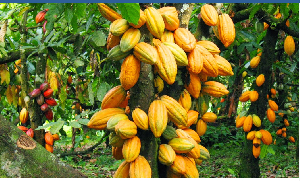 File photo of a cocoa farm