Ghana often prides itself on being one of Africa’s most peaceful nations.
Yet, recent tensions, from the Bawku conflict in the north to land disputes in the Ashanti region, remind us that peace can never be taken for granted.
At the heart of these local issues lies a question we rarely confront directly: can our chiefs, the custodians of our communities, rise beyond tradition to
actively build the Ghana we dream of?
Chiefs are more than ceremonial figures
It’s easy to think of chiefs as figures for festivals, durbars, and rituals — symbols of heritage. But chiefs are far more than that.
They are the first line of authority that many Ghanaians encounter.
In rural communities, the chief’s word can stop violence before it begins.
His palace can settle land disputes faster than a court ever will.
And his voice, when used wisely, carries more moral weight than a dozen political promises.
The truth is, chiefs are not only guardians of culture — they are potential builders of development.
Their authority reaches places that government policies and political slogans often can’t.
The danger of politics and division
Yet, many chiefs today risk losing that power by becoming too close to politics.
When chiefs publicly support political parties, they divide their people.
A chief’s loyalty should be to his community, not to a manifesto.
The day a chief becomes a campaigner, he loses the moral ground that gives his stool authority.
Chiefs must remember that their “call to duty” is different from that of politicians.
They are meant to unify, not to polarise.
Equally worrying is how tribal pride sometimes overshadows national unity.
When chiefs say, “We Akans” or “We Dagombas”, instead of “We Ghanaians,” they unintentionally plant seeds of separation.
Ghana needs chiefs who see their local area not as an island, but as a vital part of the national fabric.
Our diversity is our strength — but only if it is guided by unity.
Chiefs can still change Ghana — If they want to
The challenges Ghana faces today — illegal mining (galamsey), local conflicts, land encroachment — all have local roots.
And where the roots are local, the solutions must begin locally. Chiefs sit right at the heart of those solutions.
Imagine if every chief made it his mission to develop his area: cleaning the rivers, protecting the forests, promoting education, and keeping peace among his people.
Each community would become a pillar of progress, and the sum of those efforts would be a transformed Ghana.
That is not a dream — it’s simply leadership at the local level.
We cannot keep asking Accra to fix everything.
The capital cannot stop galamsey in a distant forest if the local chief keeps silent.
It cannot end chieftaincy disputes if the elders in those communities refuse to talk. Development starts with those who live where the problems exist.
A new vision for traditional leadership
Ghana needs chiefs who can combine wisdom with courage. Chiefs who call out wrongdoing even when it’s unpopular.
Chiefs who don’t sell land carelessly, but plan for schools, clinics, and youth training centers.
Chiefs who teach unity, peace, and productivity — not rivalry and pride. Let’s be honest: some chiefs are already doing great work.
The Asantehene, for example, has mediated between mining firms and farmers to prevent conflict.
In the north, some chiefs have partnered with NGOs to train youth in peacebuilding.
These are small examples, but they show what’s possible when traditional authority is used for national progress.
The Call to Chiefs: Build, don’t divide
If every chief saw his role not just as a cultural custodian but as a local development leader, Ghana would be unstoppable.
The future will not be built in Accra alone — it will be built in the villages, the towns, the markets, and the palaces of our chiefs.
Let them rise above political loyalty and tribal pride. Let them say, “We Ghanaians,” not “We Akans” or “We Ewes.”
Let them act, speak, and lead in unity. Ghana’s future depends not just on what the government does from above, but what chiefs do from below.
Our chiefs must stop asking what the nation can do for their people and start showing what their people can do for the nation. Local strength is national strength — and the future of Ghana depends on it.
Opinions of Tuesday, 21 October 2025
Columnist: Dr Isaac Yaw Asiedu
Can chiefs really help build Ghana or are they just keeping tradition alive?
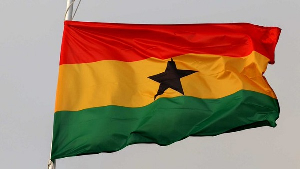 The author says Ghana prides itself on being one of Africa's most peaceful nations